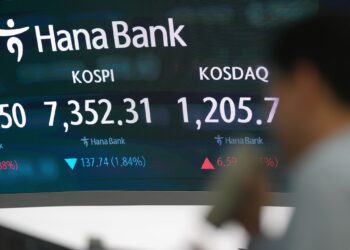

Global energy markets were thrown into immediate and violent turmoil on Friday after the United States military and Iranian forces exchanged direct fire in the geopolitically critical Strait of Hormuz. The unprecedented daylight clash has shattered a fragile regional ceasefire, immediately threatening the stability of international shipping lanes that handle nearly a third of the world’s seaborne petroleum.
The confrontation, which involved the interception of incoming Iranian drones and ballistic missiles by American naval destroyers, sent the international benchmark Brent crude surging past $101.60 (approximately KES 13,300) per barrel. Operating under the hawkish directives of the Donald Trump administration, the escalating conflict threatens to drastically inflate the cost of imported petroleum products, unleashing a devastating inflationary wave across emerging economies in East Africa and beyond.
The Anatomy of the Naval Clash
According to official briefings from the Pentagon, the incident occurred as a convoy of commercial oil tankers, escorted by three United States Navy destroyers, navigated the narrowest choke points of the Gulf. American military radar systems detected what they described as a coordinated, unprovoked swarm attack comprising fast-attack small boats, loitering munitions, and coastal defense missiles launched from Iranian territorial waters.
In response, the American destroyers engaged their automated defense grids, successfully intercepting the projectiles before launching targeted, self-defense retaliatory strikes against the originating launch sites along the Iranian coastline. The exchange of heavy ordinance in such a congested commercial waterway forced an immediate halt to civilian maritime traffic, leaving dozens of supertankers idling precariously in open waters.
- Brent Crude Impact: Prices spiked by over 2 percent within minutes of the news breaking, easing slightly to settle at a 1.5 percent gain, crossing the psychological $100 barrier.
- US Crude Metrics: West Texas Intermediate (WTI) climbed 1.1 percent, reaching $95.87 per barrel as domestic markets reacted to the geopolitical shock.
- Vessel Insurance Premiums: Maritime insurers immediately quadrupled the war-risk premiums for any vessel transiting the Persian Gulf, costs that will inevitably be passed down to the end consumer.
- Diplomatic Fallout: The clash severely undermines the precarious US-Iran ceasefire that President Donald Trump had indefinitely extended just weeks prior on April 21.
Addressing reporters in Washington shortly after the strikes, President Trump maintained a dual posture of military aggression and diplomatic openness. He insisted that back-channel peace negotiations with Tehran are ongoing, reiterating his administration’s absolute demand that Iran dismantle its nuclear ambitions. “They have to understand if it doesn’t get signed, they’re going to have a lot of pain,” the President warned, signaling a willingness to escalate military pressure to secure a favorable treaty.
The Economic Shockwave Reaching Kenya
While the artillery shells fell in the Middle East, the economic shrapnel is destined to tear through the budgets of everyday Kenyans. The East African nation is entirely dependent on imported refined petroleum to power its manufacturing sector, fuel its vast transport logistics networks, and generate supplementary electricity during grid shortfalls.
Whenever Brent crude breaches the $100 mark, the Energy and Petroleum Regulatory Authority (EPRA) is forced to initiate painful upward adjustments at the pump. An increase in the landing cost of diesel translates instantly into higher public transport fares for commuters in Nairobi, inflated transport costs for agricultural produce from the Rift Valley, and surging overheads for local industries struggling to remain competitive.
For the National Treasury, the timing of the crisis is disastrous. Already grappling with severe dollar liquidity constraints and high sovereign debt servicing costs, a sustained spike in the global oil import bill will rapidly deplete Kenya’s foreign exchange reserves. The government will be forced to choose between heavily subsidizing fuel to prevent civil unrest or allowing the free market to dictate pump prices, which could push inflation well beyond the Central Bank’s target ceiling.
A Fragile Global Ecosystem
The Strait of Hormuz is the world’s most critical maritime vulnerability. Any prolonged closure or sustained military hostility in the waterway does not merely delay shipments; it fundamentally paralyzes the industrial output of massive economies across Asia and Europe. Economic analysts warn that traders view the current US-Iran ceasefire as exceptionally brittle, with automated trading algorithms pricing in a high probability of full-scale regional conflict.
Global precedents highlight the peril of this moment. During the “Tanker War” of the 1980s, similar skirmishes in the Gulf led to localized economic depressions globally as supply chains snapped. Today, the world economy is far more interconnected, meaning a disruption in Hormuz instantly impacts the cost of fertilizer in Bungoma and the price of bread in Mombasa.
As diplomats scramble to de-escalate the tension, the physical realities remain stark. American warships continue to patrol the smoldering waters of the Strait, while Iranian fast boats regroup along the coast. For the global citizen, the message is clear: the era of cheap, stable energy is suspended, and the economic survival of millions now depends on the fragile discipline of naval commanders operating in the world’s most dangerous flashpoint.