
-
By Crystal Hsu / Staff reporter
The nation’s foreign exchange reserves climbed back above US$600 billion at the end of last month, as investment gains, currency valuation effects and renewed foreign inflows offset volatility seen earlier in the month, the central bank said yesterday.
Reserves stood at US$602.49 billion, up US$5.6 billion from the previous month, the central bank said.
The rebound reflected returns on reserve assets, fluctuations in major currencies against the US dollar and the central bank’s market operations aimed at maintaining orderly trading conditions, Department of Foreign Exchange Director-General Eugene Tsai (蔡炯民) said.
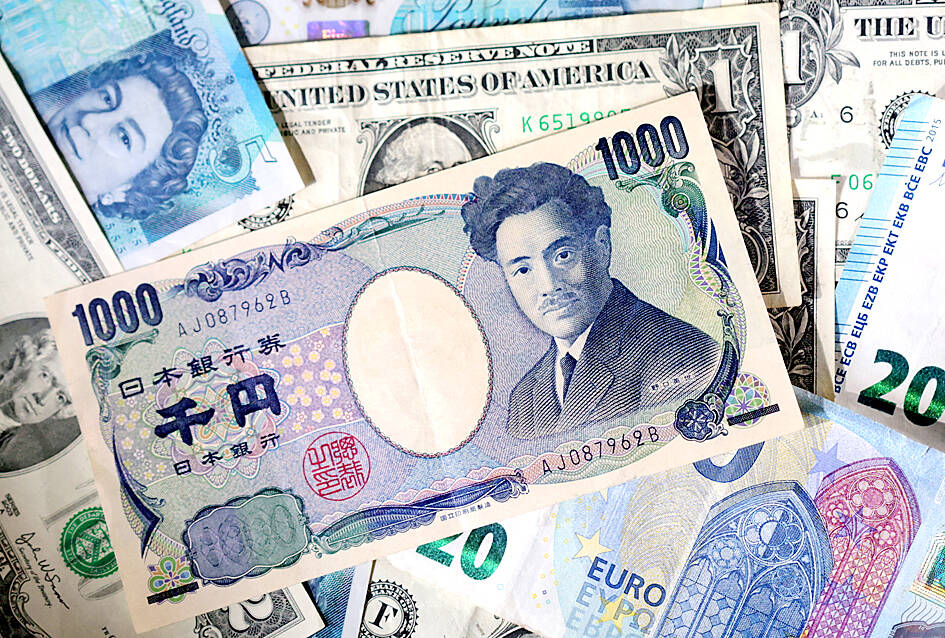
Photo: Reuters
Financial markets were volatile early last month, with foreign investors recording net purchases of more than NT$100 billion (US$3.18 million) in Taiwanese equities on April 8 alone, generating sizeable cross-border capital inflows, he said.
The central bank intervened as needed to smooth foreign exchange market movements, he added.
Taiwan’s relatively high level of foreign shareholdings has amplified capital flow sensitivity, complicating exchange rate management, Tsai said.
Despite the volatility, the New Taiwan dollar remained broadly stable, with fluctuations still within a manageable range, he said.
The central bank would step in more aggressively in the currency market if disorderly conditions emerge, although no such situation had been observed so far, he added.
Foreign exchange reserves in March fell sharply to US$596.89 billion — the steepest monthly decline in nearly 13 years — driven by geopolitical tensions in the Middle East, a stronger US dollar and heavy foreign capital outflows.
Last month also saw large dividend-related outflows linked to Taiwan Semiconductor Manufacturing Co (台積電), estimated at about US$18 billion, Tsai said.
These were more than offset by foreign inflows of about US$25.7 billion, leaving net inflows of about US$7 billion, he said.
Globally, China continued to hold the world’s largest foreign exchange reserves at more than US$3.34 trillion, followed by Japan with about US$1.16 trillion and Switzerland with approximately US$901 billion, central bank data showed.