
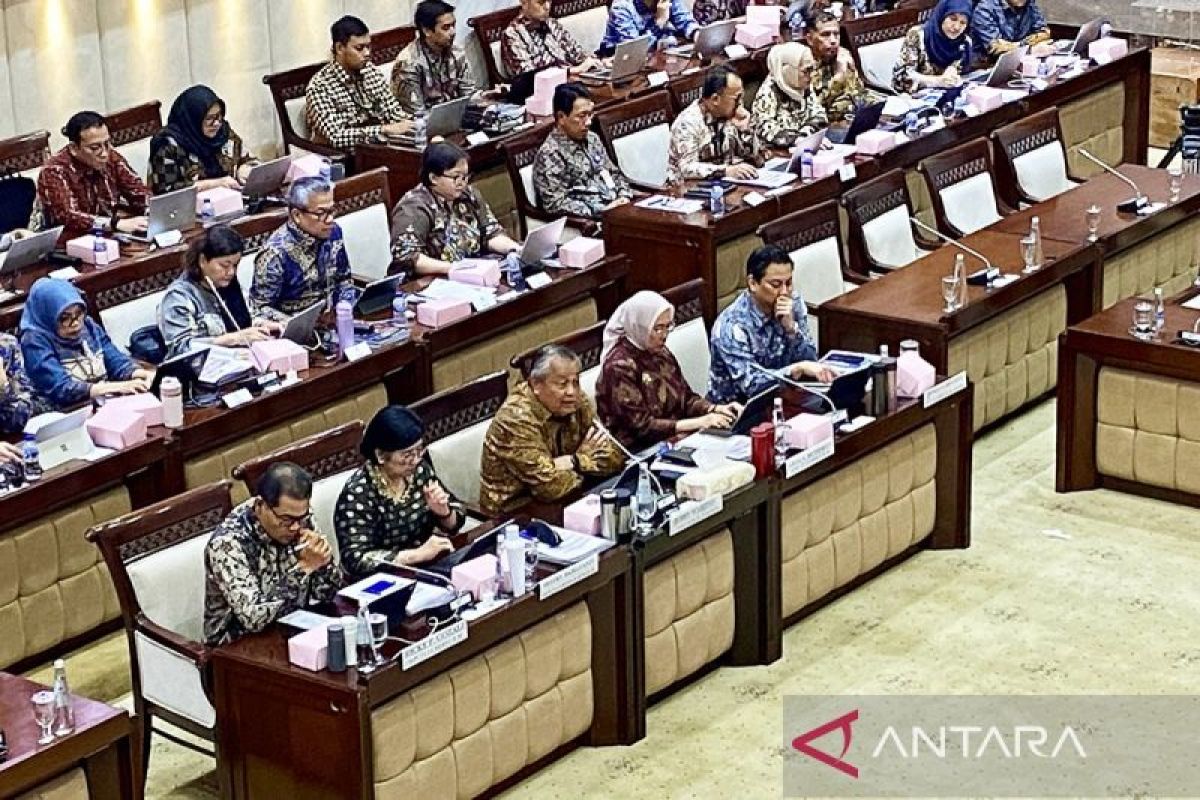
“We ensure that foreign exchange reserves are more than adequate, by referring to the IMF indicators,” BI Governor Perry Warjiyo informed during a Working Meeting with Commission XI of the Indonesian House of Representatives (DPR RI) in Jakarta on Monday.
According to BI data, foreign exchange reserves fell by US$8.4 billion, from US$154.6 billion at the end of January 2026 to US$146.2 billion at the end of April 2026. At the end of December 2025, foreign exchange reserves were recorded at US$156.5 billion.
Perry explained that the increased intensity of intervention in both domestic and offshore markets was intended to mitigate global volatility that has pressured the rupiah. According to him, the measure contributed to a decline in foreign exchange reserves of around US$10 billion compared to the end of 2025.
However, he emphasized that the intervention was not entirely conducted through cash transactions on the spot market. The central bank also optimized swap, hedging, and forward instruments to ease pressure on reserves.
“The decline in foreign exchange reserves of around US$10 billion is only a portion of the cash intervention. The majority, more than two-thirds, is through swaps and hedging, it does not completely drain foreign exchange reserves,” he mentioned.
In addition to foreign exchange intervention, BI also strengthened its policy mix by raising yields on Bank Indonesia Rupiah Securities (SRBI) to attract foreign capital inflows. Perry said the yield on the 12-month SRBI rose to around 6.45 percent, while the 9-month tenor reached approximately 6.31 percent.
Throughout the first quarter of 2026, capital outflows from Indonesia’s domestic financial market reached Rp26.06 trillion (around US$1 billion) from the stock market and Rp25.10 trillion (around US$1.3 billion) from the government bond market.
Meanwhile, the SRBI instrument, which recorded inflows in January-February, began to experience outflows in March as global tensions escalated.
According to Perry, the increase in SRBI yields began to encourage foreign capital inflows. In April 2026, SRBI recorded an inflow of Rp48.26 trillion (US$2,6 billion), an increase of Rp27.05 trillion (US$1,5 billion) by May 8, 2026, bringing the total inflow from April to early May to Rp75.31 trillion (US$4,1 billion).
Perry also noted that foreign investors’ purchases of government securities (SBN) began to increase by Rp13.36 trillion (US$742 million) in April 2026. Meanwhile, the stock market continued to record year-to-date (ytd) outflows, although inflows of Rp10.9 trillion (US$605 million) was seen in the first week of May 2026.
He stated that strengthening the SRBI instrument is necessary to maintain net inflows and increase the domestic foreign exchange supply.
Perry also estimated that the seasonal increase in foreign exchange demand would begin to decline in July-August 2026, allowing for a gradual reduction in the intensity of intervention.
Related news: President Prabowo backs BI’s seven steps to steady Rupiah
Translator: Rizka Khaerunnisa, Resinta Sulistiyandari
Editor: M Razi Rahman
Copyright © ANTARA 2026