

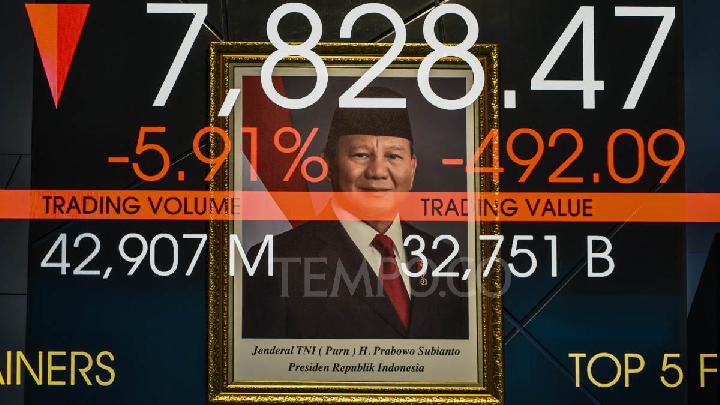
TEMPO.CO, Jakarta – Indonesia’s financial markets ended April in turmoil. Equities and the currency market both suffered heavy losses. The Jakarta Composite Index plummeted 2.03 percent in a single session on Thursday, April 30, closing at 6,956.8. The rupiah fared no better, plunging to a fresh all-time low and briefly nearing Rp17,400 against the United States dollar.
Several factors underpin the rout. The most immediate is the surge in Brent crude, the global oil benchmark, which has scaled US$121 a barrel. For Indonesia, which imports roughly 1 million barrels of crude and refined fuel products daily, higher oil prices translate directly into pressure on the currency and the balance of payments.
Yet the government is also being squeezed by its own decisions. Rather than allowing domestic fuel prices to rise, policymakers have opted to shield consumers by expanding subsidies and compensation payments to state-owned energy group Pertamina. The support covers not only subsidised diesel and Pertalite fuel, but even Pertamax gasoline, which is primarily consumed by middle and upper-income motorists.
The consequence is clear: Indonesia’s 2026 State Budget is coming under increasing strain. The fiscal deficit risks widening sharply just as government revenues weaken alongside a slowing economy. Tax collections have already begun to soften, leaving the state with a thinning cash position at precisely the wrong moment.