
The strengthening of the shekel has become a central concern for exporters across Israel, from high-tech companies in the country’s center to traditional manufacturers in the periphery. Technology firms warn that they are increasingly hiring workers abroad and may reduce recruitment in Israel, while industrial companies report, backed by data from Israel’s Central Bureau of Statistics, that they are moving production lines overseas.
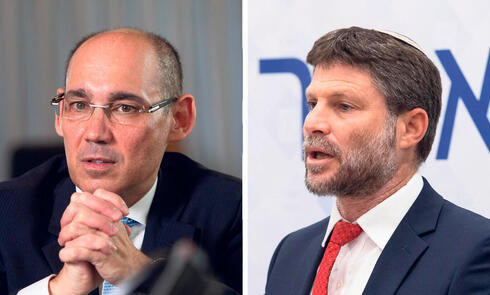
Yet despite exporters’ attempts to push the issue into the public debate, both the Bank of Israel and the Ministry of Finance have largely avoided addressing it directly. The Bank of Israel, which is legally responsible for foreign exchange policy, has not published detailed analyses explaining the shekel’s appreciation or delivered consistent messaging on the issue. At times, the central bank has appeared to shift responsibility toward the government, or limited itself to general statements that “the exchange rate is a broad policy tool.”
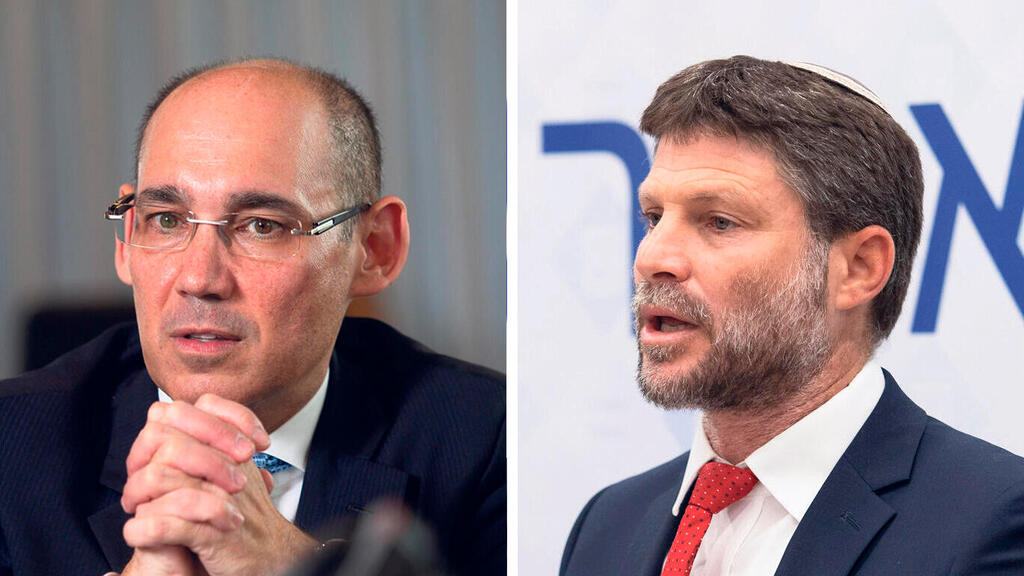
The government’s response has been similarly restrained. The Ministry of Finance, which oversees the real economy and whose approval may be required for foreign exchange intervention, has largely declined to comment publicly. As far as is known, no formal meetings have been held with business leaders regarding the shekel’s appreciation.
The scale of the challenge is significant. Israeli exports total roughly $160 billion annually, accounting for about 30% of the country’s GDP. Estimates suggest that around 750,000 Israelis, approximately 17% of the workforce, are directly employed by export-oriented companies, including more than 400,000 workers in the high-tech sector.
These businesses are contending with a rapid decline in the dollar against the shekel. On Tuesday night, the dollar fell to around NIS 2.9, marking a decline of 3.8% compared with the previous month’s average, 10.9% compared with six months ago, and 18.6% compared with the average exchange rate in May 2025.
In practical terms, this means that for every 100 shekels an exporter generated a year ago, the same dollar revenues now translate into less than 82 shekels. Business leaders warn that such sharp currency movements inevitably lead to layoffs, relocation of operations abroad, cost-cutting measures, and wage freezes. Against that backdrop, many expected clearer and more active communication from both the Bank of Israel and the Treasury.
At the same time, many Israelis benefit from a stronger shekel. Imported products become cheaper, at least in theory, and travel abroad becomes significantly more affordable. The shekel has strengthened by roughly 28% over the past year and a half, increasing Israelis’ purchasing power overseas.
As a result, economists are increasingly focused on understanding what is actually driving the currency’s appreciation.
According to Yannay Spitzer, who until recently taught at The Hebrew University of Jerusalem, the explanation is not rooted in a surge in Israeli exports.
“It’s not defense exports or anything like that,” Spitzer told Calcalist. “The current account surplus in 2025 was actually lower than in 2024.”
Instead, Spitzer identifies three main drivers behind the shekel’s strength: improved expectations regarding Israel’s economy, a decline in Israel’s risk premium, and narrowing spreads between Israeli and US government bonds.
In practice, this means increased capital inflows into Israel, through investments in Israeli stocks and companies, are boosting demand for the shekel. Another factor, he says, is the broader weakening of the US dollar under the economic policies of Donald Trump. A third factor involves global financial flows linked to rising US equity markets.
Spitzer notes that Israeli institutional investors are also playing a major role. As US stock markets rise, pension funds and investment houses become more exposed to dollar-denominated assets. To reduce currency exposure, many institutions hedge against the dollar, effectively increasing demand for shekels.
Economists say this institutional activity has become one of the most influential, and controversial, drivers of the exchange rate.
According to Alex Zabezhinsky, Chief Economist at Meitav, there has long been a measurable relationship between the performance of the S&P 500 and the shekel-dollar exchange rate.
“There is a longstanding correlation between the S&P 500 and the exchange rate,” Zabezhinsky told Calcalist. “If the US market rises 10%, the dollar tends to weaken by roughly 2% to 3% against the shekel.”
By some estimates, roughly 30% to 40% of the shekel’s recent appreciation can be explained by gains in US equity markets and the associated hedging activity by Israeli institutional investors.
Institutional investors currently hold around $300 billion in foreign currency assets, though only part of that exposure remains unhedged. Between January and February alone, institutions added nearly $5 billion to their currency hedges, while from August 2025 through February 2026 they added roughly $23 billion in hedged exposure. Those hedging operations involve selling dollars and buying shekels, contributing further to the currency’s strength.
Zabezhinsky argues that while such activity is legitimate, policymakers must consider its broader consequences.
“The question is whether, for the sake of financial market activity, we are willing to sacrifice export industries,” he said. “We are living in a world where countries increasingly want domestic production capacity.”
He points to regulatory changes in Taiwan, where authorities modified accounting rules after concluding that some hedging operations were being conducted primarily to avoid reporting paper losses. The result, he says, was a sharp decline in hedging activity.
Spitzer, however, opposes direct intervention in institutional investment strategies.
“There’s no need to regulate institutions more heavily,” he said. “It’s more a question of informing both the public and institutional investors. Over the long term, extensive hedging is not necessarily economically rational.”
Attorney Nimrod Sapir warned against government interference in institutional portfolio management.
“The Bank of Israel should not intervene in the professional management of savers’ money,” Sapir said. “Institutional investors are responsible for maximizing returns for savers. Other policy goals should not interfere with that process.”
“It will be harder to buy dollars this time”
Regardless of the causes, pressure is mounting on policymakers to respond. Economists note that even if the exchange-rate shift reflects legitimate market forces, the Bank of Israel and the Finance Ministry remain responsible for protecting growth and employment.
A currency move of nearly 20% within a year is widely viewed as unusually sharp and disruptive. Few advocate returning to a fixed exchange-rate regime, but many argue that the government could at least soften the transition and give exporters more time to adjust.
In 2021, Bank of Israel Governor Amir Yaron announced a $30 billion intervention program aimed at slowing the shekel’s appreciation. At the time, the central bank not only intervened directly in currency markets but also publicly explained its strategy and limitations.
Some economists believe similar intervention could be considered again. Others, including Zabezhinsky and former Manufacturers Association president Ron Tomer, argue that such a move would be more complicated today because the US has become increasingly critical of central-bank currency intervention and has labeled countries such as Switzerland as “currency manipulators.”
Tomer believes the government should instead focus on temporary support measures for exporters, including grants to improve efficiency and targeted tax relief.
At the same time, parts of the business sector are calling for lower interest rates, hoping that rate cuts could weaken the shekel modestly. But economists note that previous rate reductions had only limited impact on the exchange rate.
For now, many business leaders feel they are speaking mainly to themselves, and to the media. The Bank of Israel and the Treasury remain largely silent. Policymakers may disagree over the best course of action, but for many exporters, continued silence is becoming increasingly difficult to justify.