

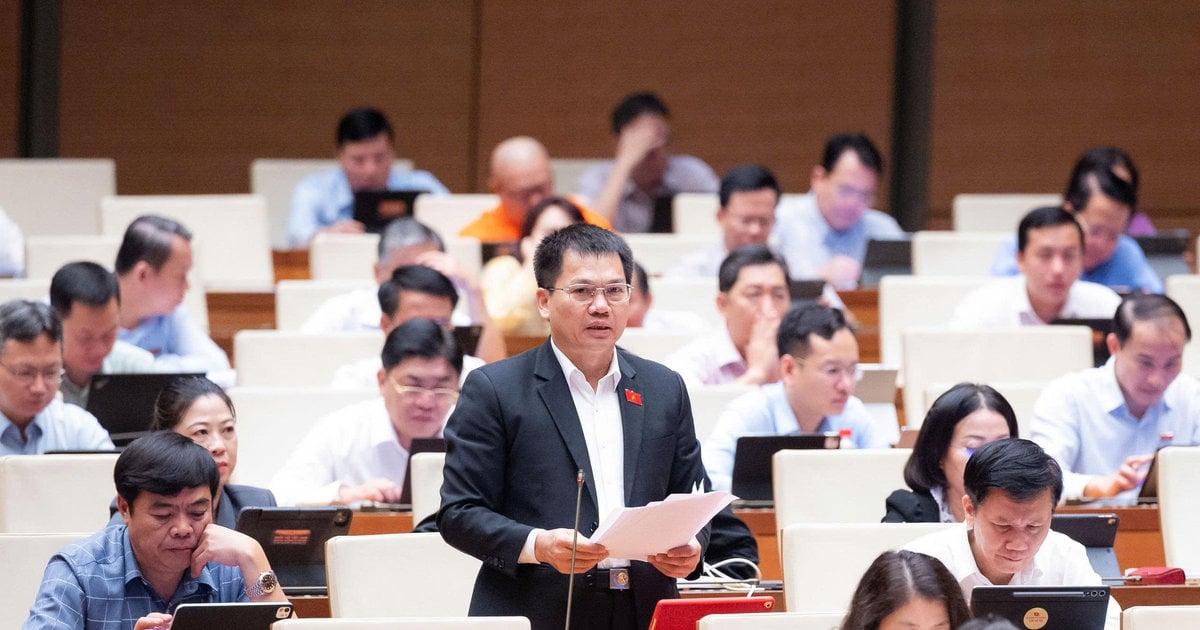
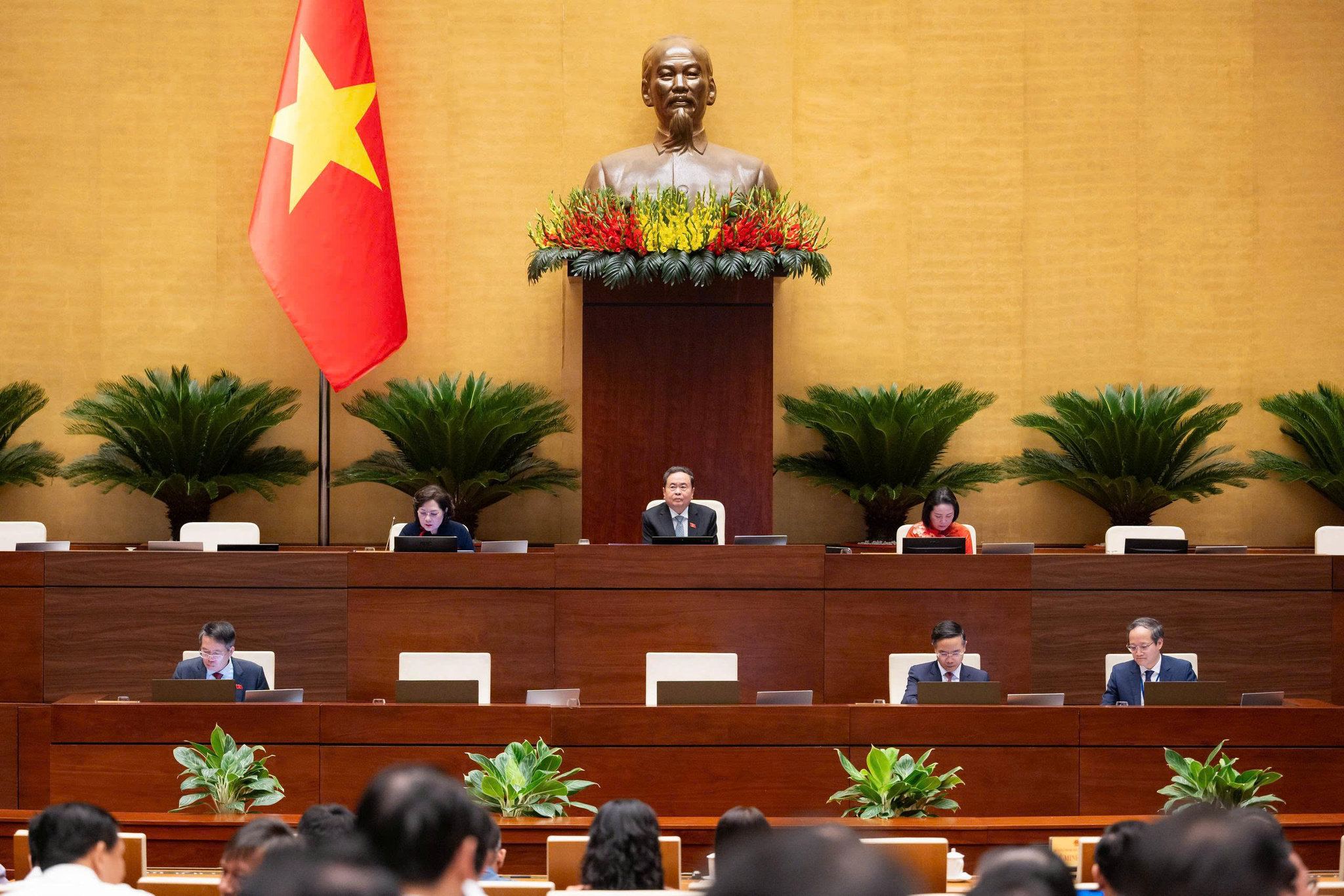
Continuing the agenda of the First Extraordinary Session, on the morning of August 9th, under the chairmanship of National Assembly Chairman Tran Thanh Man and the direction of National Assembly Vice Chairwoman Nguyen Thi Hong, the National Assembly discussed in the plenary hall the draft Law amending and supplementing a number of articles of the Law on the State Bank of Vietnam , the Law on Prevention and Combat of Money Laundering, and the Law on Credit Institutions.
The delegates generally agreed on the necessity of amending and supplementing several articles of the laws; at the same time, they emphasized the need to improve the mechanism for foreign exchange management, banking inspection and supervision, and to further concretize international standards on anti-money laundering and ensuring the safety of the banking system.
Add suspicious transaction patterns related to crypto assets for each period.
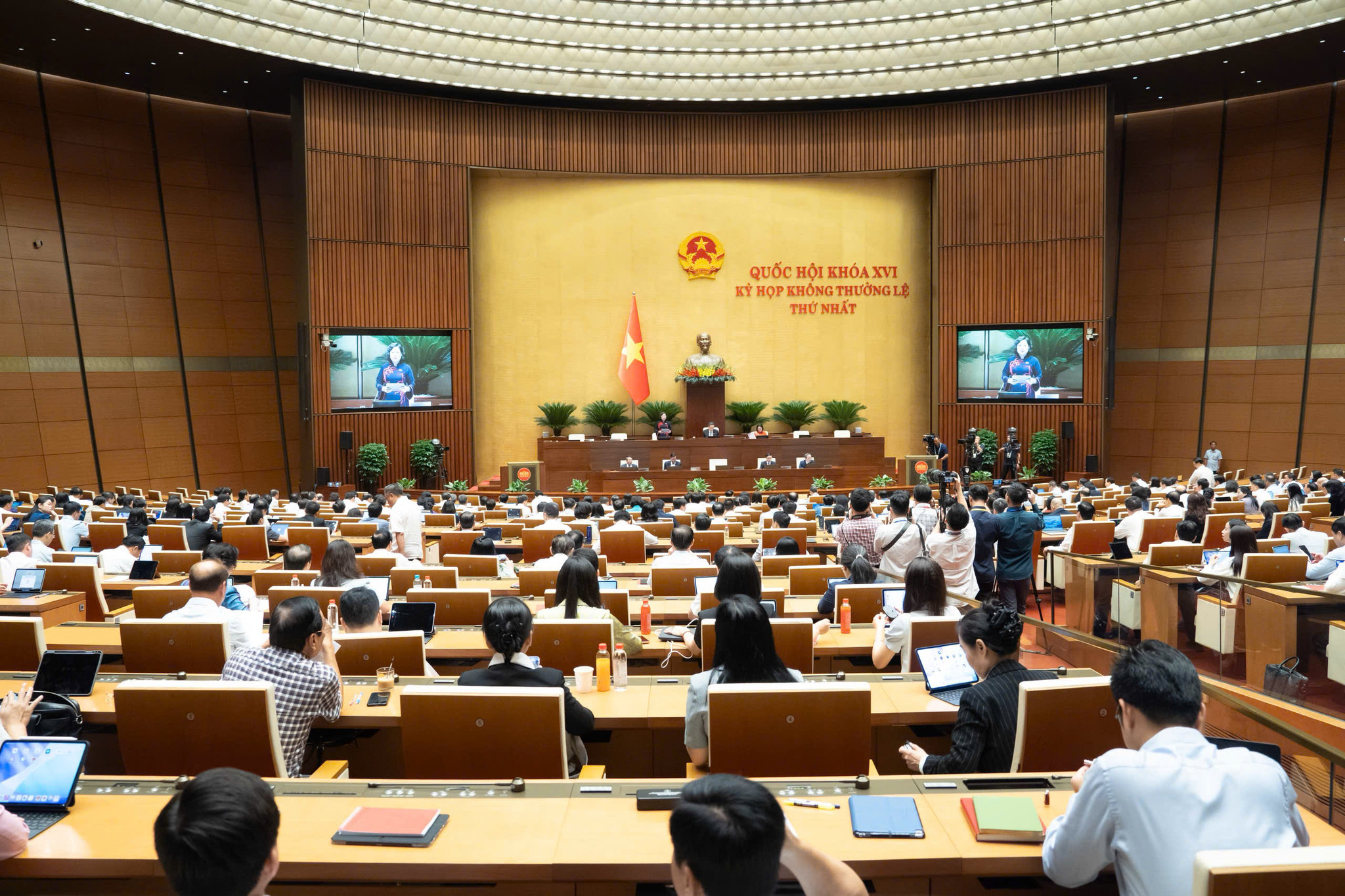
Commenting on the amendment of the Law on Prevention and Combat of Money Laundering, National Assembly representative Trinh Thi Tu Anh from Lam Dong province highly appreciated the drafting committee’s inclusion of 15 suspicious transaction indicators related to crypto assets in Article 33a of the draft law. According to the representative, this is an important step in concretizing FATF Recommendation 15, creating a legal basis for identifying, assessing, and controlling money laundering risks related to crypto assets.
From a technological perspective, the delegates suggested focusing on three issues. Firstly, it is necessary to design the suspicious signs into groups. The delegates argued that the 15 signs in the draft are not currently structured into groups of signs with similar characteristics, but are listed quite broadly. Therefore, they need to be reorganized to make the provisions clearer and more logical.
Accordingly, indicators can be divided into two groups: Off-chain indicators, which relate to identity and access behavior such as using IP addresses, anonymous VPNs, duplicate devices, opening multiple P2P accounts, or evading customer identification and verification (KYC/CDD) processes; and On-chain indicators, which reflect the structure and history of asset movements on the distributed ledger, such as using money mixing services (Mixers/Tumblers), splitting money flows across multiple wallet addresses, using privacy-enhancing technologies, or transferring assets via cross-chain bridges.
The third group consists of VASP and wallet address indicators, such as transactions with unlicensed cryptocurrency service providers, addresses on sanctions lists, or those linked to high-risk jurisdictions.

At the same time, delegates argued that the 15 indicators should not be considered a closed list. The Web3 and DeFi ecosystems are rapidly developing, bringing with them new trading models, protocols, and methods to conceal or disperse money flows. AI is also increasingly being used to automate trading operations and can alter risk models.
Therefore, the delegates suggested that, in addition to the specific indicators stipulated in the Law, there should be an open provision, empowering the Governor of the State Bank of Vietnam to issue additional indicators of suspicious transactions related to crypto assets periodically.
Secondly, it is necessary to ensure the technical capacity to detect signs on the supply chain. Delegates argued that the requirement to identify transactions related to money mixing services, inter-chain bridging, and other methods of concealing money flows is correct, but the technical nature of these activities needs to be properly understood.
At the point of converting cryptocurrency assets into fiat currency (On/Off-Ramp), the banking system can see the transaction in Vietnamese Dong. However, from a VND transaction, the system does not automatically know which wallet addresses the cryptocurrency asset has previously passed through, which services it used, and how many blockchains it has traversed. To determine the origin and path of the asset, on-chain analytics is needed, including wallet address clustering, transaction graph analysis, identifying the entity behind the wallet address, tracing the asset flow across multiple blockchains, and analyzing interactions with smart contracts.

“This is not a default function of the core banking system,” the delegate emphasized. If the law stipulates that reporting organizations must detect signs that the existing technical infrastructure is incapable of observing, the delegate argued that a gap would arise between legal obligations and enforcement capabilities. The delegate suggested that the State Bank of Vietnam research and develop or provide a shared supervisory technology infrastructure based on the SupTech/RegTech model, with on-chain analysis tools, data sharing mechanisms, and a risk warning system. Instead of requiring each bank to build its own blockchain analysis system, a shared supervisory capacity at the national level could be established.
Thirdly, it is necessary to develop the capacity for analyzing and investigating digital finance. According to the delegates, a good monitoring system is not enough if the agency receiving and processing suspicious transaction reports lacks the corresponding analytical capacity. A suspicious transaction report (STR) related to crypto assets has a very different structure from a regular banking transaction. The analytical agency may have to process on-chain transaction history, smart contract events, token movements, and relationships between thousands, even millions, of wallet addresses.
Therefore, anti-money laundering efforts in this field cannot rely solely on traditional AML methods, but require the addition of blockchain analytics, digital financial investigation, and digital forensics capabilities. Delegates suggested researching mechanisms to attract and utilize highly skilled personnel in Blockchain Forensics, data analysis, and digital financial investigation.
Representative Trinh Thi Tu Anh emphasized: “Regarding crypto assets, we need to shift from a mindset of ‘specifying which signs must be detected’ to a more comprehensive one: ‘using what data, what tools, and who has the capacity to analyze those results’.”
We request clarification on the principles governing the use of foreign exchange within Vietnam.
Commenting on the draft Law, Representative Duong Khac Mai, Deputy Head of the Lam Dong Provincial National Assembly Delegation, said that amending and supplementing laws is necessary to address emerging problems; improve the mechanism for managing foreign exchange, finance, inspection, and supervision of banks; further concretize international standards on anti-money laundering; and create a legal basis for handling some issues arising in banking operations and the corporate bond market.
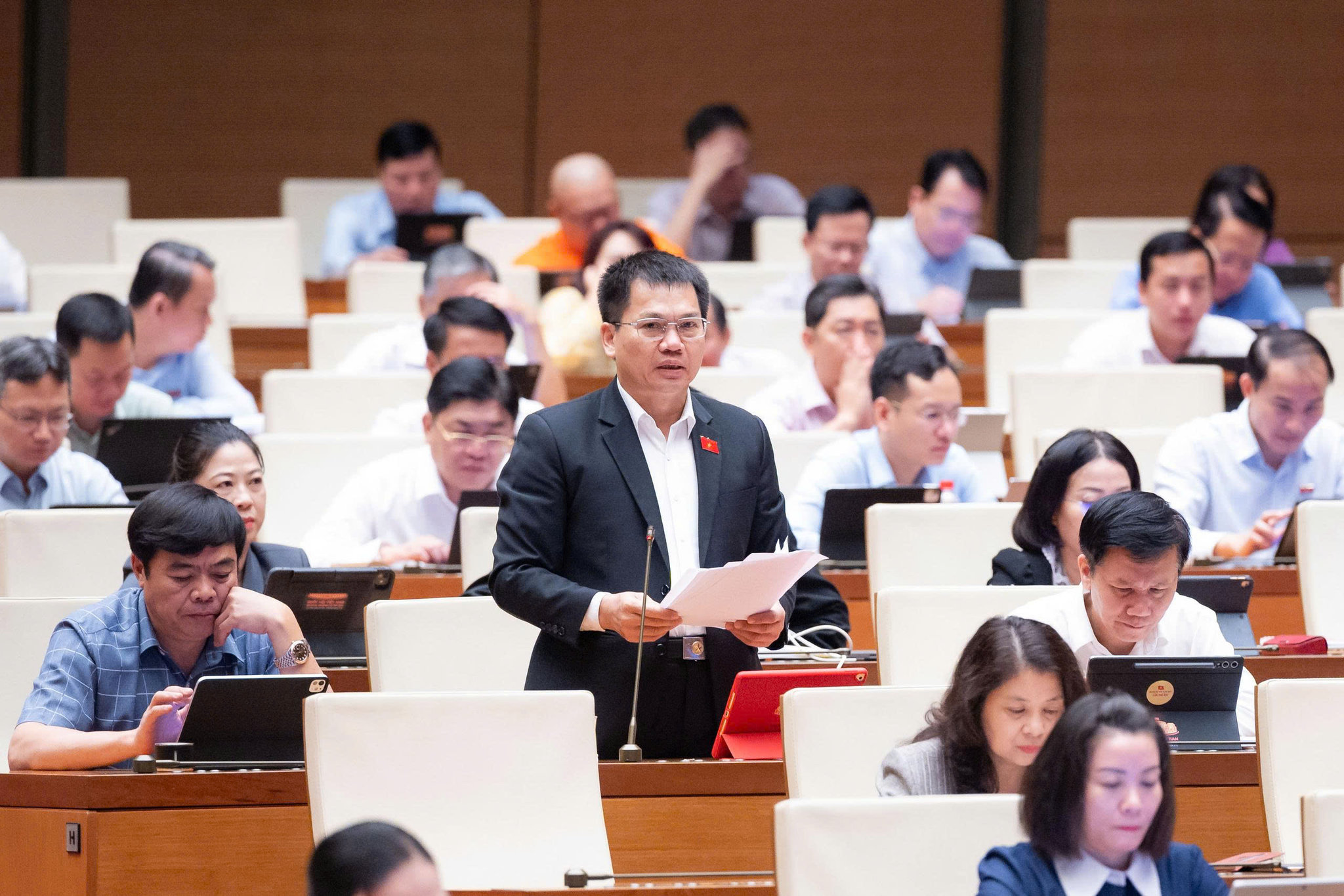
Regarding the mechanism for applying alternative safety ratios to meet socio -economic development requirements, delegates requested clarification on what constitutes an “other safety ratio” compared to the usual level. If a lower level is allowed, this would essentially be a mechanism to relax safety standards, potentially impacting the resilience of credit institutions and the safety of the system.
The delegates also argued that the phrase “to fulfill the requirements of economic and social development” has too broad a meaning; they suggested that it should only be applied in cases where it is truly necessary, linked to important programs, projects, or tasks in accordance with the policies of the Party and the State. They also proposed unifying the term “safety ratio” with the Law on Credit Institutions.
Regarding the principles of using foreign exchange within Vietnam, delegates agreed with the legalization of the principle of restricting the use of foreign exchange and appreciated the drafting agency’s decision to abolish Article 22 of the Foreign Exchange Ordinance. However, delegates noted that the phrase “other similar forms” lacks a clear legal boundary, potentially leading to the interpretation that using foreign currency as a reference unit, basis for determining or adjusting prices is also prohibited, even if the final payment obligation is in Vietnamese Dong. Therefore, delegates proposed clarifying in the Law the difference between using foreign exchange as a means of payment and using it as a reference or to indicate value in transactions permitted by law .

Regarding “beneficiary owners,” delegates suggested that the criteria for identification must be clear and verifiable; credit institutions should not be burdened with the responsibility of investigating control relationships for which they lack the authority or data to verify. Regarding the obligation to report suspicious transactions, delegates proposed further review, aiming for financial institutions to report when they “suspect or have reasonable grounds to suspect,” in line with FATF Recommendation 20; while ensuring that the reporting mechanism for assets or transactions related to terrorist financing is interconnected and consistent with the Law on Counter-Terrorism.
Regarding suspicious activity in the cryptocurrency sector, delegates agreed with the proposed amendments but suggested clearly defining responsibilities. Accordingly, cryptocurrency service providers are responsible for the underlying and on-chain data they manage; credit institutions are only responsible for identifying suspicious activity within the scope of account cash flow, customer information, linked accounts, and other legitimate data they can access.
Regarding the activity of managing collateral for corporate bonds, delegates agreed to add this activity to the other business activities of commercial banks, but argued that this is a content that carries potential legal risks and conflicts of interest.
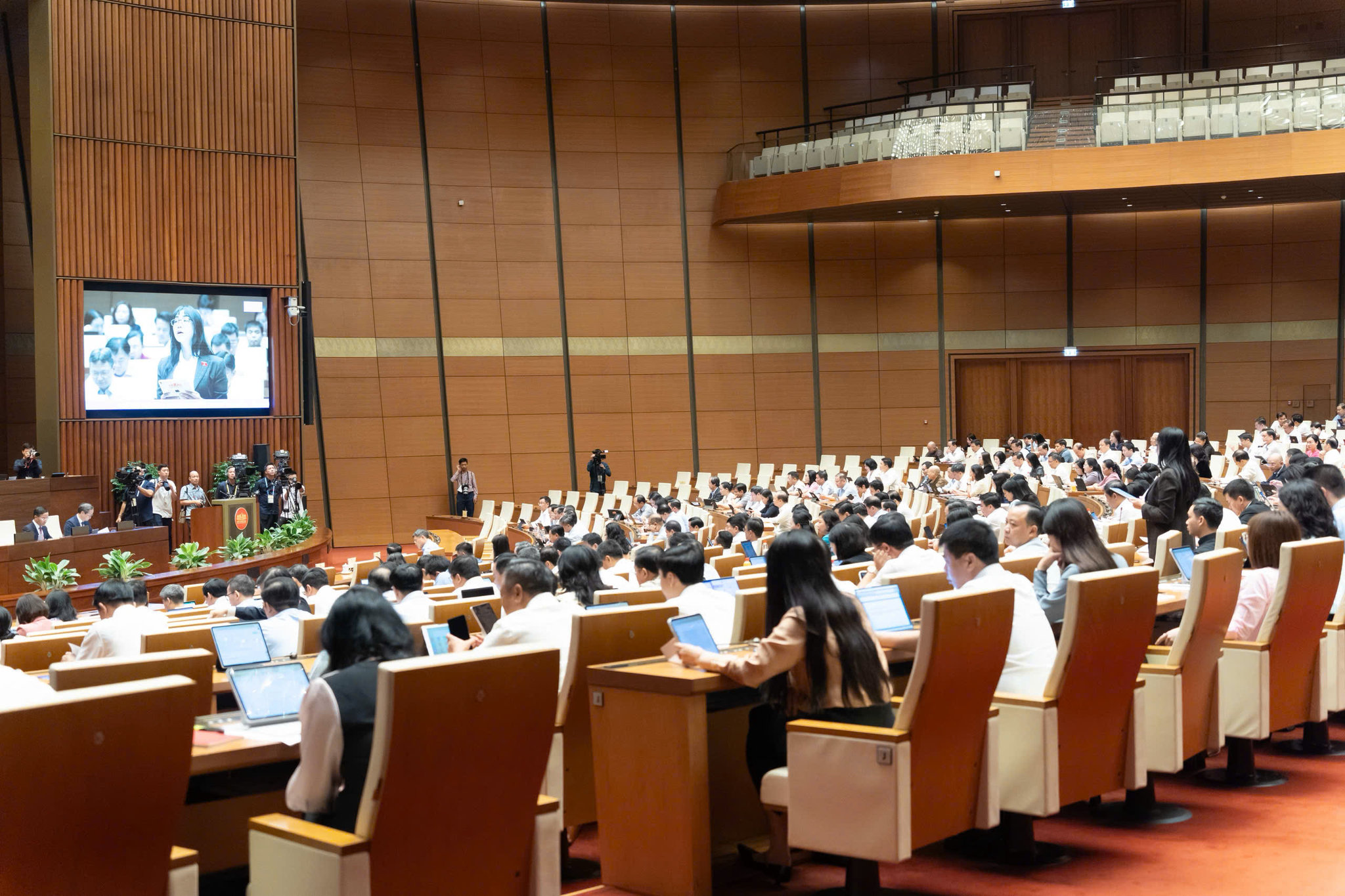
Delegates proposed clearly defining the legal status of commercial banks when acting as agents for managing collateral assets; minimum principles regarding the rights, obligations, and responsibilities of agents; mechanisms for controlling conflicts of interest; and minimum conditions for commercial banks to perform this activity.
Source: https://baolamdong.vn/dbqh-tinh-lam-dong-gop-y-hoan-thien-phap-luat-ve-ngan-hang-and-phong-chong-rua-tien-458570.html

![“Exchange Rate Nears 1,300 Won…Iran Uncertainty Remains a Key Factor” [Weekend Money]](https://www.currency.coach/wp-content/uploads/2026/08/2026060418491488279_1780566554-350x250.jpg)