

- Manufacturers more confident
- More fiscal initiatives to tackle constraints
Macroeconomic reforms embarked upon by the President Bola Ahmed Tinubu’s administration have laid a strong foundation for sustainable growth of the Nigerian economy.
Finance and economy experts and think tanks in several reports reviewed at the weekend were unanimous that the reforms have delivered measurable fundamental gains that could serve as basis for long-term growth and prosperity.
Experts at PricewaterhouseCoopers (PwC), Centre for the Promotion of Private Enterprise (CPPE), Manufacturers Association of Nigeria (MAN) and Coronation Group agreed that the economic outlook remains positive, with continuing improvement in national productivity, revenues and foreign exchange (forex).
They however called for additional fiscal initiatives to deepen growth and cushion reforms’ shocks within the vulnerable segments, noting that the next phase of reforms should focus on consolidating the recent economic gains into inclusive growth and welfare.
PwC stated that Nigeria’s economic outlook remains positive with the real Gross Domestic Product (GDP) expected to grow by 4.3 per cent this second half, supported by higher crude oil production and stronger performance in dominant sectors.
A report by MAN showed that aggregate Manufacturers’ CEOs Confidence Index (MCCI) for second quarter 2026 rose to 52.1. This was 3.4 points higher than 48.7 recorded in first quarter 2026, signaling a return of confidence in manufacturing activities in Nigeria.
The report also suggested that uncertainties around government reforms over the past three years have subsided, assuring manufacturers that production incentives have regained maturity.
MCCI was created by MAN as a gauge for assessing quarterly shifts in manufacturing activities, influenced by macroeconomic trends and government policies.
MCCI is, therefore, the barometer used by MAN to garner the perceptions of CEOs of manufacturing companies on the impact of changes in the economy on manufacturing operations.
Chief Executive Officer, Centre for the Promotion of Private Enterprise (CPPE), said the reforms have delivered measurable gains.
“The reforms have delivered measurable macroeconomic gains. Government revenues have strengthened, the foreign-exchange market has become more stable, external reserves have improved, the trade surplus has expanded and investor confidence has recovered. Real GDP growth strengthened to 3.89 per cent in first quarter 2026, from 3.13 per cent in first quarter 2025. These are important foundations for investment and growth,” Yusuf said.
Managing Director, Coronation Asset Management, Aigbovbioise Aig-Imoukhuede said Nigeria’s improving foreign-exchange liquidity, stronger reserve position and greater currency stability are providing a more supportive environment for foreign capital inflows.
He said Nigeria is better positioned now than in previous years to attract both domestic and foreign investment, provided the country sustained reforms, strengthened market institutions and maintained macroeconomic stability.
“Nigeria’s economic outlook remains positive, although the second half of the year will continue to be shaped by domestic and external risks. Real GDP growth is projected at 4.3 per cent for 2026, supported by higher crude oil production and stronger performance in dominant sectors. Inflation is expected to moderate, although food-price pressures, other supply-side shocks and pre-election spending could create upside risks,” PwC’s latest Economic Outlook stated.
The report highlighted that the naira is expected to remain broadly stable, supported by improved external buffers and foreign-exchange market reforms, though it remains exposed to shifts in oil prices, capital flows and domestic forex demand.
According to the report, monetary policy is expected to remain relatively tight, with room for gradual rate reductions if the decline in inflation is sustained.
PwC stated that fiscal pressures may persist as continued spending needs, budget deficit, and government financing requirements place demands on available resources.
“The central task for Nigeria in H2 2026 is therefore not simply to preserve macroeconomic stability. It is to make that stability work more effectively for households and businesses. Progress will depend on lowering essential costs, expanding access to finance, improving infrastructure and productivity, and converting stronger investor interest into productive investment and jobs.
“Successfully navigating this next phase would allow Nigeria to move beyond stabilisation and begin unlocking the broader reform dividend through stronger incomes, improved welfare and more inclusive economic growth,” PwC stated.
PWC noted that Nigeria can broaden the gains from recent economic reforms by addressing the structural constraints limiting their impact on households and businesses.
“Six months on, the data point to progress in external reserves, exchange-rate stability and GDP growth. The task now is to translate this progress into better outcomes for households and businesses, higher productivity, investment and jobs.
“Nigeria’s macroeconomic stability creates the conditions for growth, but structural constraints limit how far its benefits are felt across the economy. That is why targeted support for consumers, affordable finance for MSMEs, investment in infrastructure and skills, and faster conversion of investor interest into productive assets must now be priorities,” PwC stated.
The report identified four actions for unlocking a broader reform dividend, including scaling up targeted support for consumers and reduce food, energy and transport costs to strengthen household purchasing power.
PwC also called for expansion of access to affordable, longer-term finance and reduce the operating constraints limiting MSME growth and job creation.
According to the report, government should prioritise power, transport, broadband, security, education and workforce development to lower business costs and raise productivity.
PwC underlined the need to build a stronger pipeline of bankable projects and address the approval, land, financing and foreign-exchange bottlenecks delaying investment and job creation.
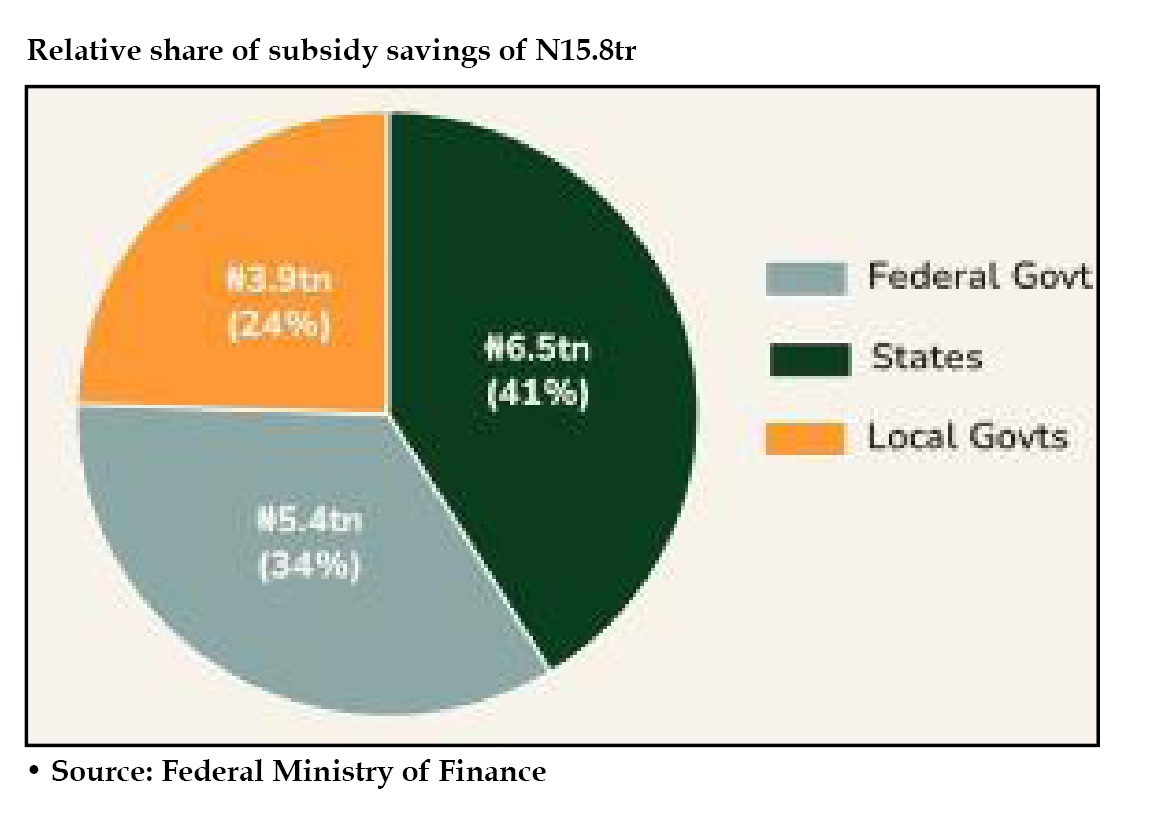
Yusuf noted that the reforms have significantly expanded the fiscal space of state governments through higher statutory allocations and stronger internally generated revenues.
According to him, such expanded sub-national revenue base should translate into a much larger development role for the states.
“Citizens should demand measurable outcomes in roads, healthcare, public transportation, education, agricultural infrastructure, security, power and enterprise support. Higher revenues must produce a visible development and welfare dividend, rather than simply finance higher recurrent expenditure and prestige projects,” Yusuf said.
He decried any attempt to reverse the reforms, warning that truncating the reforms would be damaging to the economy.
He said: “CPPE believes that reversing the reforms would be profoundly damaging to the economy. It would undermine investor confidence, weaken fiscal stability, destabilise the foreign-exchange market and reintroduce distortions that the reforms were designed to correct.
“Such a reversal could trigger significant economic dislocations and erode the gains already achieved. The reform trajectory should therefore be sustained, while implementation is continuously refined in response to emerging realities. Reform instruments should be continuously recalibrated in response to evidence, implementation experience and their impact on businesses and households”.
He charged the governments to build on the macroeconomic stability to deliver higher productivity, stronger investment, more jobs, lower poverty and improved living standards.
“The next phase must move decisively from stabilisation to productivity; from higher government revenues to better development outcomes; and from improving macroeconomic indicators to tangible gains in jobs, incomes and living standards,” Yusuf said.
According to him, Nigeria’s major constraints are increasingly structural- electricity, logistics, insecurity, agricultural productivity, infrastructure, regulatory costs and the cost of capital.
He added that trade policy should also support domestic productive capacity, noting that industries and agricultural producers with credible local capacity deserve calibrated protection against unfair import competition, while producers should retain competitive access to critical inputs not adequately available locally.
“The prevailing high-interest-rate environment is equally challenging. As inflation moderates, stronger fiscal-monetary coordination should create room for a gradual easing of financing costs without jeopardising macroeconomic stability,” Yusuf said.
Director General, Manufacturers Association of Nigeria (MAN), Mr. Segun Ajayi-Kadir said recent tax laws, executive orders and other business-related policies such as Nigeria Industrial Policy and “Nigeria First” Policy have reinforced positive outlook of manufacturing executives.
He however listed the top challenges faced in the manufacturing sector within second quarter 2026 to include limited access to finance, frequent power outages, high production costs, inadequate foreign exchange availability, low patronage and multiple taxation.