


Much progress has been made in the use of local currencies for cross-border payments since I last took stock in 2023. This trend has been driven by countries’ efforts to reduce costs, limit exposure to foreign-exchange volatility, and lessen vulnerabilities stemming from reliance on a handful of major currencies for cross-border payment transactions. It has also been facilitated by innovations in payment and settlement technology, including, more recently, applications powered by artificial intelligence.
Continued growth in the use of local currencies in cross-border payments is likely to lead to a more diversified and fragmented international payments landscape. Contrary to speculation from some market participants, however, this does not necessarily mean that another national currency—such as the euro or renminbi—is close to replacing the US dollar as the dominant currency in international finance.
Modernizing the plumbing of international finance
The infrastructure needed to use local currencies for cross-border payments has several components—all of which are now being implemented in a growing number of countries.
First and foremost is the transition to Instant Payment Systems (IPS), which provide real-time or near-real-time settlement and comply with ISO 20022 for financial messaging between financial institutions and national systems. These efforts have been closely aligned with the G20 Roadmap for Enhancing Cross-Border Payments that was launched in 2020 and aims to be completed by 2027.
In an impressive development, more than one hundred countries have developed and started to operate fast payment systems for retail transactions—especially since the COVID-19 pandemic. At the wholesale level, many countries use a hybrid system of real-time gross settlement and deferred net settlement (DNS) to settle accounts between banks in support of retail fast payments—a few, including the United Kingdom (UK), Singapore, and South Africa, rely on DNS to economize on bank liquidity. Instant payments are projected to grow from 16 percent of total payment transactions in 2023 to 22 percent in 2028.
The map below shows and ranks the largest markets for instant payments by transaction volume. Notably, four of the top five are Asian economies, with India leading by a wide margin.
For the twenty-one member states of the euro area, the Single Euro Payments Area (SEPA) was established by the European Payments Council to harmonize euro payments across Europe. In 2017, the SEPA Instant Credit Transfer scheme—supported by the ECB-operated TARGET Instant Payment Settlement—was launched. It became mandatory for all euro area banks in 2024, enabling euro credit transfers in less than ten seconds.
From national networks to cross-border platforms
Various national IPSs can be linked to form bilateral or multilateral payment platforms. If they conform to the ISO 20022 standard, these IPSs can exchange financial messages. Such platforms can support cross-border payments in local currencies by enabling direct currency conversion via accredited foreign exchange providers. These private-sector providers can offer continuous real-time quotes for currency pairs without relying on a vehicle currency.
Instant settlement significantly reduces FX settlement risk and thus lowers the need for hedging, which in turn depends on liquid FX and money markets. The lack of such liquidity has historically contributed to the dominance of the US dollar as a vehicle currency. Bilateral or multilateral central bank swap lines can provide backstop liquidity for these FX providers.
In addition, participating countries need to coordinate and harmonize financial regulations and standards to avoid friction in cross-border flows.
At present, several IPS platforms are at different stages of development, ranging from testing to full operational status.
Multilaterally, the Bank for International Settlements has worked with central banks in India, Malaysia, Singapore, Thailand, the Philippines, and Indonesia (as an observer) to develop Nexus, a central clearing hub designed to connect national IPSs. It provides automated competitive real-time FX quotation, conversion, and settlement to enable instant cross-border payments in local currencies.
China has developed its Cross-border Interbank Payment System (CIPS) to facilitate international payments and settlements in renminbi. The CIPS has about 1,700 participants in 190 countries, with a daily transaction volume exceeding 1.22 trillion renminbi—about $179.7 billion. At present, approximately 53 percent of China’s cross-border receipts and payments are denominated in renminbi, compared with 10 percent in 2017.
ASEAN has accelerated its Local Currency Transaction framework. Key initiatives include cross-border QR code interoperability, allowing consumers and retailers to transact in domestic currencies across participating countries, and the Regional Payment Connectivity initiative. Some of these arrangements have been broadened to include China, Japan, and South Korea under the ASEAN+3 framework.
India has expanded its Unified Payment Interface to connect with foreign payment systems, enabling seamless, real-time, low-cost payments with several partner countries.
Brazil has leveraged its Pix system and developed cross-border real-time payment linkages. The Central Bank of Brazil is exploring integration with Nexus, while private fintech companies have enabled Pix-based payments in Argentina and Uruguay.
In Africa, the Pan African Payment and Settlement System (PAPSS), launched in 2022 by Afreximbank and the African Continental Free Trade Area Secretariat, enables near-instant cross-border payments in local currencies. It is operational in fifteen countries, including Nigeria, Ghana, Kenya, and Zambia. In 2025, PAPSS established the African Currency Marketplace to promote direct trading in local currency pairs and improve FX liquidity.
Most recently, at its May 2026 ministerial meeting, BRICS reaffirmed its commitment to advancing BRICS Pay as a platform for cross-border payments in member currencies by linking national IPSs and Central Bank Digital Currencies (CBDCs).
In addition, Project mBridge—a multi-CBDC platform designed for instant cross-border payments among China, Hong Kong, Thailand, the United Arab Emirates, and Saudi Arabia—has reached the minimum viable product stage.
What does this mean for the US dollar?
It is important to keep in mind that IPS platforms linking two or more countries are designed to enable settlement of bilateral transactions in local currencies, rather than to promote the use of a third-country currency. As such, they do not represent efforts to replace the US dollar, but rather reflect attempts to reduce costs and risks in using local currencies for cross-border payments through technological innovation.
Over time, these developments could narrow the scope of the dollar’s use in cross-border payments and further fragment the international payment landscape. However, they would not necessarily challenge other key roles of the dollar, including its function as a reserve asset and its dominance in international lending and borrowing.
Hung Tran is a nonresident senior fellow at the Atlantic Council’s GeoEconomics Center, a senior fellow at the Policy Center for the New South, a former executive managing director at the Institute of International Finance, and a former deputy director at the International Monetary Fund.

At the intersection of economics, finance, and foreign policy, the GeoEconomics Center is a translation hub with the goal of helping shape a better global economic future.
Further reading

Wed, Apr 1, 2026
Global payment systems are fragmenting. Here’s what the G20 can do.
Issue Brief
By
Fragmentation is reshaping global payment systems, driven by technological change, regulatory divergence, market dynamics, and rising geopolitical tensions. While innovation have long-term benefits, the near-term risks to efficiency, inclusion, and financial stability are mounting, demanding a more implementation-focused G20 agenda.
Mon, Apr 21, 2025
Fast payments in action: Emerging lessons from Brazil and India
Econographics
By
These lessons are shaping a framework governments can use to evaluate their need for central bank-led immediate payment systems, their potential structure, organizational features, and the trade-offs involved.
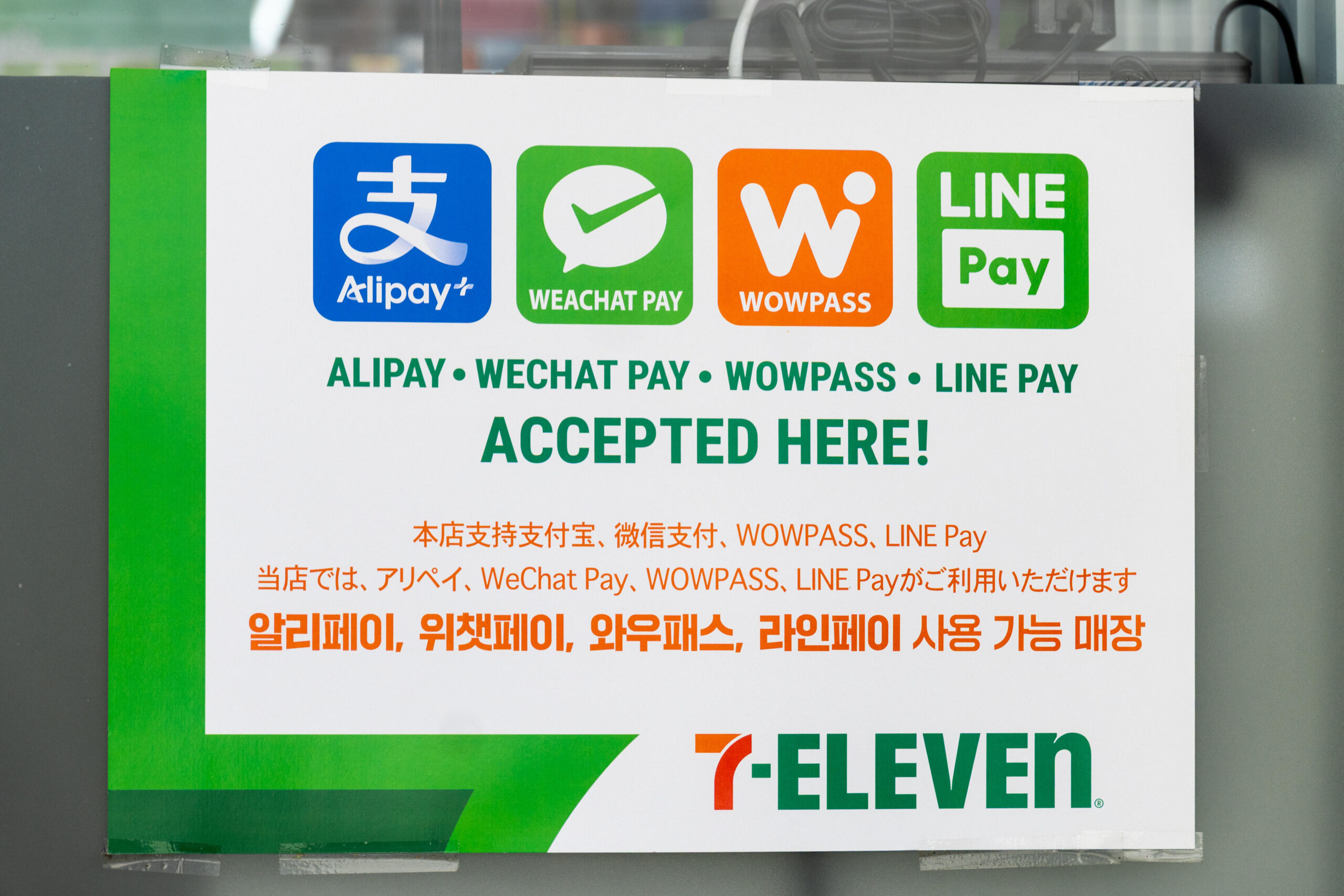
Image: A shop sign in Seoul, South Korea, displays accepted digital payment methods, including Alipay, WeChat Pay, Wowpass, and Line Pay. Source: DPA/Picture Alliance.