

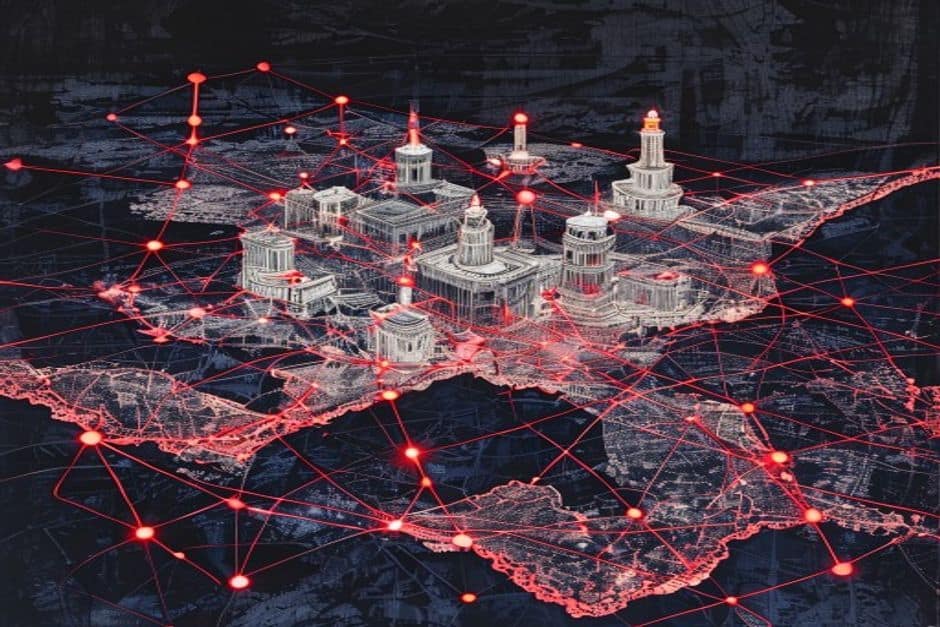
A Reuters investigation has found that Nobitex, Iran’s largest cryptocurrency exchange with more than 11 million users, processed up to $11 billion in transactions including flows linked by blockchain analytics firms to the Iranian central bank and the IRGC, raising serious questions about whether consumer crypto platforms can function as shadow financial infrastructure inside sanctioned economies.
Nobitex presents itself as a straightforward consumer exchange, a place where ordinary Iranians can buy, sell, and hold digital assets. What Reuters found beneath that presentation is considerably more complicated. The exchange was founded by Ali and Mohammad Kharrazi, brothers from one of the most influential families in Iran, a detail that immediately complicates the narrative of an independent fintech startup operating at arm’s length from the country’s political establishment. With 11 million registered users and transaction volumes reaching into the billions, Nobitex is not a marginal operation. It is, by any measure, a significant financial institution, and the question of who benefits from the flows it processes has now become a matter of international regulatory concern.
The transaction data examined by Reuters and cross-referenced against blockchain analytics is the most damaging element of the investigation. Blockchain analytics firms, whose core business is tracing on-chain flows and mapping wallet activity to real-world entities, identified transactions processed through Nobitex that connect to sanctioned Iranian entities including the country’s central bank and the Islamic Revolutionary Guard Corps. Both are subject to comprehensive US sanctions that prohibit financial institutions and exchanges worldwide from facilitating transactions on their behalf. Nobitex’s position is that any such activity occurred without its knowledge and that it does not maintain government ties. That denial may be legally significant, but it does not resolve the underlying compliance question about whether the exchange had adequate controls to detect and prevent the flows that analytics firms have now publicly documented.
The family background of Nobitex’s founders is not incidental context. The Kharrazi name carries specific weight in Iran’s political economy. Kamal Kharrazi, a prominent figure in the family, has served as Iran’s foreign minister and remains a senior adviser to the country’s supreme leader. That kind of proximity to state power does not automatically imply coordination between the exchange and sanctioned entities, but it does raise the question of whether a foreign exchange or financial institution conducting due diligence on Nobitex as a potential counterparty would have had enough public information to proceed cautiously, and whether several that did not proceed cautiously enough will now face scrutiny of their own.
For the global crypto compliance community, the Nobitex investigation arrives at a moment when regulators in the United States, Europe, and the United Kingdom are actively expanding their expectations around sanctions screening for digital asset platforms. The Financial Crimes Enforcement Network and OFAC have both signaled in recent guidance that crypto exchanges are expected to apply the same sanctions compliance rigor as traditional financial institutions, including monitoring for indirect exposure to sanctioned jurisdictions through intermediary wallets and mixing services. The Nobitex case is a live example of exactly the kind of indirect exposure that compliance teams are now required to identify and report.
The $11 billion transaction volume figure also reframes how regulators and policymakers should think about crypto’s role inside sanctioned economies. Iran has faced successive waves of financial sanctions for decades, and each wave has produced adaptive responses from Iranian businesses and institutions seeking to maintain access to international value transfer. The adoption of cryptocurrency, particularly stablecoins and Bitcoin, as a mechanism for circumventing the dollar-denominated financial system has been documented by researchers and intelligence analysts for several years. What the Reuters investigation adds is a specific institutional actor, a named exchange with an identifiable founding family and a verifiable user base, operating at a scale that moves the conversation from theoretical risk to documented reality.
When a startup becomes a geopolitical payment rail
The crypto industry has long pushed back against the characterization of digital assets as a preferred tool for sanctions evasion, and the data on illicit activity as a share of total crypto transaction volume supports a more nuanced view. As blockchain analytics firm Chainalysis has consistently reported, the overwhelming majority of crypto transactions are legitimate, and the pseudonymous but traceable nature of public blockchains makes cryptocurrency less attractive for sustained illicit use than cash or certain traditional financial mechanisms. That general point remains true. It does not, however, prevent a specific exchange operating in a specific jurisdiction from becoming disproportionately important infrastructure for the sanctioned entities that jurisdiction’s government comprises.
That is the Nobitex problem in its clearest form. The exchange is not defined by illicit activity in aggregate. It is implicated by the specific flows that analytics firms have traced to specific sanctioned entities, and by the structural conditions, its founders’ family connections, its home jurisdiction, its scale, and its apparent compliance gaps, that made those flows possible. Those conditions are not unique to Nobitex. They exist wherever a large consumer exchange operates in a sanctioned country without the compliance infrastructure that international regulators now expect as a baseline.
The broader implication for the crypto industry is one that compliance officers at global exchanges should take seriously independent of their own jurisdictional exposure. The tools for tracing on-chain flows to real-world entities are improving rapidly, the regulatory appetite for pursuing sanctions violations in the digital asset space is increasing, and the bar for what constitutes adequate compliance is rising. Exchanges that relied on passive monitoring and after-the-fact denial as their primary sanctions risk management strategy are operating on borrowed time. Nobitex’s situation makes that point with a specificity and a scale that is difficult to set aside.
Also read: The Trump Crypto Empire Is Starting to Show Its Cracks • MoonPay launches a stablecoin Mastercard that lets AI agents spend crypto on behalf of their users • Crypto Twitter turns on Ansem after his Solana exit story collides with a 60 percent price collapse