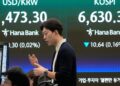

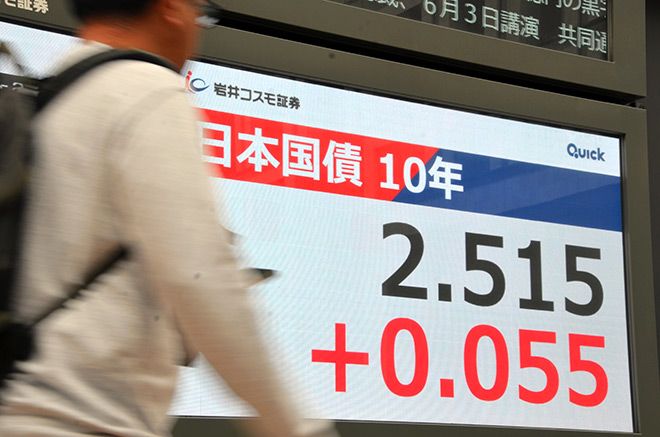
The yield on Japan’s benchmark 10-year government bond hit 2.535 percent in Tokyo on April 30, its highest level in 29 years, while the yen slid beyond the supposed “red line” for currency intervention.
“The time is approaching when we will have to take decisive action,” Finance Minister Satsuki Katayama told reporters, hinting of a possible intervention to prop up the Japanese currency.
“Make sure you don’t let your smartphones out of your sight, whether you’re out and about or on your days off,” she advised.
In the Tokyo foreign exchange market on April 30, the yen weakened by more than 1 yen against the U.S. dollar from the evening of April 28, briefly reaching the 160.70-yen-per-greenback level—its lowest point in about one year and nine months.
The 160 yen-to-the-dollar level is now widely seen as a “red line” for potential intervention by the Japanese government and the Bank of Japan.
The last Japanese intervention in the foreign exchange market was in July 2024, when more than 5.5 trillion yen was used to buy the currency on July 11 and 12.
The weakening yen and a resurgence in crude oil prices amid the Middle East conflict stoked concerns about inflation and fueled the government bond sell-off on April 30.
The yield on the 10-year government bond rose 0.070 percentage point from the previous close to a level unseen since June 1997, according to Japan Bond Trading Co.
With negotiations between the United States and Iran stalled, expectations are growing that the war in the Middle East will be prolonged.
On the New York Mercantile Exchange, West Texas Intermediate (WTI) crude futures, an oil price benchmark, temporarily rose into the $110-per-barrel range on April 30.
The yen sell-off accelerated on expectations that rising oil prices will widen Japan’s trade deficit. Receding hopes for a U.S. interest rate cut also prompted investors to sell the yen for the dollar.
Higher oil prices and a weaker yen lead to inflation. This prompted investors concerned about the future value of their holdings to sell bonds or avoid buying them, pushing prices down and yields up.
Back in 1997, the heavily traded 10-year government bond also served as the primary long-term interest rate benchmark.