

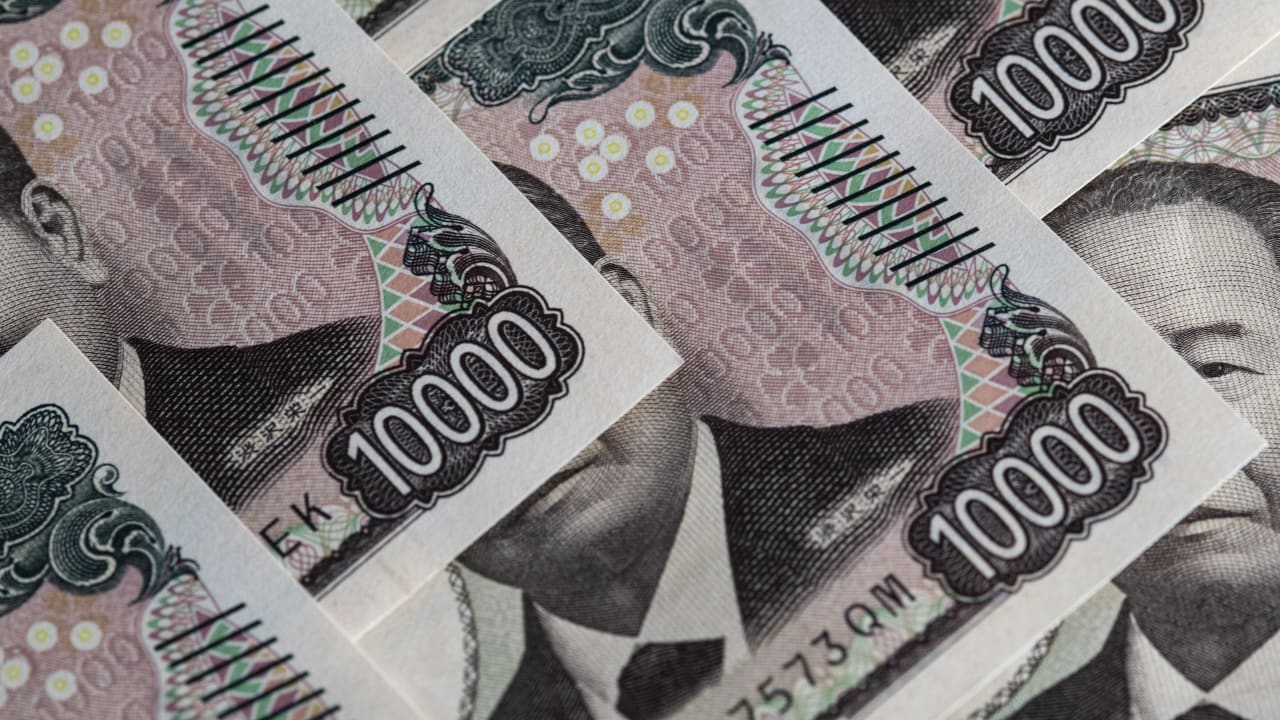
The United States’ rare decision to join Japan in supporting the yen marked more than an attempt to arrest the decline of one of the world’s most heavily traded currencies.
For more stories from The Media Line go to themedialine.org
It also highlighted the depth of the financial relationship between Washington and Tokyo at a moment when the Iran war has increased Japan’s energy costs, strengthened demand for the dollar, and renewed scrutiny of more than $1 trillion in US government debt attributed to Japanese investors.
Japan and the United States conducted coordinated action to support the yen on July 31. Japanese and US officials publicly confirmed the operation on August 3 after the yen had approached its weakest level against the dollar in approximately four decades. The intervention helped the currency gain around 5%, lifting it from nearly 164 yen per dollar to about 155.
By August 11, however, the yen had fallen back to about 159.36 per dollar, surrendering roughly half of that advance. Bank of Japan (BOJ) account data suggested that Tokyo may have spent as much as $58.97 billion on its July 30 intervention. According to media reports cited by Shirai, the US Treasury acted through the Federal Reserve Bank of New York, purchasing yen with euros rather than selling dollars directly.
Buying yen with euros allowed Washington to support the Japanese currency without creating the impression that the United States had embarked on a wider policy of deliberately weakening the dollar.

Why US involvement in the yen intervention matters
Sayuri Shirai, an economics professor at Keio University’s Faculty of Policy Management and a former member of the Bank of Japan’s Policy Board, said Washington’s participation sent a stronger message than action by Tokyo alone.
“Coordinated intervention is likely to exert more persistent upward pressure on the yen than unilateral Japanese intervention, because US participation sends a stronger signal that the yen is substantially undervalued,” she told The Media Line.
“Media reports suggest that the US Treasury intervened through the New York Fed [Federal Reserve Bank of New York] by selling euros and buying yen, rather than selling dollars directly. This may have been intended to support the yen without creating the impression that the United States had begun a broader policy of weakening the dollar,” she explained.
The New York Fed conducts foreign-exchange transactions at the direction of the US Treasury or the Federal Open Market Committee (FOMC). US participation in currency interventions has been uncommon since the mid-1990s, making the decision to support the yen particularly important as a signal to traders betting on further depreciation.
Iran war accelerates an existing yen crisis
The Iran war did not create the yen’s structural weakness. That weakness has been driven primarily by the interest-rate gap between Japan and the United States, Japan’s comparatively loose monetary conditions, and the continued use of the yen to finance investments in higher-yielding foreign assets.
The conflict nevertheless intensified those pressures.
The Federal Reserve Bank of New York said the dollar’s appreciation during the first quarter of 2026 was partly driven by the negative terms-of-trade shock suffered by major energy-importing economies during the US-Iran conflict. The United States, as a net energy exporter, was in a stronger position to absorb the shock than countries heavily dependent on imported fuel.
Japan is particularly exposed. Approximately 95% of its crude-oil imports have come from the Middle East in recent years, and much of that supply normally passes through or is affected by conditions around the Strait of Hormuz.
Japanese authorities responded to the conflict by releasing national oil reserves and seeking alternative supply routes that avoided the strait. The waterway remained largely closed on August 11, when Iran said it would not reopen it unless the United States ended the war and met other conditions, including the release of frozen Iranian assets.
For Japan, higher oil prices and disrupted shipping create several connected problems. Energy imports become more expensive, demand for dollars to pay for those imports increases, and imported inflation places pressure on households and businesses. A weaker yen magnifies the problem because every dollar-denominated barrel costs more in Japanese currency.
Helen Popper, professor of economics and associate dean at Santa Clara University’s Leavey School of Business, said the underlying interest-rate differential remained essential to understanding why the yen had been under sustained pressure.
“When there are high interest rates in the US, people do not want to sit on assets denominated in yen that are earning low interest rates. They want to dump those yen and buy assets that have higher interest rates,” she told The Media Line.
“The carry trade that everyone is talking about is: you borrow yen, change the yen into dollars, take those dollars and buy US assets, wait until they mature, and then trade them back. Hopefully, if you are carrying out the trade, you trade them back without losing too much in the foreign-exchange market. If the interest-rate differentials are not changing, you cannot really expect the yen to strengthen,” she said.
The inflation-adjusted difference between Japanese and US interest rates also continues to favor the dollar.
“The inflation-adjusted interest rate is still higher in the US, by most measures, than the inflation-adjusted interest rate in Japan,” Popper said. “As long as that interest rate is higher in the US, there is going to be upward pressure on the dollar and downward pressure on the yen.”
The war therefore acted as an accelerant rather than the sole cause of the currency crisis. It increased the economic costs of yen depreciation and contributed to the conditions under which Washington decided that intervention was no longer solely a Japanese concern.
Japan’s trillion-dollar connection to US debt
The intervention has also drawn attention to Japan’s role in the US Treasury market.
The latest available US Treasury data show that securities attributed to Japanese holders totaled approximately $1.143 trillion at the end of May 2026, down from about $1.210 trillion in April. Japan remained the largest foreign holder of US Treasury securities.
That figure, however, should not be confused with the amount of US debt directly controlled by the Japanese government or immediately available for currency intervention.
The Treasury International Capital data include securities held by both Japanese official institutions and private investors. They are compiled largely through custodial records and cannot always establish the ultimate owner of securities held through accounts in third countries.
Japan’s official reserves are reported separately. At the end of July, the country held $1.287099 trillion in official reserve assets, including $927.332 billion in foreign-currency securities, according to data released by Japan’s Ministry of Finance on August 7. The monthly data do not identify all those securities individually as US Treasuries.
When Japan intervenes to support the yen, the decision is made by the Ministry of Finance and executed by the Bank of Japan as the ministry’s agent. Dollar funds held in the government’s Foreign Exchange Fund Special Account are used to purchase yen.
The correct distinction is therefore between Japan’s aggregate Treasury holdings, which include a wide range of Japanese investors, and the government-controlled foreign reserves that can be mobilized for intervention.
The concern for Washington is not that Tokyo could casually threaten to sell the entire $1.143 trillion portfolio. Rather, sustained intervention could require the Japanese authorities to liquidate some foreign securities, while higher Japanese yields could encourage private investors to reduce their exposure to US debt over time.
Large sales of Treasury securities could place downward pressure on their prices and upward pressure on US government borrowing costs. But a sudden fire sale would also damage Japan by reducing the value of the securities still held by Japanese investors.
Popper said that mutual exposure made a wholesale liquidation highly improbable.
“They are not going to dump all this in one day, because it would cause them pain. They are still holding Treasuries. If you sell a big chunk, their value falls, and you are still holding a big chunk. For their own purposes, they cannot just dump all their Treasuries and make a fire sale,” she said. “People are saying that the US is worried about a precipitous decline, but a precipitous decline would hurt Japan as well. So I think it is pretty unlikely.”
Foreign monetary authorities that meet the relevant requirements can also use the Federal Reserve’s Foreign and International Monetary Authorities Repo Facility to obtain temporary dollar liquidity against Treasury securities, rather than selling those securities outright into the market.
The facility is intended to reduce the risk that foreign demand for dollars could destabilize Treasury trading.
Why intervention alone may not strengthen the yen
The coordinated operation can deter traders from aggressively betting against the yen and signal that both governments regard its depreciation as excessive. Its longer-term effect will nevertheless depend on whether monetary conditions change.
Popper said intervention can be useful when war or another shock disrupts market liquidity, but evidence of a lasting impact remains limited.
“Intervention is sometimes done in a situation like when there is a Middle East war outbreak, and everything is uncertain. Central banks will come in, reduce the bid-ask spread and do trades to address liquidity issues,” she explained. “But there is not very much evidence that intervention has any sustained effect, even when it is concerted, meaning it involves more than one central bank, and they do it in concert.”
She compared attempts to permanently alter an exchange rate without changing monetary policy to trying to change the water level in one section of an ocean: “You are trying to change the level in one bay, but you still have the whole ocean out there. The intervention they are doing is like getting a bunch of buckets and soaking up this bay, but you still have this whole ocean of yen, dollars and euros out there.”
The only way countries really change their exchange rate, she said, is by changing their domestic monetary conditions.
For Japan, this places attention back on the Bank of Japan and whether it will increase interest rates. A rate rise could narrow the gap with US yields, make yen-denominated assets more attractive and raise the cost of maintaining carry-trade positions.
Shirai said the coordinated operation was likely to increase expectations of monetary tightening.
“The intervention therefore strengthens expectations that the BOJ could raise rates, possibly as early as September, because intervention alone is unlikely to produce a durable appreciation of the yen.”
She said that US participation places greater pressure on the BOJ than unilateral intervention by Japan would have done, although the BOJ will continue to justify any rate increase primarily in terms of domestic inflation and economic conditions.
But the central bank must balance support for the currency against the risks of tightening monetary policy in a highly indebted economy. Higher interest rates would increase government financing costs and could weaken domestic demand, even as imported inflation creates an argument for tighter policy.
The limits of official intervention may therefore become apparent quickly.
“However, if markets conclude that further coordinated intervention will be limited, attention will shift quickly back to the Bank of Japan and the outlook for interest rates,” Shirai said.
A powerful signal, but not a permanent solution
Further intervention remains possible if the yen again experiences disorderly depreciation, particularly if renewed disruption around Hormuz causes another rise in energy prices or strengthens demand for the dollar.
Repeated action would nevertheless carry wider risks.
“Further intervention cannot be ruled out, but it is likely to remain limited,” Shirai said. “Repeated official attempts to correct the perceived misalignment of major currencies could destabilize international currency markets and weaken confidence in the international monetary system.”
Washington’s decision to participate bought Japan time and raised the potential cost for investors continuing to bet against the yen. It also demonstrated that Japan’s currency stability, energy dependence and position in the Treasury market are no longer separate issues.
The Iran war intensified the pressure by raising the cost of Japan’s imported energy and strengthening the dollar against major energy-importing currencies. Japan’s interest-rate policy and the US-Japan yield gap, however, remain the fundamental forces determining whether the yen can sustain its recovery.
Coordinated intervention can alter market expectations and slow a rapid sell-off, but it is unlikely to produce a durable reversal unless the underlying monetary and economic conditions also change.