

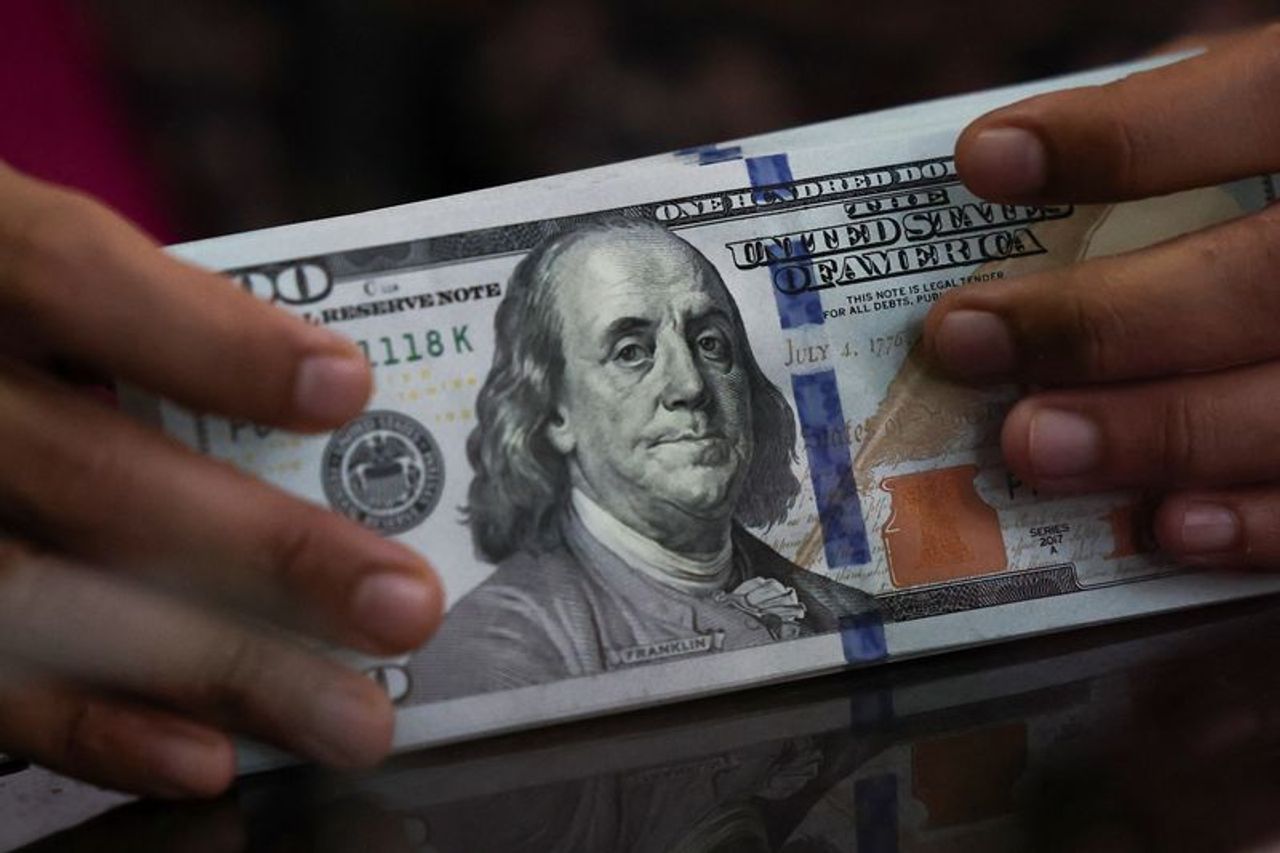
The rouble has steadily strengthened over the past two months, becoming the world’s best-performing currency against the dollar, according to Bloomberg.
On 20 March, the dollar was worth more than 86 roubles, whereas it is now trading at around 71. The dollar has not traded at such a low level since spring 2023.
As experts explain, several factors that coincided in time played a role.
Firstly, the conflict in the Middle East and the blockade of the Strait of Hormuz drove up oil prices, including those for Russian Urals crude. While it cost $44 per barrel in February, it reached $94 in April.
As a result, exporters experienced a significant increase in foreign exchange earnings.
Moreover, experts explain that this revenue enters the market with a time lag of approximately one and a half months.
In other words, the market is now processing March’s volumes, when the conflict in the Middle East was just flaring up.
As a result, a simple formula worked: oil prices rose and the rouble strengthened.
Secondly, in March, the Russian Ministry of Finance suspended operations under the budget rule until July 1.
Related
However, it returned to the market earlier. In May, the ministry resumed purchasing foreign currency.
But the volume of purchases was small—1.2 billion rouble per day. The government’s limited demand did not curb the rouble’s appreciation.
Incidentally, the Ministry of Finance previously discussed revising the budget rule to adjust the oil cutoff price. When the price is above the target, the Ministry of Finance buys foreign currency. These funds are channelled into the National Welfare Fund, a financial safety net.
If the cut-off price is lower, funds from the “piggy bank” are used to offset the loss of budget revenue.
Therefore, the Ministry of Finance planned to lower this mark from the current $59, since Urals was trading below it. But then the conflict between the US and Iran erupted, and the price of black gold skyrocketed.
Experts note that the rouble’s performance will depend on developments in the Middle East.
If there is an escalation and oil prices rise, the rouble will strengthen further.
Furthermore, structural factors influence the Russian currency’s exchange rate. “The high key rate is holding back lending and imports, and the rouble’s share of settlements has reached almost 60 percent,” Igor Rastorguev, an analyst at Amarkets, tells TRT in Russian.
Buying up ‘greenbacks’
However, there are two sides to the coin. The lucrative status of “the world’s best currency in terms of performance against the dollar” conceals a harsh reality.
“The Russian budget is losing 100-150 billion rouble’s a month. Exporters are forced to scale back their investment programmes,” a source who wishes to remain anonymous, tells TRT Russian.
But there are also those who benefit from the rouble’s strengthening. Among those who benefited were importers, IT companies with foreign-currency expenditure, and retailers.
A strong rouble means, first and foremost, cheap imports. Inflation is slowing. For example, in April, it was 5.7 percent.