
Columns
Despite record exports and a vast current account surplus, policy inconsistency, excess liquidity and semiconductor dependence are weighing on the won.
Kim Jung-sik
The author is a professor emeritus of economics at Yonsei University and former president of the Korean Economic Association and the Korea International Economic Association.
One of the Korean economy’s biggest puzzles is why the won remains under depreciation pressure despite a substantial current account surplus and improving growth. Normally, these conditions should strengthen the currency.
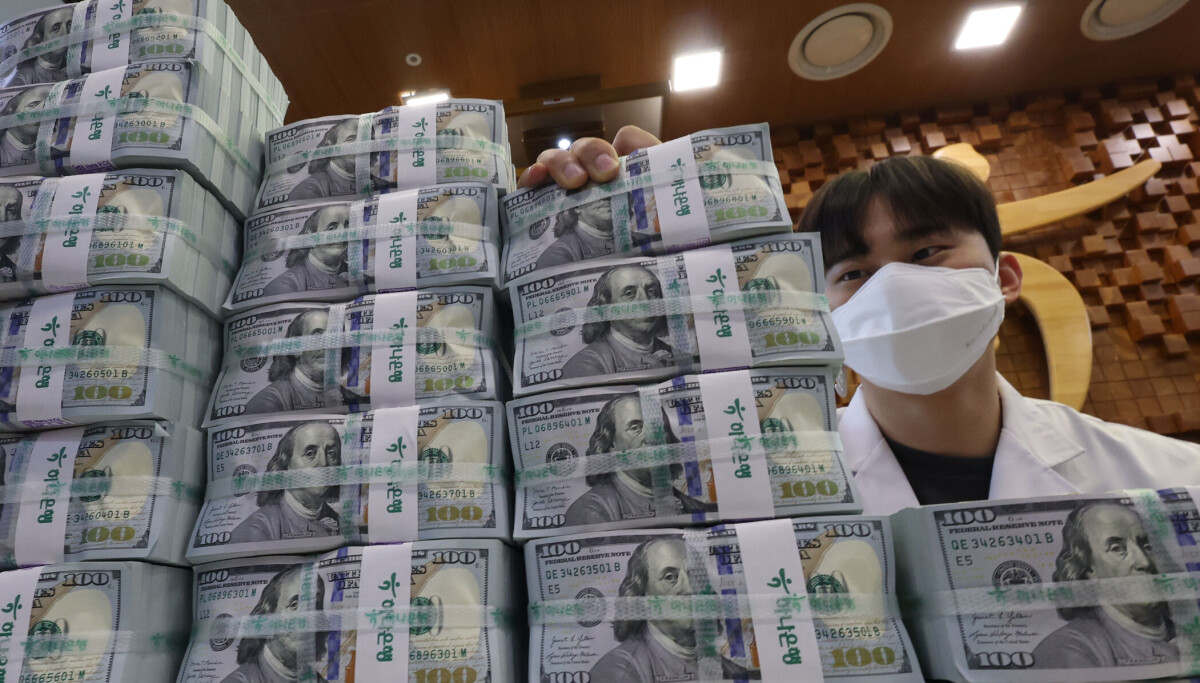
Semiconductor demand pushed September exports to a record $120 billion, up 83.5 percent on year, putting annual exports of $1 trillion within reach. The Bank of Korea raised its growth forecast to 3.3 percent and projected a $450 billion current account surplus, approaching 20 percent of GDP.
Yet the exchange rate remains volatile. SK Hynix’s issuance of American depositary receipts increased dollar supply, temporarily strengthening the won to around 1,340 per dollar.
External factors include dollar strength, yen weakness, rising oil prices and increased Korean investment overseas. Expectations of annual $20 billion investments in the United States have also increased dollar demand. But these factors alone cannot explain the exchange rate’s behavior.
Domestic vulnerabilities deserve greater attention.
First, Korea depends excessively on semiconductor exports, particularly those driven by U.S. investment in AI. A U.S. downturn could severely damage Korean exports and the current account.
Meanwhile, Chinese competition has weakened other major industries, including automobiles and petrochemicals. Concerns about the sustainability of export growth are putting pressure on the won.
Second, contradictory monetary and fiscal policies are contributing to instability. Korea, the United States and Japan are combining monetary tightening to contain inflation with fiscal expansion to stimulate growth.
This combination can produce both high interest rates and excessive liquidity. Central banks seek to absorb liquidity through higher rates, while governments issue more bonds to finance spending.
Korea’s proposed budget increases spending by a record 12.8 percent. Government debt is projected to reach 1.7 quadrillion won ($1.27 trillion) by 2030. Even with stronger semiconductor-related tax revenues, fiscal expansion risks increasing inflation expectations and weakening the currency.
Large current account surpluses can also increase liquidity. During the late-1980s boom, characterized by low interest rates, exchange rates and oil prices, surpluses contributed to sharp increases in property and stock prices.
Although monetary authorities can absorb excess liquidity by issuing monetary stabilization bonds, substantial surpluses still inject money into the economy through multiple channels.
Third, inconsistent policies have undermined confidence. Frequent changes to real estate regulations and taxation, sometimes applied retroactively, discourage domestic investment and encourage capital outflows.
Expectations of won depreciation can also prompt investors to substitute dollars for domestic currency. The potential expansion of dollar-denominated stablecoins could intensify exchange rate volatility.
Addressing these vulnerabilities requires coordinated action.
The immediate priority should be reducing excess liquidity and inflation expectations. Housing regulations, lending restrictions and tax reforms cannot permanently stabilize property prices if abundant liquidity continues eroding money’s purchasing power.
The government must restrain excessive spending, while monetary authorities should manage liquidity generated by current account surpluses through effective interest rate policies.
Financial stability is equally important. Household debt exceeds 2 quadrillion won, reflecting structural problems.
Borrowing for living expenses stems from weak economic conditions and insufficient employment, while mortgage debt reflects elevated housing prices.
Simply tightening lending limits or raising interest rates cannot resolve these underlying problems. Instead, such measures risk increasing defaults and financial distress.
Financial regulators should prioritize reducing delinquency rates rather than restricting aggregate household lending. Stronger domestic demand, competitive industries, job creation and stable housing prices would help achieve a gradual reduction in household debt risks.
Central banks must also avoid abrupt rate increases that could trigger a debt crisis.
Restoring policy credibility is another priority. The government should avoid frequent regulatory changes and retroactive legislation. Predictable policies would encourage domestic investment and reduce demand for dollars as an alternative store of value.
Korea must also diversify its growth engines beyond semiconductors. Fiscal resources should prioritize research and development in emerging industries and training specialized workers rather than politically motivated spending.
New competitive industries could revive growth, attract domestic investment and stabilize the exchange rate.
Improving the business environment is equally essential. Labor regulations, taxation and investment rules should align with international standards.
In an economy with liberalized capital flows, uncompetitive regulations encourage money to leave the country through legal or illegal channels.
Rather than imposing capital controls, which carry substantial costs, policymakers should make domestic investment more attractive. Redirecting investment toward Korea would create jobs and support the won.
The exchange rate remains Korea’s economic Achilles’ heel. Heavy dependence on imported energy and raw materials means depreciation raises import prices, fuels inflation and encourages higher interest rates.
This creates the triple-high trap: high exchange rates, high inflation and high interest rates.
Although depreciation can benefit exporters, it can also undermine confidence, accelerate capital outflows and increase financial crisis risks.
The solution lies in credible policies, disciplined liquidity management and stronger industrial competitiveness. Without these measures, Korea risks remaining trapped in the triple-high economy.