

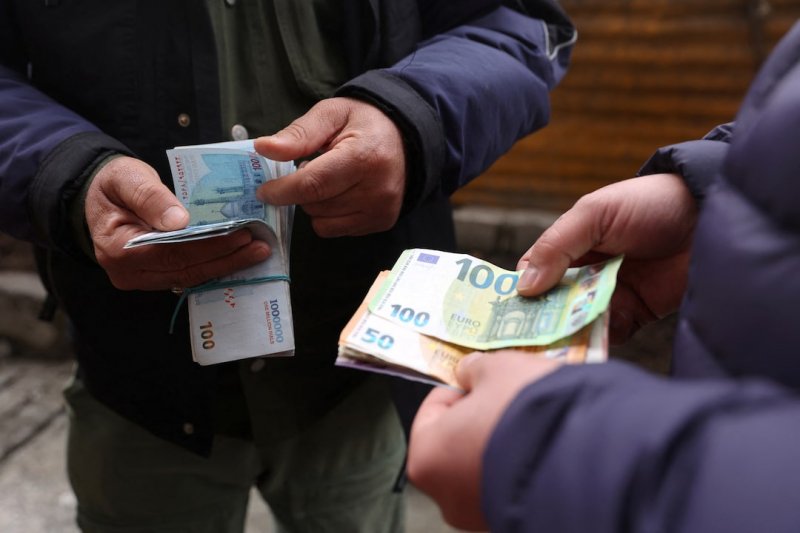
Iran’s central bank is offering up to $2 billion in cash dollars to the public to curb the rial’s decline, prompting debate over whether the move can support the currency or deplete the country’s limited foreign-exchange reserves.
The dollar traded at nearly 2.7 million rials on Tuesday, after crossing the psychologically important threshold of 2.5 million last week, despite repeated efforts by authorities to contain the currency’s decline, Iran International reported.
Central Bank Governor Abdolnaser Hemmati said Monday that the bank would take whatever measures it deemed necessary to manage the foreign exchange market.
The central bank announced on Sept. 30 that it would offer up to $2 billion in banknotes at a rate below the free-market price, beginning with $1 billion sold through selected banks and bank-affiliated exchange offices. Individuals can buy up to $10,000.
The rial’s decline has intensified public anxiety over the cost of living and the value of savings. Iranian news sites now routinely publish daily prices not only for currencies, gold and cars but even staples such as meat.
‘Structural problems’
Economists have questioned whether selling dollars can have more than a temporary effect while the forces driving the currency’s decline remain unchanged.
Kamran Nadari, an economist and university professor, told Rokna that the intervention could temporarily stabilize the exchange rate if its purpose was to meet speculative demand.
“The main problems in the foreign exchange market are declining foreign currency revenues, difficulties in transferring money and sanctions,” Nadari said. “Selling banknotes cannot solve these structural problems.”
He also warned that selling dollars below the free-market rate creates an opportunity for arbitrage, allowing buyers to obtain currency from the central bank and resell it for a profit.
“As a result, part of these $2 billion could go toward speculation and arbitrage rather than meeting genuine demand,” he said.