
The Bank of Mozambique is preparing new measures to reinforce transparency in the foreign exchange market and stimulate financing for domestic production, at a time when the economy remains exposed to internal and external shocks and faces investment constraints.
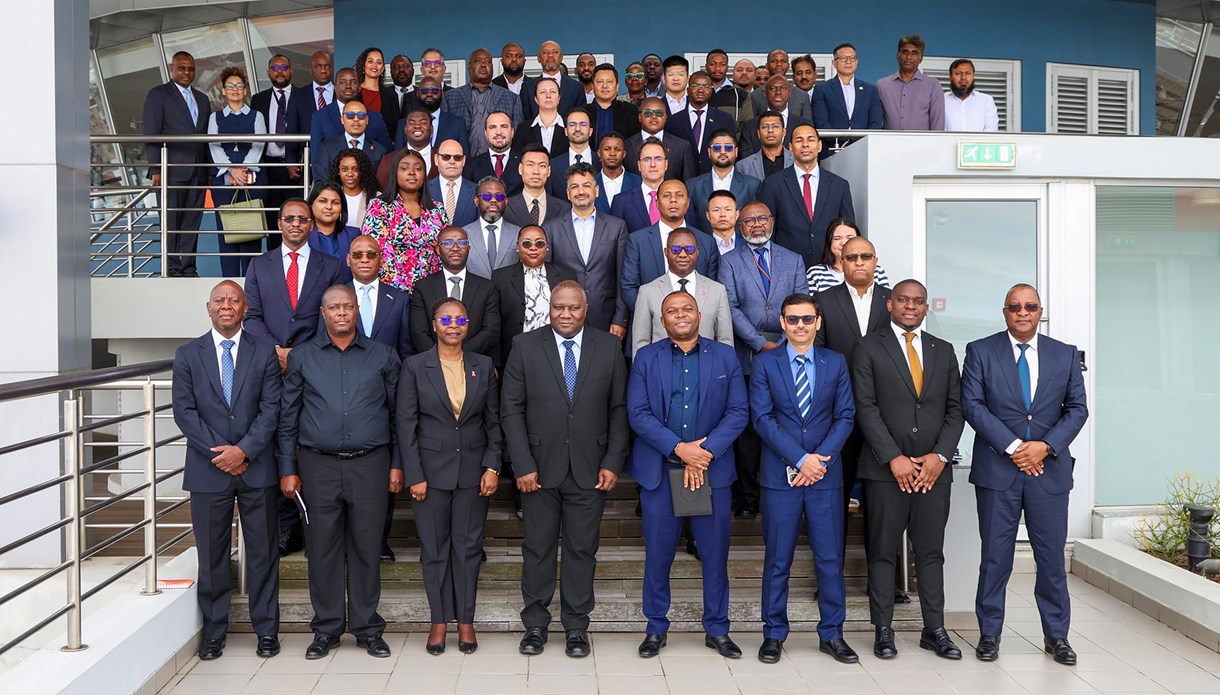
The announcement was made this week by the Governor of the Bank of Mozambique, Felisberto Navalha, during a meeting with private sector representatives held at the institution’s headquarters in Maputo.
The gathering served to present approved reforms to economic operators along with others slated to take effect in the short term, notably real-time monitoring of the foreign exchange market and a new financing mechanism oriented toward domestic production.
One of the main developments presented by Navalha concerns the operation of the foreign exchange market.
The Governor recognized the presence of information asymmetries and operational incongruities in the market’s current functioning—factors that, as he explained, justify an intervention designed to enhance transparency and efficiency.
In this context, the monetary authority is set to implement, in the short term, a platform capable of enabling real-time monitoring of the foreign exchange market.
The tool is expected to provide greater supervisory capability and access to transaction data, aiming to improve market transparency and reduce information asymmetries among various economic agents.
The measure comes at a moment when foreign exchange market behavior continues to exert a direct impact on businesses, particularly through foreign currency availability, import costs, and the predictability necessary for business planning.
In the financing domain, the Bank of Mozambique is likewise introducing mechanisms designed to channel resources toward sectors considered strategic for the economy.
On September 30, the Monetary Policy Committee approved a temporary mandatory reserve requirement regime allowing credit institutions to deduct, from their domestic currency reserve requirement component, new loans granted for import substitution and export expansion.
For these loans, the MIMO policy rate will apply, plus a maximum margin of 150 basis points, depending on the loan’s purpose.
The measure aims to create conditions for the financial system to gain greater flexibility in funding companies involved in producing goods capable of replacing imported products or contributing to export growth.
However, Navalha placed part of the initiative’s success on the private sector itself.
The Governor urged enterprises to boost productivity, diversify their production base, and, above all, familiarize themselves with and utilize the financing framework made available by the Bank of Mozambique.
Despite the focus on exchange rate reforms and economic financing support, the Bank of Mozambique maintains price stability as one of its top priorities.
For the central bank chief, price stability creates conditions of greater predictability for price formation, investment planning, and corporate financing decisions.
This position reflects the monetary authority’s concern over the adverse impacts that economic instability can produce on households and businesses, particularly in a context marked by successive internal and external shocks.
According to the Governor, these shocks have constrained economic activity, heightened uncertainty, and limited investment capacity across productive sectors.
Another measure presented during the meeting involves the use of bank cards for overseas payments. A monitoring center tracking bank card usage for international payments has already entered into operation, created with the objective of fostering greater discipline in the use of these instruments.
The center will allow the consolidation and dissemination of information regarding foreign bank card usage by individual holder, regardless of the credit institution that issued the card.
The initiative strengthens oversight of transactions executed abroad and adds an additional layer of monitoring to the financial system.
The Governor argued that this type of engagement enables economic policymakers to better understand the impact of macroeconomic conditions on businesses, identify obstacles to investment and output expansion, and detect growth opportunities.
“This platform for dialogue is thus an opportunity to deepen that understanding and reinforce our joint commitment to macroeconomic stability and the country’s sustainable growth,” he stated.
On the business side, participants welcomed the openness demonstrated by the Bank of Mozambique and expressed readiness to collaborate in operationalizing the ongoing reforms.
Source: AIM