

Receiving money from abroad does not automatically mean you have to pay UK tax. What matters is what the money represents and your UK tax status.
If you’re a UK tax resident, foreign income such as salary, freelance earnings, business income, interest, dividends or rental income may be taxable in the UK. By contrast, transferring your own savings or receiving a genuine personal gift is generally not treated as taxable income.
From 6 April 2025, UK residents are generally taxed on worldwide income and gains as they arise. The FIG regime provides relief for qualifying new residents during their first four years of UK residence after at least 10 consecutive tax years of non-UK residence.
This guide explains when money received from abroad may be taxable, what the current UK rules mean for individuals and businesses, and how to manage international payments efficiently.
This article provides general information and is not tax advice. Tax treatment depends on your individual circumstances. For specific tax questions, check the latest guidance from HMRC or speak to a qualified tax adviser.
Key takeaways
- Receiving money from abroad does not automatically mean you owe UK tax: The tax treatment depends on what the payment represents and your UK tax status.
- UK tax residence matters: UK residents normally pay UK tax on foreign income, subject to applicable rules and reliefs. The Statutory Residence Test determines whether you’re a UK resident for tax purposes.
- The type of payment matters: Freelance income, business revenue, dividends, interest and rental income can have different tax treatment from your own savings, genuine gifts or loan repayments.
- Foreign tax may qualify for UK tax relief: If the same income is taxed in another country and the UK, you may be able to claim Foreign Tax Credit Relief or another form of relief, depending on the circumstances.
- The rules changed from 6 April 2025: UK residents are generally taxed on worldwide income and gains as they arise. The FIG regime provides relief for qualifying new residents for their first four years of UK residence after at least 10 consecutive tax years of non-UK residence.
- Managing FX costs can help protect your margins: Tax rules are unavoidable, but you can still manage the cost of converting overseas revenue. WorldFirst lets businesses receive and hold 20+ currencies and convert funds when needed, with a clearly stated FX markup.
Do I have to pay tax if I receive money from abroad? The short answer
Not necessarily. Receiving money from abroad does not automatically create a UK tax charge. The tax treatment depends on what the money represents and your UK tax status.
If you’re a UK tax resident, foreign income may be taxable in the UK. Transfers of your own savings and genuine gifts are treated differently.
The most important principles of taxing money from abroad
Understanding how foreign payments are taxed starts with the basics. These principles set the framework for deciding if a transfer counts as taxable income or not:
1. Residency defines your tax scope
Your UK tax residence is one of the first things to consider when working out whether foreign income is taxable in the UK.
If you’re a UK tax resident, you’ll normally pay UK tax on your income from the UK and abroad. If you’re not a UK resident, you generally won’t pay UK tax on your foreign income, although UK tax can still apply to income from the UK.
Your residence status is determined under the UK’s Statutory Residence Test. It considers factors such as how many days you spend in the UK, whether you meet certain automatic residence tests and, in some cases, your connections to the UK.
Your tax residence can also change from one tax year to another, so check your status for the relevant tax year before deciding how your foreign income should be treated.
2. Source determines jurisdictional claim
The country where the money originates (the “source country”) can tax certain income types before the funds leave, even when your resident country already taxes them.
For example, many countries impose withholding taxes on dividends, interest, and royalties paid to non-residents.
Under tax treaties, the source country’s withholding rate is often capped depending on the type of income and the treaty provisions. The resident country may then provide tax relief to reduce double taxation. In the UK, Foreign Tax Credit Relief may be available when qualifying foreign tax has already been paid on income or gains that are also taxable in the UK.
It’s also worth noting that “source” isn’t always literal. The rules for determining where income arises can vary depending on the type of income and the applicable tax treaty.
3. Character and purpose of the funds
A salary payment, dividend and loan repayment may all look the same when they reach your account, but their tax treatment can be very different.
- Income from work or business: Salary, freelance payments and business revenue may be taxable in your country of residence. Foreign tax paid on the same income may qualify for relief, depending on the relevant rules.
- Investment income: Dividends, interest, rental income and capital gains can have different tax treatment. The country where the income arises may also deduct tax at source. Your country of residence may then tax the income and provide relief for qualifying foreign tax already paid.
- Gifts, loans and inheritances: A genuine loan repayment is generally not income for the recipient. Gifts and inheritances may also fall outside Income Tax, but separate gift, estate or inheritance tax rules can apply depending on the country and circumstances.
What if I’m a freelancer receiving money from abroad?
If you’re self-employed and receive payments from overseas clients, those payments can count as trading income for UK tax purposes. HMRC’s £1,000 trading allowance may apply to qualifying trading income.
From 6 April 2026, Making Tax Digital (MTD) for Income Tax applies to sole traders and landlords with qualifying income above £50,000 for the 2024-25 tax year. Qualifying income is total self-employment and property income before expenses, so self-employment income from overseas clients that is included on your UK Self Assessment return can count towards the threshold.
The threshold falls to £30,000 from 6 April 2027 and £20,000 from 6 April 2028. If you need to use MTD, you’ll need to keep digital records and send quarterly updates.
5 most common scenarios for businesses receiving money from abroad
Cross-border receipts come in various forms, each carrying distinct tax and compliance implications:
1. Revenue from overseas customers
If you receive payments from overseas customers, the tax treatment depends on your tax residence, business structure, the type of income and the countries involved.
The country where the customer is based may also tax certain types of payments, such as royalties or interest. Tax treaties can determine which country has taxing rights and whether relief is available when the same income is taxed in more than one country.
You may also need to consider indirect taxes such as VAT or GST. The rules depend on what you sell, where your customer is based, and whether the customer is a business or individual. For UK businesses, HMRC’s place-of-supply rules determine how VAT applies to different types of cross-border sales and services.
What to do:
- Check how your tax residence and business structure affect your overseas income.
- Check whether the customer’s country can tax the payment and whether a tax treaty applies.
- Check the relevant VAT, GST or other indirect tax rules for your goods or services.
- Keep invoices, contracts and payment records for your international transactions.
2. Marketplace payouts and platform settlements
When your business receives a payout from a marketplace or payment platform such as Amazon, Etsy, Shopify or Stripe, the payment usually represents the settlement of your underlying sales. The payout itself is not a separate type of income.
For tax purposes, you generally need to account for the underlying sales and relevant business expenses, including platform fees, refunds and other allowable costs.
Platforms may collect certain taxes on your behalf in some markets, but this does not necessarily remove your own tax or reporting obligations. The rules depend on the platform, what you sell, where your customers are based and the countries involved.
What to do:
- Record your underlying sales rather than treating each platform payout as separate income.
- Reconcile marketplace statements with your accounting records, including fees and refunds.
- Check which taxes the platform has collected and which remain your responsibility.
- Keep invoices, marketplace statements and payment records.
3. Supplier refunds, rebates and incentives
Money received from an overseas supplier as a refund, rebate or incentive does not automatically count as new income.
The tax and accounting treatment depends on why the payment was made. A rebate linked to the cost of goods may reduce the cost of those purchases, while a payment for a separate service or promotional activity may be treated differently.
Keep supplier agreements, invoices, credit notes and payment records so you can support how the payment was treated in your accounts and tax return.
4. Reporting and compliance traps to watch
Receiving money from abroad can create reporting obligations, depending on what the payment represents and your tax position.
UK-resident companies generally pay Corporation Tax on their profits from the UK and abroad and report their taxable profits through a Company Tax Return.
If foreign tax has already been paid on the same income or gains, relief may be available under the relevant UK rules.
5. AML and “source of funds” obligations
Receiving money from abroad may also trigger compliance checks from your bank or payment provider. These checks are separate from tax.
A provider may ask you to explain where the money came from and why you received it, particularly where a transaction is unusual, complex or higher risk. The FCA describes “source of funds” as the origin of the money involved in a transaction.
For businesses, keep documents such as invoices, contracts, payment records and shipping documents that can help show the source and purpose of international payments.
How WorldFirst supports businesses in cross-border payments
Once you understand how your overseas income is treated for tax, the next step is managing those international payments efficiently.
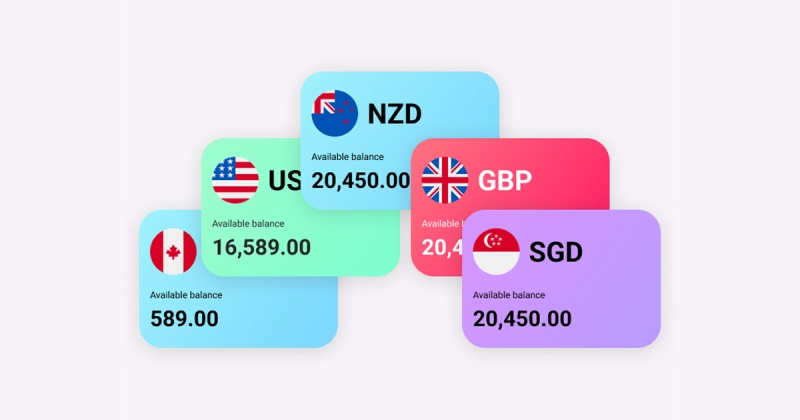
WorldFirst’s World Account lets businesses receive, hold and pay in multiple currencies. You can collect payments from overseas customers and marketplaces, keep funds in supported currencies and use them to pay international suppliers.
With WorldFirst, businesses can:
- Receive: Collect business payments in 20+ currencies with no receiving fees.
- Hold: Keep funds in 20+ currencies and convert them when needed.
- Pay: Send payments to 200+ countries in 100+ currencies.
- Manage: Track incoming and outgoing payments, move funds between currency balances and connect with accounting software for reconciliation.
- Manage FX costs: Convert currencies with an FX markup applied to the mid-market rate. Current UK pricing lists currency conversion at up to 0.50%, depending on the currency and transaction.
- Spend: Use the World Card for eligible business expenses, with up to 1.2% uncapped cashback on eligible spend. When paying in 15 supported major currencies from a matching World Account balance, no FX fees apply.
- Support e-commerce sales: Connect with 130+ marketplaces and payment gateways to receive and manage international e-commerce payments in one place.
Real-world examples:
- Bull Doza Fight Wear, a UK-based brand, used WorldFirst to obtain local bank details in multiple markets. This cut their international launch times by three to six months, accelerating growth.
- Wild & Stone: A UK-based sustainable brand used WorldFirst to manage international marketplace payouts and supplier payments as it expanded globally.
Open a World Account today and make global payments simpler, faster and more affordable.
FAQs
1. Do I have to pay tax on money transferred from overseas to the UK?
Not necessarily. A transfer itself does not automatically create a UK tax charge. If you’re a UK tax resident, foreign income may be taxable, while transferring your own savings is treated differently.
2. Are international money transfers taxed?
Not automatically. The tax treatment depends on what the money represents and your UK tax status. Your own savings or a genuine gift can be treated differently from overseas income, such as freelance or business earnings. If you’ve already paid qualifying foreign tax, you may be able to claim relief in the UK.
3. What happens if I receive money from abroad?
Your bank or payment provider may ask about the source or purpose of an international payment. For tax, the treatment depends on what the money represents and your UK tax status. Foreign income may need to be reported to HMRC, while your own savings or genuine gifts can have different tax treatment.
4. How much money can I receive from abroad?
There is no general UK tax limit on how much you can receive or transfer by bank transfer. The tax treatment depends on what the payment represents. If you’re carrying £10,000 or more in cash into or out of Great Britain, you must declare it to UK customs. In Northern Ireland, the threshold is €10,000 or more, including when arriving from Great Britain, and family or group totals count.
5. Do I have to report foreign income to HMRC?
If you’re a UK resident, you usually need to report foreign income or gains through Self Assessment, although some exceptions apply. If you do not normally file a tax return, you generally need to tell HMRC by 5 October following the tax year in which you had the income.