
By Uche Usim
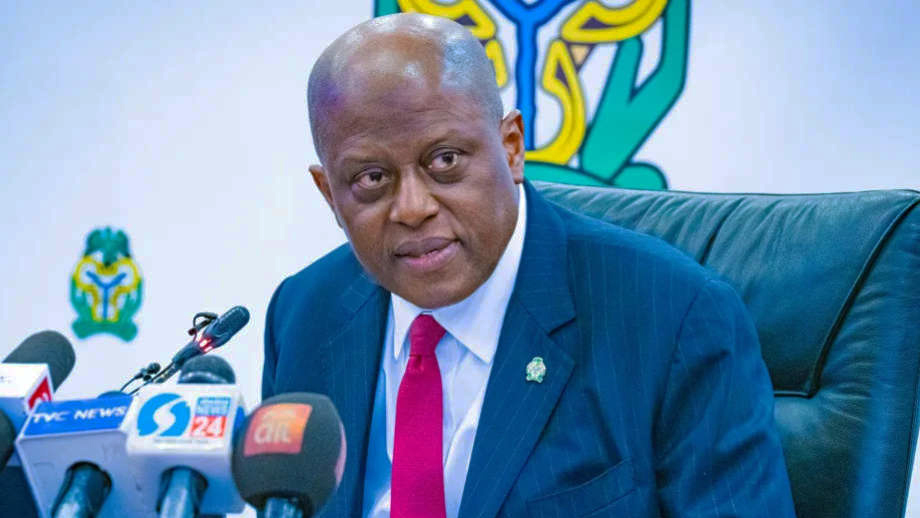
Nigeria’s financial ecosystem was sailing through a tempest when Olayemi Cardoso took over as Governor of the Central Bank of Nigeria (CBN) on September 22, 2023.
The naira was tumbling in the foreign exchange market, prices of goods were rising, households and businesses were feeling the squeeze and banks faced tremendous pressure to strengthen their financial base.
At the same time, concerns about the transparency and effectiveness of some areas of the financial system had weakened confidence.
Cardoso, therefore, had his job automatically cut out for him.
He needed to hurriedly sail the nation’s monetary policy wing from troubled to calmer waters.
He had to tackle several problems at once; from stabilising the naira and controlling inflation to strengthening banks and restoring confidence in the financial system.
Nearly three years later, financial experts and other stakeholders say the apex bank’s reform programme has produced appreciable changes across banking, foreign exchange, payments, consumer protection, financial markets and external reserves.
However, it must be hurriedly stated that the reforms do not mean that all of Nigeria’s economic problems have disappeared.
In fact, Nigerians still contend with high living costs, while businesses continue to complain about financing costs and other operating challenges threatening to cripple them.
But beneath these difficulties, the apex bank has been making changes designed to strengthen the financial system and make it more transparent, better regulated and more capable of supporting economic growth.
President Bola Tinubu has publicly commended Cardoso’s leadership of the CBN, while international recognition has also followed, including the Central Bank of the Year Award by Central Banking, London.
The story of the Cardoso years is, therefore, less about one single policy and more about a series of reforms that have gradually changed the way the CBN manages banks, foreign exchange, payments, financial markets and Nigeria’s reserves.
Rebuilding the banks from the inside
One of the biggest milestones came on March 31, 2026, when the CBN concluded the latest banking recapitalisation exercise.
In simple terms, recapitalisation means requiring banks to have more financial strength of their own so they can withstand losses, support bigger businesses and continue lending during difficult economic periods.
The exercise saw 33 banks meet the revised minimum capital requirements, raising about N4.65 trillion in fresh capital. About 72.55 per cent of the funds came from domestic sources.
For experts, the significance goes beyond the amount of money raised and that is because a bank with a stronger capital base has a bigger cushion against unexpected losses. It is also better placed to finance major projects and businesses without putting its own survival at risk.
The CBN also introduced new succession requirements in September 2025 for Domestic Systemically Important Banks or DSIBs.
These are banks whose size and importance mean that serious problems in them could affect the wider financial system.
The succession rules are designed to ensure that when a chief executive leaves, the bank does not suddenly find itself without a credible leadership structure.
Another development came in February 2026, when the CBN approved the Bank of Industry’s Non-Interest Banking Window.
This opened another avenue for businesses and individuals who want financing based on non-interest banking principles, potentially widening access to finance.
Tackling distortions in the foreign exchange market
Perhaps no area has attracted as much public attention during Cardoso’s tenure as the foreign exchange market.
The CBN has introduced several measures aimed at making the market more transparent and allowing demand and supply to play a greater role in determining exchange rates.
On May 15, 2026, the apex bank launched the fourth edition of its Foreign Exchange Manual.
The manual provides clearer rules for how foreign exchange transactions should be conducted, with the stated aim of improving transparency, efficiency and credibility.
The CBN also reformed the operations of Bureau de Change operators, commonly known as BDCs.
Licensed BDCs were given structured access to foreign exchange through authorised dealer banks, while the FX BDC Purchase Tracker was introduced to improve monitoring and compliance.
The idea is straightforward: the authorities want to know who is buying foreign exchange, how much is being bought and how transactions are being conducted.
The CBN also changed rules governing oil companies’ export proceeds.
On March 25, 2026, International Oil Companies were permitted to repatriate 100 per cent of their export proceeds through authorised dealer banks.
For the CBN, the measure was part of efforts to liberalise the foreign exchange market and improve the flow of foreign currency through the formal banking system.
The remittance market also came under reform.
On March 24, 2026, new naira-settlement requirements were introduced for International Money Transfer Operators.
The objective was to make remittance flows easier to trace and improve transparency in a market that is important to Nigeria because millions of dollars enter the country from Nigerians living abroad.
The CBN also strengthened monitoring of crude-oil export proceeds by allocating additional export terminals for monitoring and compliance.
Moving Nigeria towards a safer digital payments system
Nigeria’s payments system has changed dramatically over the years, with millions of transactions now taking place electronically through bank transfers, mobile channels, cards and Point-of-Sale terminals.
But rapid digital growth has also created new risks, particularly fraud and cybercrime.
The CBN has therefore placed payments-system security at the centre of its reforms.
The Payments System Vision 2028, formally launched on June 1, 2026, is the latest roadmap.
Its pillars include interoperability, security, financial inclusion, innovation, trust and collaboration.
In layman’s terms, the aim is to make it easier for different payment platforms to work together while ensuring that transactions are safe and reliable.
The CBN had earlier inaugurated the PSV 2028 Project Committee on September 9, 2025.
Agent banking has also received tighter regulation.
Under revised guidelines issued on October 6, 2025, banks and other financial institutions were required to strengthen consumer protection, agent supervision, transaction controls and location requirements.
This is particularly important because agent banking has become a major way through which Nigerians in communities without traditional bank branches access financial services.
The CBN has also introduced measures around PoS geo-fencing and dual connectivity.
These are technical measures, but their practical purpose is simple: to make PoS transactions easier to trace and more reliable.
From July 1, 2026, customers also received greater control over instant-payment preferences and transaction limits, alongside stronger device authentication, identity verification and real-time fraud monitoring.
Fighting fraud and protecting bank customers
As banking becomes increasingly digital, the nature of financial crime is changing.
The CBN has therefore been tightening the rules around fraud prevention and cybersecurity.
On March 12, 2026, the apex bank strengthened the Bank Verification Number and watchlist framework.
The BVN remains one of the major tools for establishing the identity of bank customers, while watchlist controls help financial institutions identify people or accounts associated with suspicious activities.
On March 30, the CBN deployed a Cybersecurity Self-Assessment Tool to enable regulated institutions to examine their own cyber-defences and identify weaknesses.
The bank also introduced automated standards for anti-money laundering, counter-terrorist financing and counter-proliferation financing on March 10, 2026.
The significance is that financial institutions are being pushed towards real-time monitoring rather than relying entirely on manual checks after suspicious transactions have already occurred.
The CBN has also instructed banks to strengthen rapid-response systems for electronic fraud.
This is critical because the speed at which money moves electronically means that a delay of even a few minutes can make the difference between recovering stolen funds and losing them permanently.
The revised cash policy introduced in December 2025 also changed the way cash transactions are handled.
New cash-withdrawal thresholds were introduced, while restrictions and charges on cash deposits were removed.
The broader objective is to improve cash management while encouraging Nigerians to make greater use of electronic payment channels.
The CBN also directed financial institutions to withdraw misleading or non-compliant advertisements and improve transparency in their communication with customers.
Modernising the machinery of monetary policy
Another less visible but important part of the reforms has been the modernisation of Nigeria’s financial markets.
On April 17, 2026, the CBN introduced the Nigerian Overnight Financing Rate, or NOFR. The NOFR is a transaction-based benchmark designed to give the market a clearer reference point for short-term borrowing costs.
For ordinary Nigerians, the technical language may sound distant. But benchmarks such as NOFR matter because they help determine how changes in monetary policy eventually affect the cost of money in the wider economy.
The CBN has also been strengthening its oversight of fixed-income market trading and settlement infrastructure.
The goal is to make transactions more transparent and efficient and improve the way monetary policy moves through the financial system.
The apex bank has simultaneously reviewed arrangements around its discount window and liquidity-management operations.
These reforms are aimed at ensuring that banks can manage short-term liquidity more effectively while allowing the CBN to transmit its monetary-policy decisions more efficiently.
Reserves cross the $50 billion mark
Perhaps one of the strongest indicators of the changes in Nigeria’s external position has been the increase in foreign exchange reserves.
In 2026, Nigeria’s external reserves crossed the $50 billion mark.
The level was the highest in approximately 17 years and represented a significantly stronger external buffer for the country.
Foreign reserves are important because they provide the country with foreign currency that can be used to meet international obligations and support confidence in the economy.
The CBN has also diversified the composition of the reserves.
Locally sourced gold, refined to international London Bullion Market Association Good Delivery standards, was added to Nigeria’s reserve assets.
The idea behind the gold initiative is to avoid relying solely on foreign currencies and to broaden the assets supporting the country’s external reserves.
Reforms tested by economic realities
The Cardoso era at the CBN is, therefore, defined by a broad reform programme rather than one single intervention.
Bank recapitalisation has sought to make lenders stronger. Foreign exchange reforms have focused on transparency and market structure. Payments reforms have targeted security and inclusion. Cybersecurity measures have responded to the rise of digital fraud, while changes in financial-market operations are designed to improve monetary-policy transmission.
The increase in external reserves has also provided a larger buffer against external shocks.
However, the achievements should be viewed alongside the realities faced by Nigerians and businesses.
A stronger banking system does not automatically mean cheaper loans. Higher foreign reserves do not by themselves eliminate inflation. Better payment systems do not end cybercrime overnight.
The real test of these reforms will ultimately be how effectively they translate into greater confidence, stronger financial institutions, better access to credit, more efficient markets and improved economic opportunities for households and businesses.
For Cardoso, the period since September 2023 has been an exercise in rebuilding and restructuring the financial system.
The changes may sometimes appear technical or distant from everyday life. But behind terms such as recapitalisation, NOFR, FX manuals, geo-fencing, BVN watchlists and cybersecurity standards is a common objective: to build a financial system that is stronger, more transparent and better equipped to support Africa’s largest economy.
As the CBN moves deeper into the next phase of the reforms, the emphasis is likely to shift from putting new rules in place to ensuring that those rules work effectively across the banking and financial system.
That implementation will determine whether the reforms become lasting institutional changes or remain largely regulatory milestones.
For now, the Cardoso years have produced a substantial list of changes across virtually every major part of Nigeria’s financial architecture, from the bank branch to the PoS terminal, from the foreign exchange market to the nation’s reserves.