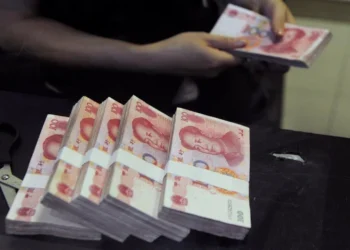


An informed banking source reported that the Central Bank of Syria has retracted its recent circular regarding the standardization of operations for exchange and money transfer companies. This retraction came approximately 48 hours after the circular’s issuance, which mandated that exchange companies receive incoming remittances in US dollars and disburse them exclusively in Syrian pounds, according to the bank’s official exchange rate.
According to the source, the retraction followed complaints from citizens who had made remittances during the period the circular was in effect. They reported incurring financial losses due to the difference between the official exchange rate and the market rate, estimated at around 100,000 Syrian pounds for every 100 US dollars.
This comes amid varying operational structures among licensed exchange and money transfer companies in Syria, as their works are regulated by Law No. 24 of 2006, which governs the exchange profession and defines the responsibilities of licensed institutions in buying, selling, and transferring foreign currencies in accordance with applicable laws and regulations.
According to banking data, officially licensed exchange companies and offices are divided into a number of entities that are duly licensed, which are obligated to accept foreign remittances and disburse them in Syrian pounds according to the Central Bank of Syria’s bulletin, and are not allowed to disburse remittances in dollars or through local payment applications in foreign currencies.
Licensed exchange bureaus are divided into 12 companies and 4 offices. These companies are not permitted to receive foreign remittances in US dollars or domestic remittances via the Sham Cash application and can only disburse them in Syrian pounds according to the Central Bank’s exchange rate bulletin.
In contrast, other companies that have received preliminary approvals under Resolution 199/L.E. process foreign and domestic remittances through various methods, including exchange at the market rate or delivering funds in US dollars, within a regulatory framework that is still under discussion by oversight bodies.
The revoked circular sparked widespread debate in economic and social circles, between those who supported it as a step towards unifying and regulating the market, and those who opposed it, arguing that it caused direct harm to citizens due to exchange rate fluctuations.
No further official details have yet been released by the Central Bank of Syria or relevant government agencies through the state news agency regarding the compensation mechanism or subsequent procedures following the circular’s cancellation.
ANHA