
Several lawmakers expressed concerns on Wednesday about legislation to charge an additional fee on money transfers frequently used by immigrants to support loved ones abroad.
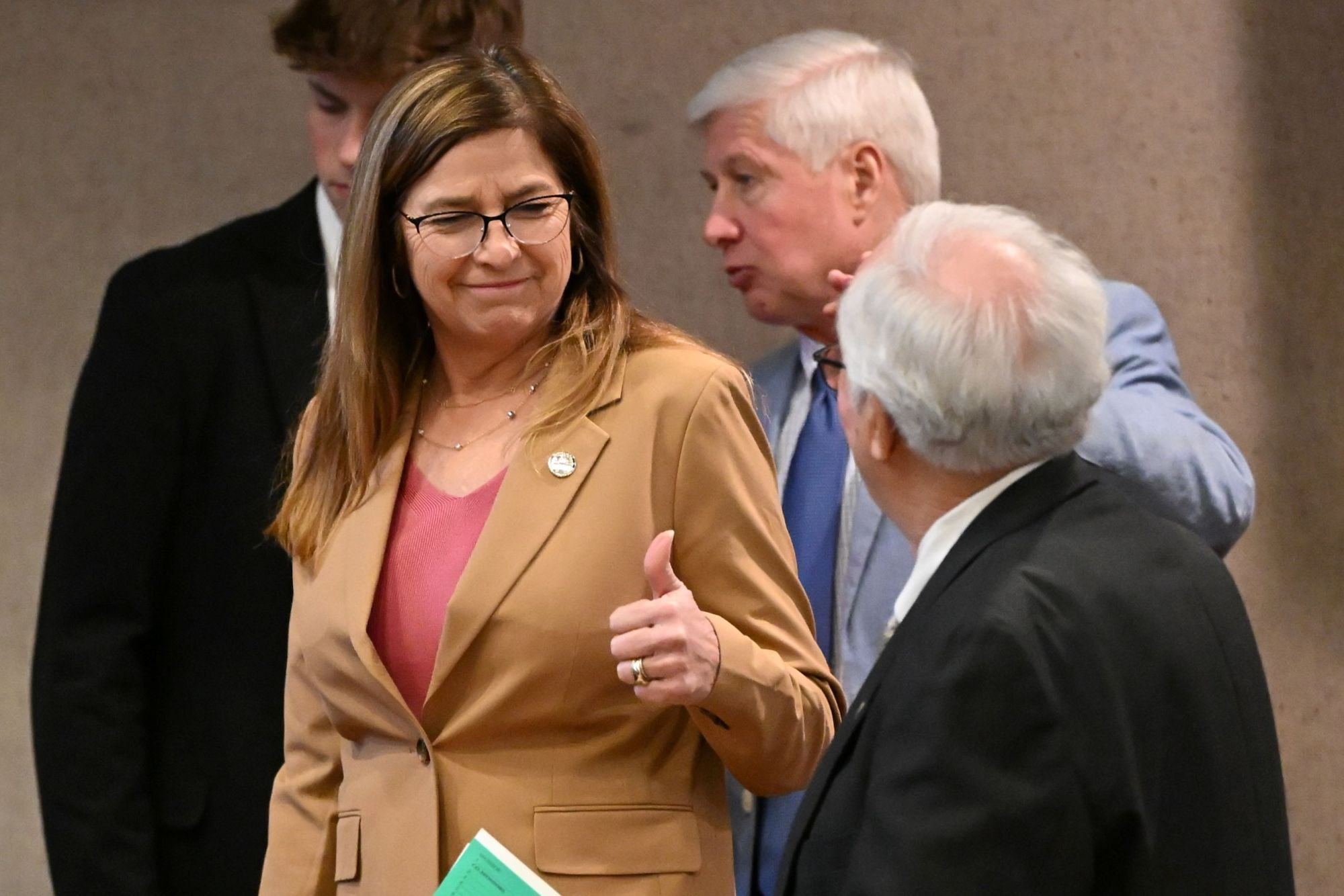
HB 585, sponsored by Rep. Jennifer Fidler, R-Silverhill, requires businesses that transfer money to collect a 1.5% fee on wire transfers that start from Alabama to foreign countries. Fidler sponsored a similar bill last year, part of a package targeting immigrants, that failed to pass.
Fidler said the idea came from a group of lawmakers who traveled to the border between Mexico and the U.S. to get a better understanding of the issue.
“They heard about this and they said this would be a way to help the burdens of these communities that are facing all the influx of people,” Fidler told the House Financial Services Committee. “That was one of the solutions that they heard on the trip to the border.”
While parts of the state have significant foreign-born populations, the rate of immigration into Alabama is small compared to the United States as a whole. According to the U.S. Census, about 4.5% of Alabama residents are foreign-born, compared to 14.8% nationwide.
The bill drew strong opposition at a public hearing Wednesday. Carlos Torres, programs director for the Hispanic and Immigrant Center of Alabama, said that the legislation is another tax that will be imposed on all citizens of Alabama and could “overstep on the federal regulations.”
“The Supremacy Clause may already be overseeing the process of sending wire transfers outside the United States,” he said. “We do not believe it is necessary for the state of Alabama to include another layer that would impede people from sending money to people, their families and friends, who may need it.”
According to language in the legislation, the 1.5% additional fee would be imposed on wire transfers conducted by financial services firms such as Western Union that perform transactions for people who want to send money to other countries. The Alabama Securities Commission would then collect the payments and deposit them into the Wire Transfer Fee Fund.
That money would then go to the Office of Prosecution Services, which would then distribute the money to “all sheriffs in the state to be used to offset costs relating to enforcement of immigration laws.”
The legislation also requires financial services companies to report and maintain records of suspicious cash transactions of at least $2,000 within 30 days. Firms must also report cash transactions of at least $10,000 from the same customer within 15 days or any other transaction that appears suspicious. They must also keep records of transactions that are at least $1,000.
Any firm that violates these provisions can be charged with a Class C felony, punishable by up to 10 years in prison and up to a $15,000 fine for the first offense. Firms who violate the regulations for a second time can be charged with a Class B felony, punishable by up to 20 years in prison and $30,000 fine.
Taxpayers are eligible for a nonrefundable tax credit for the amount they paid up to $5,000. The credit would expire in 2030.
The bill also establishes a legislative study committee to review the issue.
Opponents questioned the need for the bill.
“This legislation is unnecessary,” said Jim Barton, a principal at Barton & Kenny, a public affairs and lobbying firm based in Montgomery and a former member of the Alabama House of Representatives, lobbying for Remitly, a financial services company. “It duplicates existing oversight without improving it. Licensed remittance providers already operate under stringent compliance frameworks in the financial system.”
Several lawmakers also expressed concerns about the legislation. Rep. Penni McClammy, D-Montgomery, objected to the tax credit, which would be funded from the Educational Trust Fund budget.
Fidler said the bill is supposed to reduce the burden that communities face because of the issue of immigration
“Our taxpayers have burdens,” said Rep. Andy Whitt, R-Harvest. “We are putting an additional burden on our taxpayers.”
Independent Journalism for All
As a nonprofit newsroom, our articles are free for everyone to access. Readers like you make that possible. Can you help sustain our watchdog reporting today?