
One big reason why people are hesitant to use credit cards overseas is the fear of “hidden” fees. Between bank charges, card network fees, FX markups, and the scourge of the Dynamic Currency Conversion (DCC) scam, cash can feel like the simpler and safer option.
But in recent times, numerous travel cards have sprung up advertising “0% FX fees”, or claiming to offer FX rates “comparable to Google’s”.
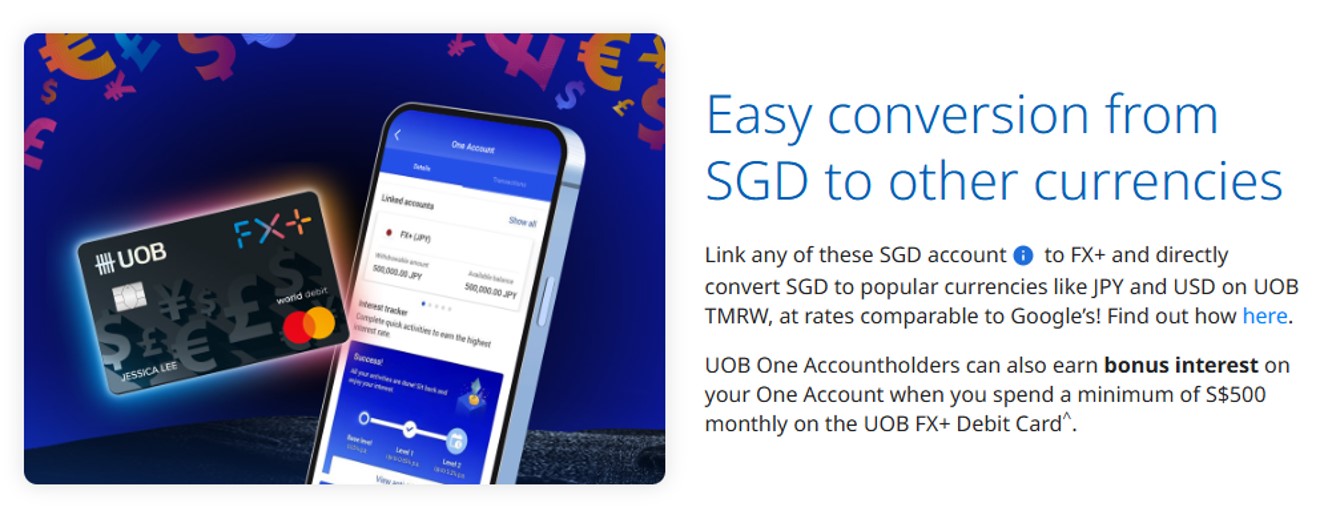
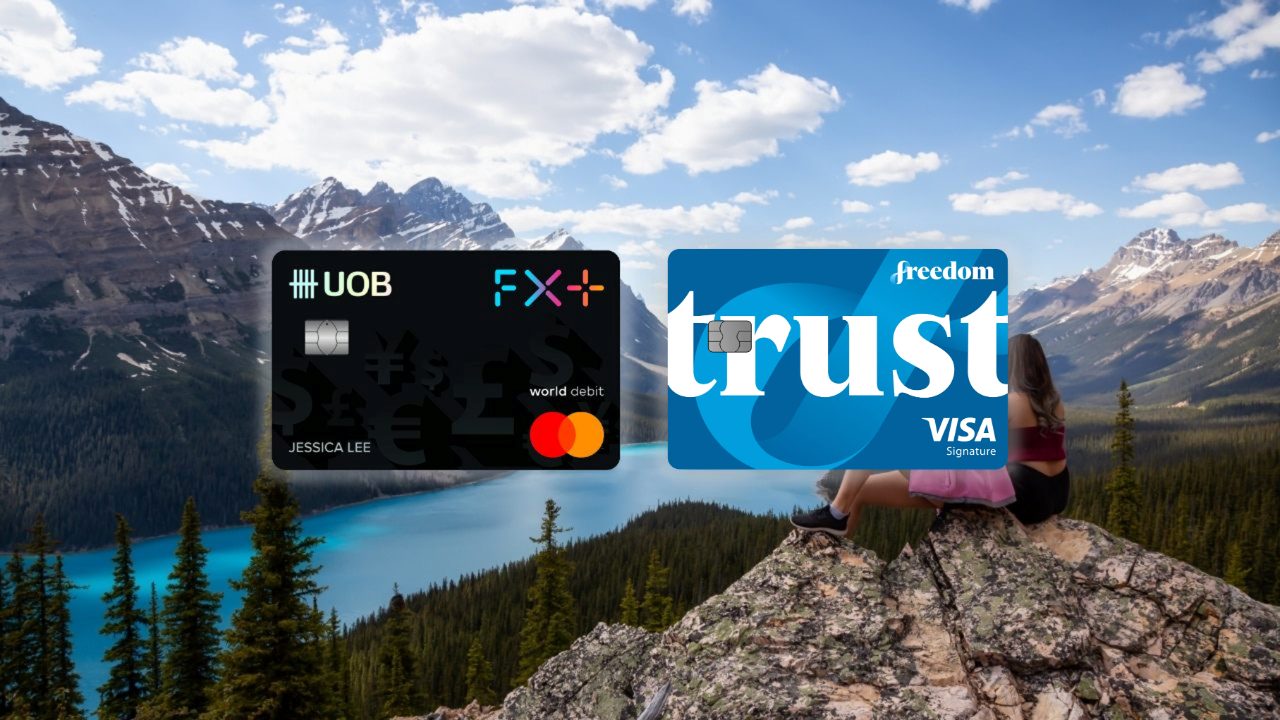
2026 has been a big year for such cards, with the launch of the DBS Chromo Card, DBS TravelLah! Card, GXS Credit Card and Trust Freedom Card. In addition to this, the UOB UnionPay Card dropped its FCY fee, and the Maribank Credit Card extended its 1.5% cashback on FCY spend for a further year.
So how do these cards work, what options are available, and are they better options than miles cards?
What do “zero FX fees” actually mean?
Let’s clear up a common misconception: just because a card offers zero FX fees — also known as foreign currency (FCY) transaction fees — does not mean you’ll enjoy mid-market rates.
When you make an FCY transaction on your card, the amount is first converted into SGD based on the prevailing rates offered by the card network (American Express, Mastercard or Visa).
- Transactions in USD are converted into SGD
- Transactions in currencies other than USD are converted into USD, before being converted into SGD
The bank then adds an FCY transaction fee to the converted amount to derive the final figure posted to your card statement. Both Mastercard and Visa offer online tools that let you work this out for yourself.
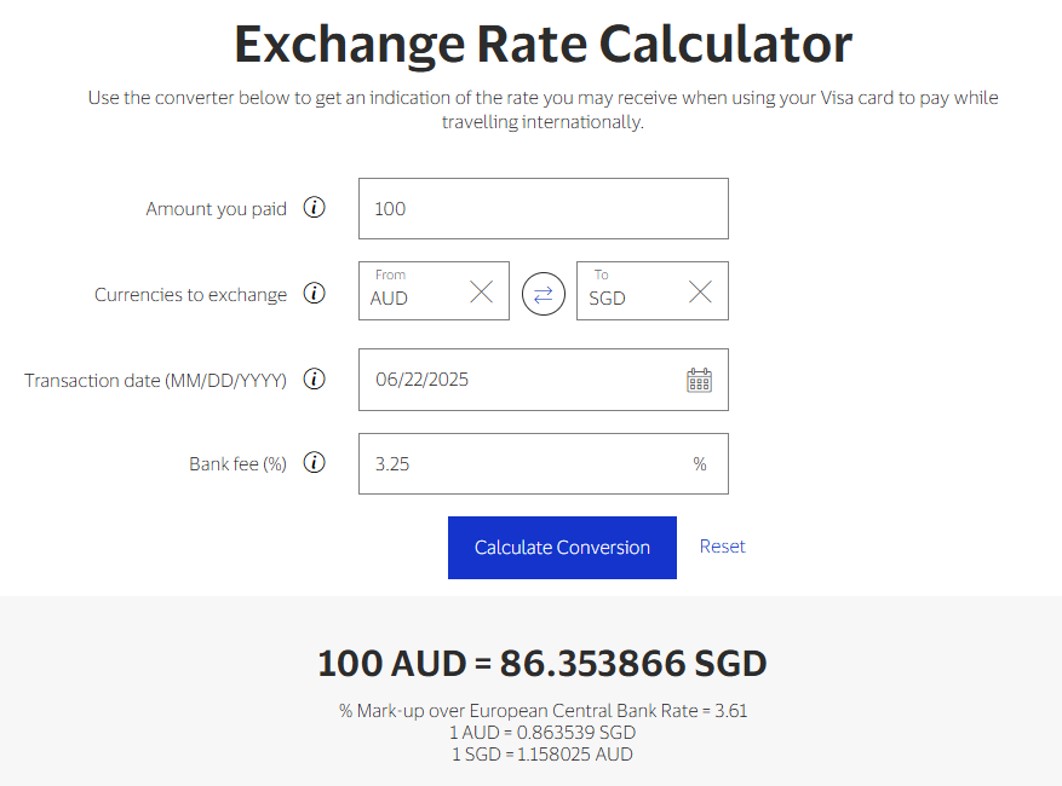
Therefore, there are two potential fees here:
- The FX spread that the card network charges
- The bank’s FCY transaction fee, which ranges from 2.5-3.5%
| 💳 FCY Fees by Issuer and Card Network |
||
| Issuer | ↓ MC & Visa | AMEX |
| Standard Chartered | 3.5% | N/A |
| American Express | N/A | 3.25% |
| Citibank | 3.25% | N/A |
| DBS | 3.25% 0% for Chromo |
3.25% |
| DCS | 3.25% | N/A |
| HSBC | 3.25% | N/A |
| Maybank | 3.25% | N/A |
| OCBC | 3.25% | N/A |
| UOB | 3.25% 0% for EVOL/Singtel-UOB |
3.25% |
| BOC | 3% | N/A |
| CIMB | 3% 0% for Founders Card |
N/A |
| ICBC | 2.5% | N/A |
| Chocolate | 0% | N/A |
| GXS Bank | 0% | N/A |
| Maribank | 0% | N/A |
| Trust | 0% | N/A |
If your card claims to have “zero FX/FCY fees,” it simply means the bank does not impose (2). You will still be subject to (1), though the spread is usually modest.
In the table below, I’ve compared the rates that Visa uses to mid-market rates (as shown on XE.com) for five major currencies.
| 1 USD | S$1.271 | S$1.273 | 0.17% |
| 1 GBP | S$1.727 | S$1.732 | 0.29% |
| 1 EUR | S$1.480 | S$1.484 | 0.29% |
| 1 AUD | S$0.915 | S$0.915 | 0.06% |
| 10,000 JPY | S$79.68 | S$79.99 | 0.39% |
| Do note that spreads can differ from day to day |
|||
|
Mid-market rates are only the right basis for comparison if you could have realistically obtained them in the first place.
|
So even though you’ll certainly be paying less with a zero FCY fee card, it won’t quite match the rate you see on Google.
Do note that multi-currency debit cards like YouTrip or Revolut work slightly differently when you’re paying with a wallet-supported currency— I’ll address this later on.
Credit cards
For credit cards, we need to draw a distinction between:
- cards which do not have FCY fees
- cards which have FCY fees, but rebate them in cashback
This may seem like splitting hairs, but the distinction is crucial because of rewards exclusions.
To illustrate, suppose you charged a US$1,000 education expense to a card which does not have FCY fees. The amount charged to your card will be the SGD equivalent based on the Visa/Mastercard rate, simple as that.
Then suppose you charged the same US$1,000 education expense to a card which has a 3.25% FCY fee, but also offers 3.25% cashback on FCY spending. The amount charged to your card will be the SGD equivalent based on the Visa/Mastercard rate, plus a 3.25% FCY transaction fee. But if education is an exclusion category for that card — and it almost certainly is — then you won’t be getting the 3.25% cash rebate. It’s as if you paid an FCY fee after all!
In other words:
- the benefit of zero FCY fees applies to any type of transaction
- a rebate on FCY spending may only apply to transactions which aren’t on the exclusion list
Of course, if you’re making a non-excluded transaction, then you’d be indifferent between the two. However, because of this possibility, zero FCY fee cards are the safer choice.
Zero FCY fees
CIMB Founders Card

The CIMB Founders Card has no FCY fee, but offers no rewards for FCY spend (or SGD spend, for that matter).
What it does offer is up to 113 interest-free days on all retail purchases, compared to 50-55 with regular credit cards. If you’re spending on a category that doesn’t earn rewards anyway — like insurance premiums, government services or utilities — or if cash flow is your primary concern rather than rewards, then this would be an option to look at.
DBS Chromo Card
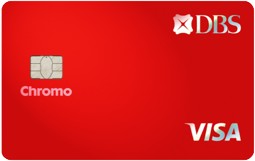
The DBS Chromo Card has no FCY fee, but offers no rewards for FCY spend.
GXS Credit Card
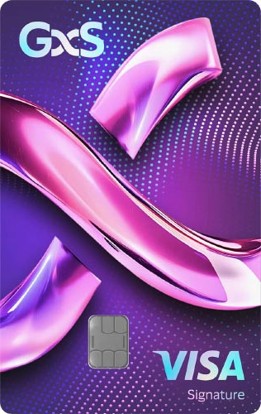
The GXS Credit Card has no FCY fee, but offers no rewards for FCY spend — except for overseas Grab transactions, which earn 50 GrabCoins per S$1 with no minimum spend, equivalent to a 10% rebate.
This is a very narrow use case, but given that there’s no minimum spend necessary, I see no harm in having it on standby just for overseas Grab.
GXS FlexiCard
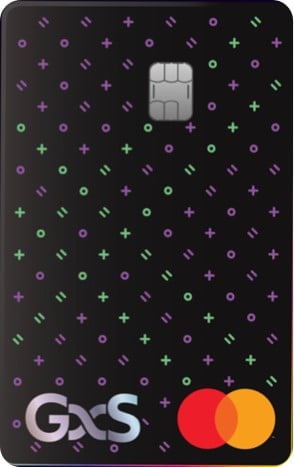
The GXS FlexiCard has no FCY fee, but offers close to negligible rewards.
You’ll need to spend at least S$10 to earn a randomised instant cashback reward. This can be as much as S$3 in theory, but in practice most people report getting a few cents. The gacha mechanic is rarely in your favour.
Mari Credit Card

The Mari Credit Card removed its 3% FCY fee on 1 January 2026, and now offers a flat 1.5% cashback on all FCY spending, with no minimum spend.
This is capped at S$22.50 of cashback per month, or S$1,500 of FCY spending. This is positioned as a limited-time promotion, but was recently extended until 31 December 2027.
Trust Freedom Card

The Trust Freedom Card (formerly known as the Trust Cashback Card) has no FCY fee, and offers a choice of four rewards modes:
- Unlimited Cashback: 0.5% cashback on FCY spend
- Bonus Cashback: “15% cashback” (a highly misleading figure, beware!) on FCY spend in the bonus category, and 0.5% cashback on all other FCY spend
- Stockback: 3% stockback on FCY spend until 31 December 2026, 0.5% stockback after that
- Miles: 1.3 Trust Miles per S$1 on SGD and FCY spend
This is notable for being the only miles-earning credit card with no FCY fee, and an excellent choice assuming 4 mpd options are unavailable.
Trust Link Credit Card

The Trust Link Credit Card has no FCY fee, and earns 0.22 LinkPoints per S$1 on FCY spending. No minimum spend is required, and no cap applies.
This is equivalent to a 0.22% cash rebate, though keep in mind that LinkPoints are a “captive cashback” that can only be spent at selected merchants (though one of those is NTUC, so to most people it’s as good as cash).
UOB EVOL Card
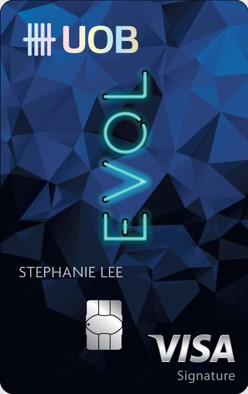
The UOB EVOL Card removed its FCY fee on 19 June 2025, and earns:
- 0.5% cashback on FCY spend in China and Europe
- 1% cashback on all other FCY spend
This rate is valid for spending up till 31 December 2026, with no minimum spend or cap.
Singtel-UOB Card
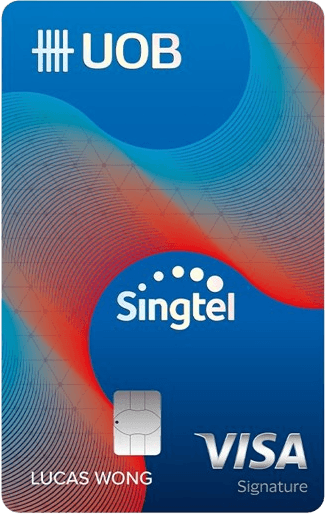
The Singtel-UOB Card removed its FCY fee on 27 August 2025, and earns:
- 0.5% cashback on FCY spend in China and Europe
- 1% cashback on all other FCY spend
This rate is valid for spending up till 31 December 2026, with no minimum spend or cap.
It’s basically identical to the UOB EVOL Card mentioned above.
UOB UnionPay Card
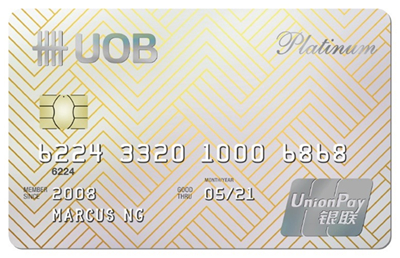
The UOB UnionPay Card removed its FCY fee on 1 October 2026, while keeping its 2% cashback on up to S$2,500 per calendar month, with no minimum spend.
Cardholders also enjoy 0% transaction fees on Alipay and WeChat Pay in China. For context, payments above CNY 200 (~S$38) made with a foreign Visa or Mastercard come with a 3% fee, on top of the usual 3.25% FCY fee that most Singapore credit cards charge.
Rebate of FCY fees
 DBS Live Fresh Card DBS Live Fresh CardApply |
3.25%* 3.25% fee |
In-store spend for selected countries. Min. spend S$800 per c. month, capped at S$50 per c. month |
 ICBC Global Travel Mastercard ICBC Global Travel MastercardApply |
3% 2.5% fee |
No min. spend or cap |
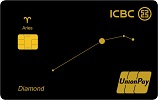 ICBC Horoscope UnionPay Card ICBC Horoscope UnionPay CardApply |
3% 2.5% fee |
No min. spend or cap |
| *Additional 6% cashback applies for shopping and transport spend in Singapore and overseas | ||
DBS Live Fresh Card
The DBS Live Fresh Card has a 3.25% FCY fee, but offers 3.25% cashback on selected overseas spend as an evergreen feature. This requires a minimum spend of S$800 in a calendar month, and is capped at S$50 cashback per calendar month.
However, the mechanics are extremely finicky. This only applies to in-store FCY spend (i.e. not online transactions), and only in the following countries:
|
|
Regular rewards exclusions apply.
ICBC Global Travel Mastercard
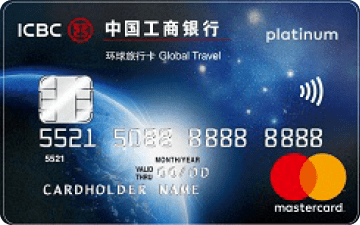
The ICBC Global Travel Mastercard has a 2.5% FCY fee, but offers 3% cashback on overseas spend.
This nets you an effective reward of 0.5% cashback on overseas spending, subject to the usual rewards exclusions.
ICBC Horoscope UnionPay Card
The ICBC Horoscope UnionPay Card has a 2.5% FCY fee, but offers 3% cashback on overseas spend.
This nets you an effective reward of 0.5% cashback on overseas spending, subject to the usual rewards exclusions.
Debit cards
Zero FCY fees
 Chocolate Visa Debit Card Chocolate Visa Debit CardApply |
1 mpd No fee |
Cap S$2K per c. month, 0.4 mpd afterwards. Min. S$5K ADB in Chocolate account |
 DBS TravelLah! Card DBS TravelLah! CardApply |
None No fee |
No rewards |
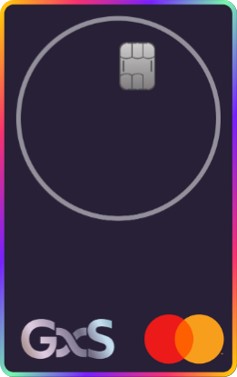 GXS Debit Card GXS Debit CardApply via app with code AARO742 |
Random cashback No fee |
Min. spend S$10 to earn random cashback |
Apply via app with code 2GQEAM81 |
0.22% rebate in LinkPoints No fee |
No min. spend or cap |
Chocolate Visa Debit Card
The Chocolate Visa Debit Card has no FCY fee, and awards 1 Max Mile per S$1 on the first S$2,000 per calendar month, with effect from 1 September 2026 (prior to which it was capped at S$1,000 per calendar month).
Beyond that, the rate drops to 0.4 Max Miles per S$1 on all spend.
In order to earn Max Miles, the ADB in your Chocolate Finance account must be at least S$5,000 in the preceding calendar month. For example, your ADB in October 2026 determines your eligibility to earn Max Miles in November 2026.
DBS TravelLah! Card
The DBS TravelLah! Card has no FCY fee, but offers no rewards for FCY spend (or SGD spend for that matter).
GXS Debit Card
The GXS Debit Card has no FCY fee, but like its FlexiCard cousin, offers a silly gacha mechanic that awards randomised cashback on every transaction of at least S$10.
Trust Link Debit Card
The Trust Link Debit Card has no FCY fee, and rewards for general spending are similar to its credit card counterpart.
Multi-currency debit cards
Unlike traditional debit cards, which allow you to hold funds in SGD only, multi-currency debit cards allow users to convert and hold selected currencies in a wallet or bank account.
Some examples can be found in the table below (this list isn’t exhaustive; there are other players out there too).
When you spend on your multi-currency debit card in a supported currency, funds are first debited from that particular currency wallet. If there are insufficient funds, then conversions will be made from your SGD wallet at the prevailing rates offered by the card issuer (e.g. Revolut, YouTrip).
But when you spend in an unsupported currency, it works similar to a traditional debit card. The amount will be converted into SGD based on the prevailing rates offered by the card network (e.g. Visa, Mastercard), and debited from the SGD wallet accordingly.
The main advantage of multi-currency debit cards is that unlike credit or traditional debit cards, they allow you to lock in today’s rates for tomorrow’s spending. This is not possible with credit or debit cards, which use the prevailing Visa or Mastercard rate on the day the transaction is made.
For example, if you feel that today’s JPY/SGD rate is good, you can buy JPY for your trip in six months. Assuming your instincts are correct and the JPY does indeed appreciate against the SGD, you win because you bought it for less (keep in mind there’s still opportunity cost, since your balance earns no interest). Of course, that can also work in reverse. If the JPY ends up depreciating against the SGD, you lose because you paid more for JPY than you had to.
Multi-currency debit cards also offer very competitive rates for supported currencies. During weekdays, they can be virtually on par with mid-market rates. However, during weekends, holidays, and times of high currency volatility, there may be a spread of ~1% or more.
Historically speaking, multi-currency debit cards were at a disadvantage because the MAS-imposed transaction limits restricted customers to keeping S$5,000 in a wallet at any time, and spending S$30,000 per year. These restrictions meant that customers wanting to make big-ticket purchases would have to use a credit card instead.
But at the start of 2024, YouTrip became the first e-wallet to increase its stock limit (the amount that can be kept in the wallet) to S$20,000, and the flow limit (the amount that can be spent per 12-month period) to S$100,000. Revolut followed suit in the middle of 2024, and Amaze in 2025 (there have never been any spending or holding limits for multi-currency debit cards offered by banks).
| Amaze | S$15K | S$75K |
| Revolut | S$20K | S$100K |
| YouTrip | S$20K | S$100K |
| Wise | S$20K | S$100K |
Basically, unless you’re spending really big, these limits should not bother you.
Drawbacks of debit cards
Fraud risk
If you plan to use a debit card (whether traditional or multi-currency), one important thing to understand is how fraudulent transactions are handled.
Any transactions charged to your debit card, whether fraudulent or legitimate, are immediately deducted from your account.
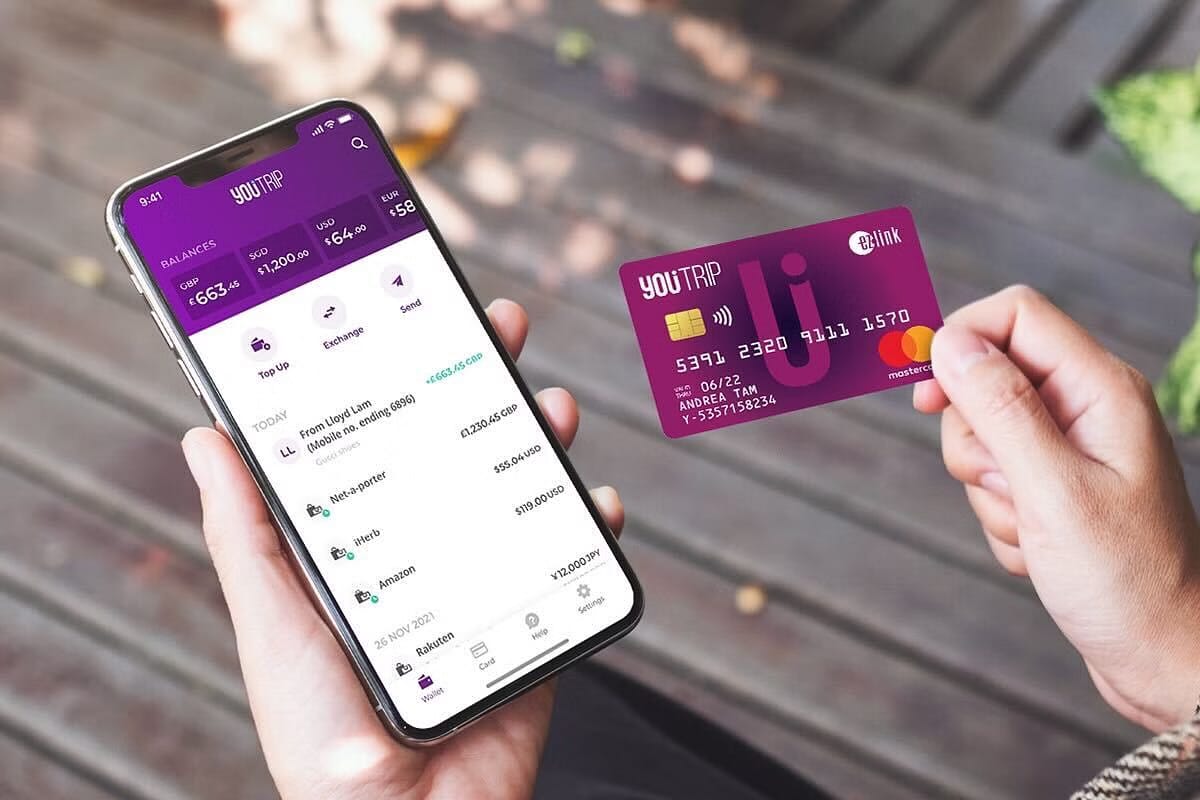
While there are procedures to dispute fraudulent transactions and (hopefully) recover your funds, you will be out of pocket for the period of the investigation. Some time back, there was a feature in CNA covering the horror story of a customer who found her YouTrip wallet drained by 31 unauthorised transactions in quick succession, and had to wait months to recover her funds.
In contrast, if your credit card gets hit by a fraudulent transaction, there is no immediate deduction of funds. You can spot the fraudulent transaction on your statement and open a dispute with the bank, and in the majority of cases, you should receive a temporary credit to offset the disputed amount while investigations are carried out.
Therefore, if you plan to use a debit card, I’d highly advise you to lock it whenever it’s not in use.
Authorisation holds
When you rent a car or check into a hotel, it’s common practice for an authorisation hold to be made on your card to cover damages or incidentals.
With credit cards, this simply earmarks a portion of your credit limit. It’s not an actual transaction, so nothing is deducted from your bank account, and it simply disappears after the car is returned or you check out.
With debit cards, funds are actually deducted from your bank account, leaving you with less money on hand.
For instance, if you have a US$1,000 balance on your YouTrip card and use it to guarantee a rental car, and the rental company has a US$400 hold, you only have US$600 left to spend.
What’s the trade-off?
You may have noticed that cards with zero FCY transaction fees generally offer lower rewards. That’s not a coincidence. If the issuer isn’t making money from FCY fees, how are they going to have the margin to offer miles or cashback? In that sense, the reward is the savings.
The most rewarding cards with zero FCY fees are:
- Chocolate Visa Debit Card: 1 mpd, capped at S$2,000 per month
- Mari Credit Card: 1.5% cashback, capped at S$1,500 per month
- Trust Freedom Card: 3% stockback — though only until 31 December 2026 — or 1.3 mpd
- UOB UnionPay Card: 2% cashback, capped at S$2,500 per month — and UnionPay acceptance is hit-and-miss outside of China
If you’re looking for cards with better earn rates for overseas spending, you’ll need to accept that FCY transaction fees are part of the deal. It’s conceptually similar to buying miles, and everyone’s willingness to pay will vary (1.5-2 cents per KrisFlyer mile is a common benchmark).
Assuming a 3.25% FCY fee and an earn rate of 4 mpd, the cost per mile is 0.79 cents (ignoring the card network spread). I reckon that would be acceptable to most people, and you can read about the miles-earning options in the article below.
Conclusion
If your main concern is minimising the cost of your overseas transactions, then zero FCY fee cards offer a convenient and more secure alternative to cash.
But not all zero FCY cards work the same. Multi-currency debit cards will generally be cheaper than traditional debit or credit cards for transactions in supported currencies, though that assumes you don’t completely misread the market and lock in unfavourable rates!
The downside to zero FCY options is that the rewards will usually be mediocre at best— you can’t have your cake and eat it.
I personally feel that it’s acceptable to pay a 3.25% FCY fee if you can earn in the 3-4 mpd range, though everyone will have to come to their own conclusion based on their personal valuation of a mile.