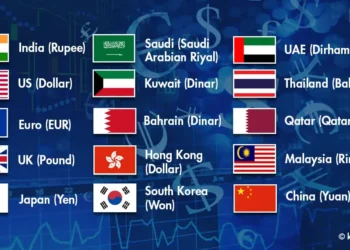


The naira has held firm this year even as African currencies as a whole lost ground against the US dollar, according to the United Nations Trade and Development (UNCTAD) Report 2026.
UNCTAD said Africa is the only developing region whose currencies weakened in 2026, losing a net 1.2 per cent against the dollar between January 1 and September 11.
According to the report, currencies in developing Americas gained 3.3 per cent, and those in developing Asia gained 0.7 per cent.
Emerging market economies as a group gained 2.1 per cent, while frontier market economies gained 0.5 per cent.
African currencies were already falling before the Middle East conflict began. They lost 1.9 per cent between January 1 and February 27, then recovered 0.7 per cent after the conflict started. They remain below their January levels.
The naira has moved the other way as the official rate was about N1,400 to the dollar on January 28 and about N1,330 on October 2.
The Central Bank of Nigeria put it at N1,331.77 on October 7. That is a gain of about five per cent for the naira since January.
Reuters reported that liquidity support from the CBN was a factor behind the calm. Governor Olayemi Cardoso said in July that the bank would support a transparent foreign exchange market rather than target a particular rate.
The gap between the official and parallel markets has also narrowed. It stood at about N24 per dollar on October 6, down from N30 the weekend before.
UNCTAD’s report pointed to why oil exporters have fared better. After the Middle East conflict disrupted the Strait of Hormuz, Brent crude rose from $70 to over $110 a barrel. The report says currencies of oil importers, excluding China, lost almost 4 per cent this year, while energy exporters saw a marginal gain. It lists Nigeria among exporters positioned to benefit from higher prices.
The report also pointed to Nigeria’s exposure, saying Nigeria and Egypt are among the few countries where foreign investment in local-currency government debt matters.
That leaves both sensitive to changes in global financial conditions.
A steady exchange rate has not shielded households from the energy shock. UNCTAD puts the rise in Nigeria’s diesel price since February 23 at 82.7 per cent, the highest in its sample. Petrol is up 48.1 per cent. The report said that where domestic refining capacity is insufficient, the gain from higher crude prices is partly offset by costlier refined products.
There are signs the calm is thin. Trading volumes at the official window fell in the week to October 6. (techeconomy)
UNCTAD projects Africa’s economy to grow 4.1 per cent in 2026, against 2.6 per cent for the world.
We’ve got the edge. Get real-time reports, breaking scoops, and exclusive angles delivered straight to your phone. Don’t settle for stale news. Join LEADERSHIP NEWS on WhatsApp for 24/7 updates →