
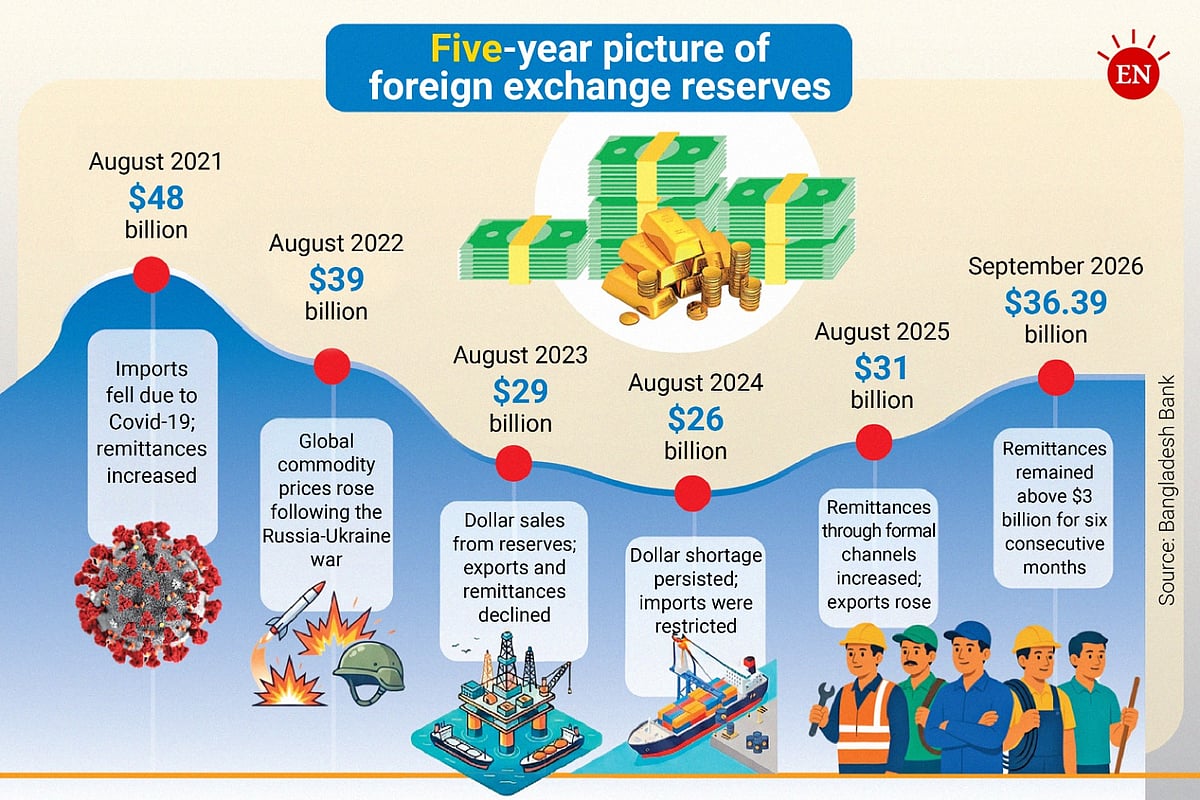
Behind the comfort provided by rising reserves lies another, weaker picture of the economy. Dollars are not accumulating simply because supply is high. Demand for imports, investment and production is also weak. In other words, the problem is no longer a shortage of dollars; rather, the economy has not generated enough momentum to use those dollars. That is why the news of rising reserves is reassuring, while weak demand for dollars is equally concerning.
Because private investment remains sluggish, imports of capital machinery, raw materials and intermediate goods are not growing at the desired rate. As a result, dollar use has declined. There is also uncertainty over whether new investment and import demand will increase amid the ongoing shortages of gas and electricity.
Bangladesh Bank data show that in the 2025–26 fiscal year, letters of credit settled for imports of capital machinery fell by 10.5 per cent compared with the previous year. Imports of intermediate goods declined by 6.5 per cent, while imports of industrial raw materials fell by 3.33 per cent.
Economists and trade analysts say that while a comfortable level of reserves is necessary, the country also needs to maintain adequate imports of essential goods.
CPD Distinguished Fellow Mustafizur Rahman recommends focusing on four areas to maintain reserves: keeping the exchange rate stable, managing the pressure of foreign debt repayments, maintaining the capacity to finance imports as investment picks up, and managing import pressures when global commodity prices rise.