
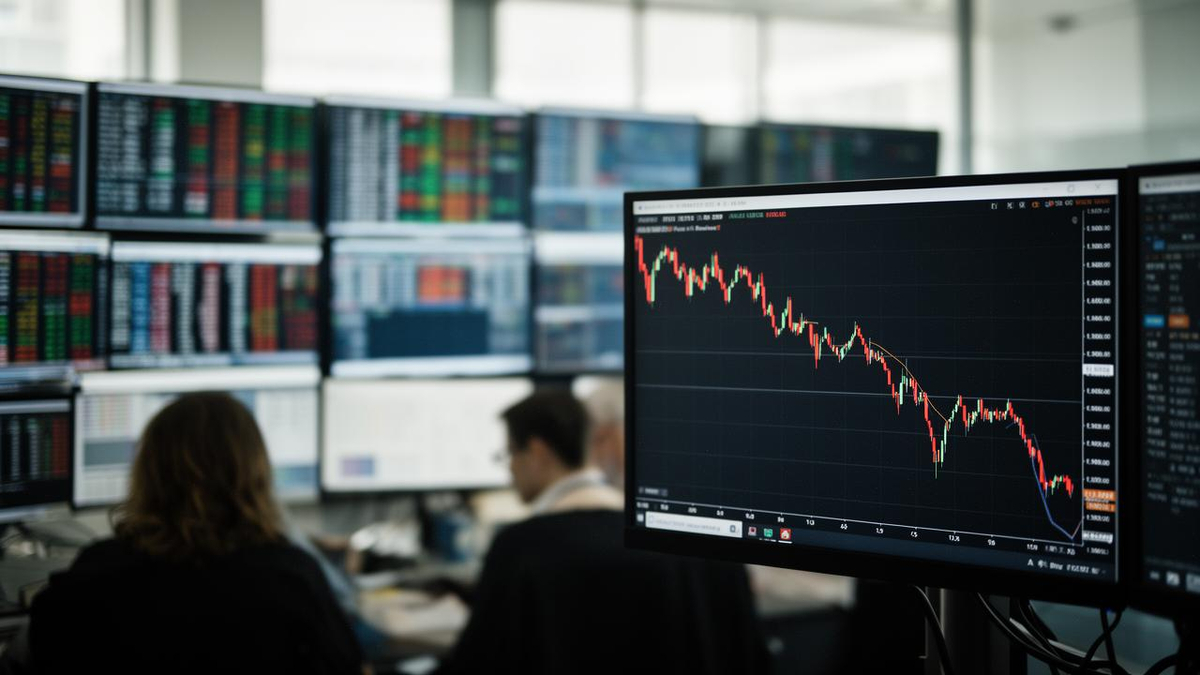
In the Seoul foreign exchange market, the won/dollar exchange rate fell to as low as 1,349.5 won intraday on the 4th, entering the 1,340 won range for the first time in approximately 14 months. On a regular session closing basis, the pair finished at 1,350.4 won, down 8.9 won from the previous day.
The exchange rate opened at 1,358.5 won and failed to breach the 1,360 won level during the morning session before accelerating its decline in the afternoon. At around 3:14 p.m., it slid to 1,349.5 won, marking the first intraday move into the 1,340 won range since July 1 of last year (1,348.5 won). On a closing basis, it was also the lowest level since June 30 of last year (1,350.0 won).
Compared with the recent peak of 1,559.2 won recorded on July 1, the exchange rate has fallen by 209 won in just two months. The won has now declined for three consecutive sessions, shedding 20 won during that period alone.
Yen Strength Drags the Won Lower
The direct catalyst behind the won’s strength was a sharp rally in the Japanese yen. As the market focused on the possibility of intervention by Japanese foreign exchange authorities, the yen/dollar exchange rate fell rapidly, and the won—which has a high correlation with the yen—moved in the same direction.
Atsushi Mimura, Vice Finance Minister for International Affairs at Japan’s Ministry of Finance, said of recent yen movements: “We are neither satisfied nor reassured about anything,” emphasizing that authorities remain “on high alert.” Following those remarks, the yen/dollar exchange rate plunged from the 158 yen range to the 155 yen range in the New York foreign exchange market.
On the day, the yen/dollar exchange rate fell 1.03 yen to 156.185 yen, and touched as low as 155.286 yen intraday—the lowest since August 3 (155.220 yen), immediately after the joint U.S.-Japan intervention. The won/yen cross rate rose 0.23 won to 864.62 won per 100 yen.
Dovish Fed Signals Weigh on the Dollar
Fading expectations for further U.S. rate hikes also contributed to the won/dollar decline. Federal Reserve Governor Christopher Waller said at a Reuters-hosted virtual event the previous day that if upcoming data over the next two weeks confirms slowing inflation, he would lean toward supporting a rate hold. The market interpreted this as a dovish signal.
The U.S. August ADP private employment report released on the 3rd showed an increase of just 38,000 jobs from the previous month, falling short of market expectations of 47,000. July’s gain was also revised down to 44,000, confirming signs of a cooling labor market, and the Dollar Index settled at the 99.5 level. On the day, the Dollar Index fell 0.36 to 98.993.
From a supply-demand perspective, continued dollar-selling by South Korean exporters supported the decline. In the South Korean stock market, foreign investors bought a net 479.3 billion won (approximately $354 million) on the day, extending their net buying streak to two consecutive sessions.
Downside Support Factors and Outlook
However, there are factors limiting the pace of the won’s decline. Min Kyung-won, an economist at Woori Bank, noted: “Real-demand bargain hunting, including import settlement payments, is supporting the downside, and if market participants who view 1,350 won as the first support level act on that perception, accumulation buying in this range could nudge the exchange rate slightly higher.” He added: “Currency conversion demand from retail investors increasing their overseas stock investments also serves to defend the downside, and real-demand bargain hunting could limit the extent of the decline.”
The market’s next focus is the U.S. August nonfarm payrolls report, due to be released tonight Korea time. If the jobs data comes in stronger than expected, the possibility of further U.S. rate hikes could resurface, potentially turning the dollar stronger. Conversely, if the report disappoints like the private employment figures, dollar weakness could persist and the exchange rate could settle in the 1,350 won range.