
![[Yen Surges] Up 5 yen in 2 days! “Yen carry trade unwinding”…](https://www.currency.coach/wp-content/uploads/2026/09/1200x.png)
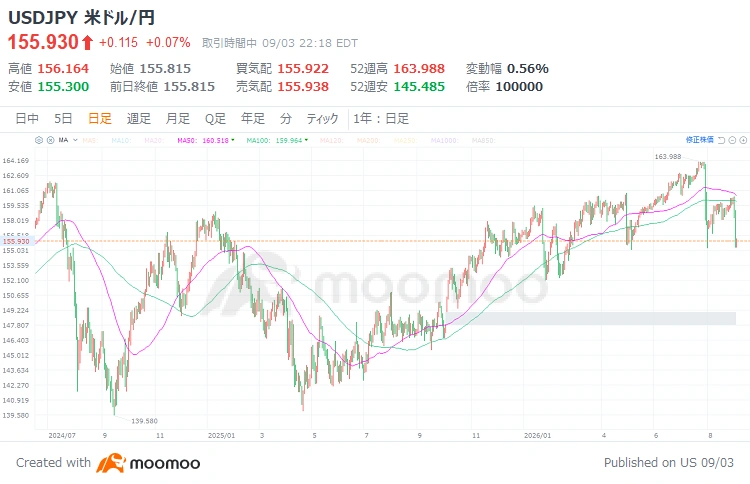
Over the past two trading days, the foreign exchange market has suddenly become the focal point for global asset pricing. The USD/JPY pair plunged from around 160 yen per dollar to the 155 yen range, with the yen appreciating by more than 5 yen in just two days. This move was not driven by a single factor, but ratherby the diverging outlooks for monetary policy from the Fed and the Bank of Japan.is.
Fed Governor Waller sent dovish signals, causing market expectations for a U.S. rate hike in September to recede. Meanwhile, speculation about additional rate hikes by the Bank of Japan is intensifying. As the interest rate differential between the U.S. and Japan narrows, carry trades that have relied on the low-yielding yen as a funding currency are facing reassessment.
Investors should note that currency fluctuations are not the only thing to watch.If the unwinding of yen carry trades accelerates further, will the impact spread to U.S. stocks, Japanese stocks, gold, and even cryptocurrencies?This remains the key focus.
Governor Waller’s shift toward dovishness clashes with the BOJ’s hawkish stance, accelerating the yen’s surge
Meanwhile, the Bank of Japan issued more hawkish signals. Board Member Hajime Takada expressed the view that there is no need to mechanically adhere to a pace of adjusting policy by 25 basis points (0.25%) roughly every six months, as done in the past. In response, the market has begun to anticipate that the BOJ will accelerate its pace of policy normalization.
• Receding expectations of US rate hikes → Declining appeal of US Treasury yields
• Rising expectations of Japanese rate hikes → Increasing cost of funding in yen
The simultaneous emergence of these two trends narrowed the Japan-US interest rate differential, directly triggering a rapid decline in the USD/JPY exchange rate.
In other words, what truly deserves attention is not the “sudden 5-yen appreciation of the yen,” but rather the fact that the macroeconomic foundations that have long supported the weak yen are beginning to shake.
Why did the yen’s appreciation accelerate? Speculation of a “yen carry trade unwind” emerges
The recent yen appreciation was driven not only by heightened expectations of Bank of Japan rate hikes but also by clear positioning factors. For the past several years, the low-interest-rate yen has been a major global funding currency, with many investors borrowing yen to invest in higher-yielding overseas assets to capture the interest rate spread.
Recently, BOJ Board Member Takada emphasized that policymakers should not adhere rigidly to specific frequencies or magnitudes of future rate hikes, fueling expectations of further tightening. Meanwhile, Fed Governor Waller sent dovish signals, causing expectations of a US rate hike in September to recede. The view that “Japan is turning hawkish while the US turns dovish” gained strength, diminishing the appeal of continuing to sell the yen.
When USD/JPY broke below the 200-day moving average around 158.44 yen—a level closely watched by the market—some leveraged investors began covering their short yen positions. This brought the “yen carry trade unwind” into focus. As leveraged funds had maintained relatively high levels of net short yen positions, any increase in stop-loss orders or position unwinding could further amplify the momentum of the yen’s appreciation.
At that time, the Bank of Japan’s rate hike and the rapid appreciation of the yen coincided with concerns over deteriorating US employment and a potential recession. This triggered a sharp deleveraging of crowded carry trades, which became one of the key factors amplifying global market volatility.
However, there is a clear difference between the current situation and August 2024. US stocks are currently on an upward trend, and risk appetite has not deteriorated systematically as it did back then.
The yen, gold, and growth stocks benefit first, but selectivity is required
Looking at asset prices, we are already seeing movements that price in “easing upward pressure on interest rates” in response to Governor Waller’s dovish remarks.
If expectations for additional BOJ rate hikes strengthen further, it could continue to provide tailwinds for the yen. Japanese bank stocks are also likely to benefit from interest rate normalization and improved net interest margins. On the other hand, export-oriented stocks such as automobiles, machinery, and electronics need to be cautious about the decline in the yen-denominated value of overseas profits due to a rapid appreciation of the yen.
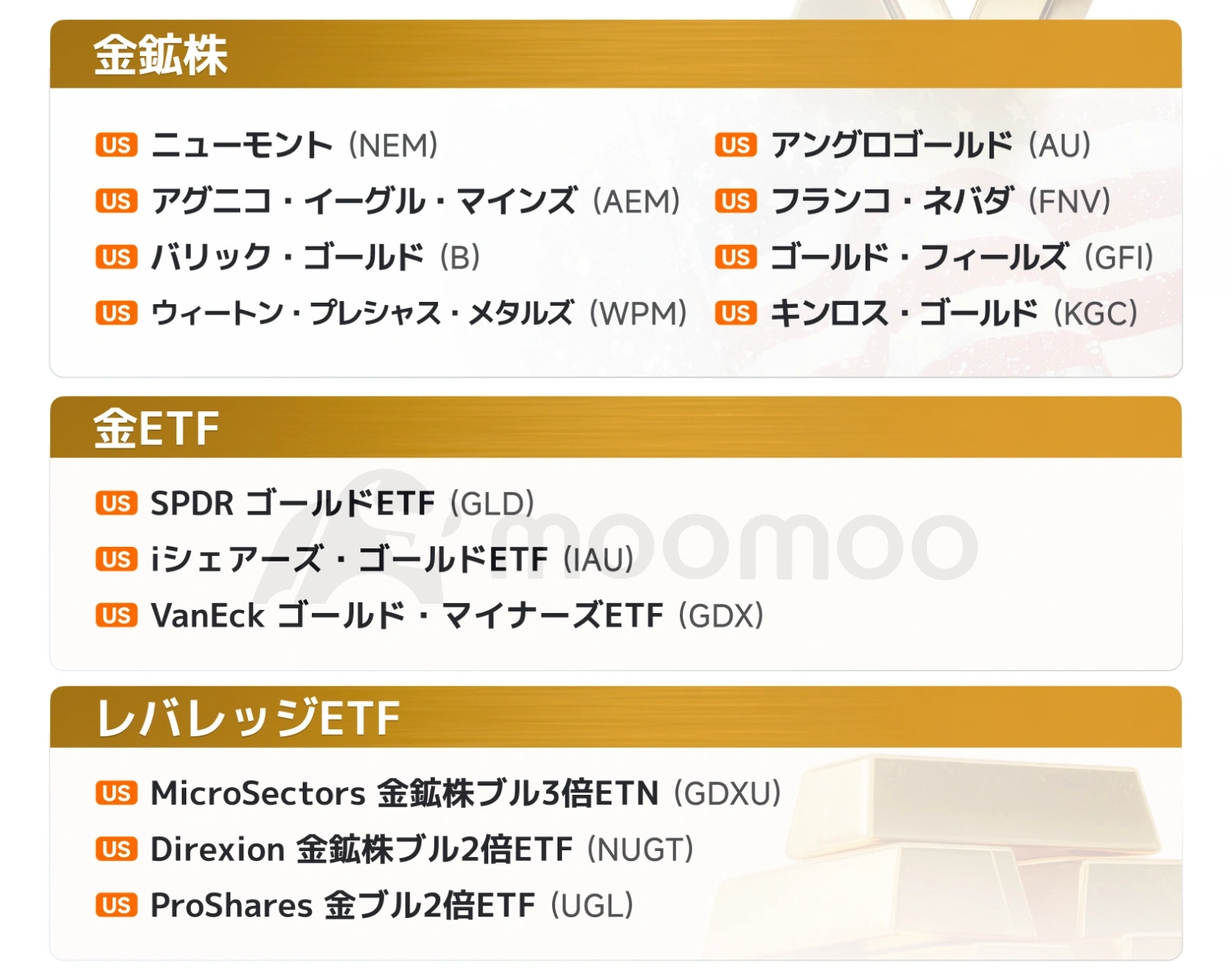
Gold ( $XAU/USD (XAUUSD.CFD)$ ) surpassed $4,500 again, driven by the decline in the US dollar and US Treasury yields. This reflects the market beginning to re-price in “easing upward pressure on interest rates + geopolitical risks + central bank gold purchases.”, $SPDR Gold ETF (GLD.US)$ 、 $VanEck Gold Miners Equity ETF (GDX.US)$ 、 $Newmont (NEM.US)$ 、 $Wheaton Precious Metals (WPM.US)$ are expected to remain in focus.
If expectations for US rate hikes recede, pressure from rising discount rates will ease, so $NVIDIA (NVDA.US)$ 、 $Palantir (PLTR.US)$ growth stocks in software and AI-related sectors, starting with [specific stocks], are likely to benefit from valuation recovery.
However,A gradual appreciation of the yen and a decline in US interest rates could act as tailwinds for growth stocks; however, if the yen strengthens sharply and carry trade unwinding accelerates, high-beta risk assets could face deleveraging pressure instead.
Furthermore, the US ISM Non-Manufacturing Prices Index has risen to 72.6, indicating that inflationary pressures in the services sector remain persistent.
Therefore, it is more appropriate to view the current situation not as the Fed having clearly turned dovish, but as a phase where hawkish pressures have temporarily receded. If future employment and inflation indicators strengthen again, there remains room for US Treasury yields and the dollar to rebound.
Will tonight’s US jobs report be a watershed moment? How far will the yen’s rise continue?
The next major focus is the release of the US August employment statistics tonight.
If hiring slows gently, expectations will strengthen that the Fed will skip further rate hikes, potentially pushing U.S. Treasury yields and the dollar even lower. The divergence in monetary policy outlooks between Japan and the U.S. would also narrow, which could be a tailwind for the yen, gold, and high-valuation growth stocks. However, if the yen appreciates rapidly, further triggering unwinding of carry trades, deleveraging pressure could instead intensify on high-beta U.S. stocks and crypto assets.
On the other hand, if nonfarm payrolls significantly exceed expectations and wage growth accelerates again, the market is likely to price in additional rate hikes once more. This would cause the dollar and U.S. Treasury yields to rebound, while the yen’s appreciation pauses temporarily. High-valuation tech stocks and gold could also give back their recent gains.
The key takeaway from the yen’s recent sharp surge is not the exchange rate level itself, but ratherthe fact that the monetary policy outlooks of the Fed and the Bank of Japan have started moving in opposite directions.is.
In the short term, investment opportunities may emerge in the yen, Japanese bank stocks, gold, and interest-rate-sensitive growth stocks. Conversely, if the unwinding of yen carry trades accelerates, volatility could rise significantly for high-beta U.S. stocks, crypto assets, and Japanese export-oriented stocks.
Tonight’s U.S. employment data is asking more than just whether the U.S. labor market is strong or weak.
The next focal point is whether it will further narrow the interest rate differential between Japan and the U.S., evolving the current yen rebound into a larger-scale global capital reallocation.
-moomoo News Sherry
This article uses machine translation in part