

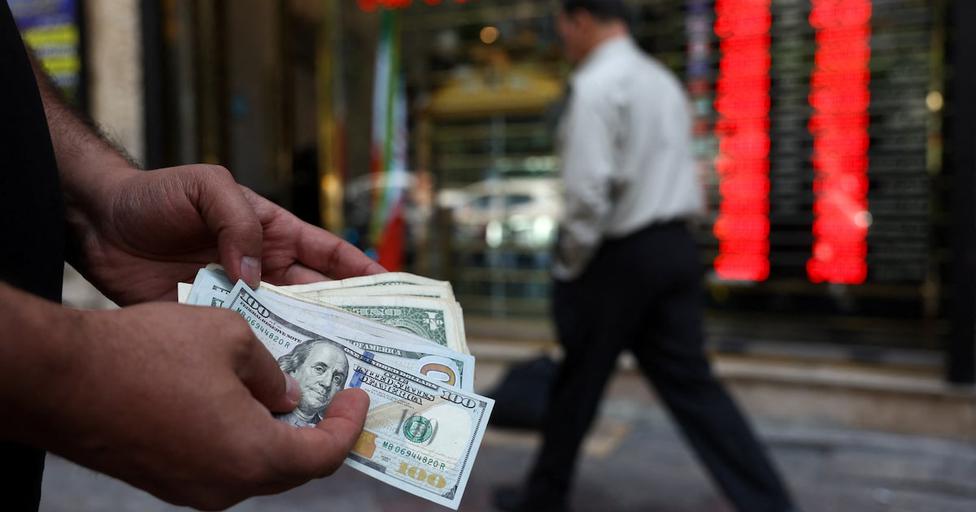
In the past week, Iran’s economy witnessed the exchange rate of a single U.S. dollar cross the historic threshold of 200,000 tomans, a figure that the Governor of the Central Bank of the Islamic Republic of Iran characterized as the result of American propaganda and psychological warfare, while the U.S. Secretary of the Treasury described it as merely a prelude to a 300,000-toman rate in the near future.
The collapse of the rial’s value to as low as five ten-millionths of a single U.S. dollar banknote signals new equilibrium ruptures within Iran’s macroeconomic structure. Under current conditions, similar to those of the past half-century and particularly recent years, this rupture indicates that inflationary expectations have spiraled out of control, resulting in an explosion of accumulated inflation crushing the livelihoods of the Iranian public.
This report seeks to deconstruct the events of the past week that pushed the dollar past 205,000 tomans, explaining how the Central Bank of the Islamic Republic rode a wave of public panic, anxiety, and negative emotion, thereby exacerbating volatility in Iran’s financial markets while maximizing its own profits.
What Pushed the Dollar Past the 200,000-Toman Mark Last Week
The dollar crossing the critical 200,000-toman mark was not an unexpected event. The government’s continuous and growing reliance on Central Bank money creation to cover explicit and hidden budget deficits, chronic imbalances in the banking network, the issuance of unbacked mandatory loans without collateral or repayment mechanisms, and the failure to repatriate foreign currency from national resource sales have reduced the purchasing power of Iran’s national currency to its lowest point in history. According to the inflation gap framework and Purchasing Power Parity (PPP) theory, an artificially controlled exchange rate will eventually surge to reflect the difference between domestic and foreign inflation. In fact, economic variables had already signaled a 200,000-toman mark, or higher, for the summer of 2026 as early as last year. Beyond economic analysts, gold bullion traders in February 2026 were trading physical gold based on a projected dollar rate of 208,000 tomans for August 2026.
Last week, however, these projections materialized alongside several major developments: the Central Bank capitalizing on public anxiety and inflationary expectations for profit, market fear surrounding the U.S. Department of the Treasury’s economic isolation campaign, and the total severance of trade relations between the United Arab Emirates and Iran.
The U.S. Treasury’s Campaign of Economic Isolation
On the evening of Wednesday, August 19, U.S. President Donald Trump announced on the social media platform Truth Social the launch of an economic campaign aimed at isolating the Islamic Republic, describing it as “the most crushing economic operation ever conducted against a nation.”
Donald Trump compared the economic isolation campaign against Iran to the massive Allied operations of World War II, calling it a decisive economic offensive.
The following day, on August 20, U.S. Treasury Secretary Scott Bessent spoke with CNBC regarding Washington’s new plan to escalate economic sanctions against Iran to bring about the “toppling” of the Islamic Republic’s government.
Finally, on Monday, August 24, the U.S. Treasury Secretary formally announced the launch of a new campaign titled “Operation Economic Exclusion” against the Islamic Republic. He stated that the objective of this campaign is to sever “all economic arteries” of the Iranian government and force other nations to choose between economic cooperation with Tehran and maintaining access to the U.S. financial system. Bessent declared the goal of the campaign to be the total isolation of the Islamic Republic, emphasizing that President Trump’s administration is no longer interested in “managing the threat” posed by the Iranian regime, but intends to end it. He also issued a stark warning to banks, corporations, and financial institutions worldwide that any entity facilitating money laundering for the Islamic Republic would be cut off from the U.S. dollar-based financial system, warning: “The countdown begins right now.”
The U.S. Treasury Secretary also described a 300,000-toman dollar as very near for Iran’s economy. These remarks came after Western media outlets and the White House had spent days promising the release of details and the implementation of this campaign starting August 24, triggering a wave of fear, anxiety, and inflationary expectations across Iran’s financial markets over the prospect of complete global economic isolation.
The Complete Severance of UAE-Iran Trade Relations
Just one day after the expiration of the understanding between the U.S. and Iran and the U.S. President’s statement announcing the suspension of talks, the United Arab Emirates suspended all trade activities, commercial exchanges, and financial transactions with the Islamic Republic on the evening of Tuesday, August 18, 2026. Coinciding with the declared “end of negotiations and economic war” by the United States against Tehran, this move brought pressure on one of Iran’s primary regional financial and commercial partners to a peak.
Afra Al-Hamli, Director of Strategic Communications at the UAE Ministry of Foreign Affairs, stated in an announcement: “All activities, commercial exchanges, and financial transactions with Iran have been suspended until further notice.” The UAE government went so far as to order the offloading of cargo and the departure of Iranian dhows from UAE ports; videos of empty dhows returning from UAE waters circulated widely on social media.
It is no exaggeration to state that the United Arab Emirates, and Dubai in particular, serves as the Islamic Republic’s most critical economic partner after China. Beyond its trade partnership, the UAE, particularly Dubai, has for years functioned as Iran’s “financial lifeline,” serving as the primary hub for sanctions evasion, re-exports, and imports to and from Iran.
The UAE dirham serves as the primary benchmark and driver of the dollar rate in Tehran’s market. The pricing formula for the dollar in Tehran is straightforward: the dirham remittance rate multiplied by a fixed coefficient determines the dollar rate in Tehran. For years, the UAE, particularly Dubai, has functioned as the core support center for foreign currency, order registrations, and settlement networks for Iranian remittances. Consequently, any disruption to the flow of dirhams into Iran, or even news of such a disruption, severely impacts Iran’s foreign exchange market, as seen in late August 2026.
Beyond foreign exchange rates, the severance of trade with the UAE negatively affects the prices of imported goods as well as the overall volume and cash value of Iranian exports. Official statistics from the Islamic Republic indicate that Iran’s trade volume with the UAE reached $21 billion in the 10 months leading up to the conflict, equivalent to 30.6 percent of Iran’s total imports in 2024. Exports to the UAE were reported at $7 billion, bringing total bilateral trade to over $28 billion. This figure excludes informal trade, the business activities of Iranian expatriates, exchange houses, and Iranian-owned companies based in the UAE. It also leaves out companies registered in the UAE that facilitate sanctions evasion and the transfer of billions of dollars in oil revenues back to Iran.
The decision to sever trade ties increases import costs because, with the UAE route closed, imports must be redirected through more expensive and risky alternative routes. Adding new layers of intermediaries increases insurance and shipping costs by 30 to 50 percent, which directly inflates the final price of essential goods passed on to consumers. A significant portion of purchases for livestock feed and pharmaceutical ingredients was handled through letters of credit in UAE banks; disruptions to this process trigger severe price volatility across poultry, meat, dairy, and pharmaceutical markets.
In imported or import-dependent goods, supply reductions manifest rapidly, translating into immediate price pressures, particularly on semi-essential commodities. Furthermore, within Iran’s economy, bad news itself acts as a primary driver of inflation. This decision alone can trigger precautionary demand, hoarding, and price hikes long before physical shortages occur.
What the Central Bank Did
On August 22, the Central Bank of the Islamic Republic announced foreign exchange reserves totaling $4.5 billion, stating that this figure was accumulated through domestic market currency purchases and the collection of surplus market supply as part of market management and foreign exchange operations. The Central Bank explicitly noted that $1.4 billion of this total had been collected from the domestic foreign exchange market recently, emphasizing that these funds did not originate from new external sources or oil sales.
This announcement came right amid reports regarding the deadline for negotiations with the U.S., news from the White House concerning economic measures and Iran’s economic isolation package, four days after the UAE severed trade ties with Iran, and exactly three days before Scott Bessent’s speech at the U.S. Department of the Treasury regarding the new campaign to isolate Iran’s economy.
The timing of this news, published alongside multiple events driving inflation across foreign exchange and gold markets, indicates that Central Bank officials, led by Central Bank Governor Abdolnasser Hemmati, anticipated the rise in exchange rates before and after Scott Bessent’s speech. Anticipating the dollar’s surge following the expiration of the U.S.-Iran understanding on August 17, the Central Bank capitalized on public fear, anxiety, inflationary expectations, and market panic to enter the market as a primary currency buyer. Intervention by the Central Bank, as the nation’s largest holder of foreign exchange reserves, can single-handedly disrupt market equilibrium, particularly when such intervention coincides with critical political, trade, financial, and geopolitical signals. This maneuver yielded substantial profits for the Central Bank and, by extension, the government and the regime. By buying cheap dollars in anticipation of coming shocks and later selling those reserves at inflated rates under the guise of market stabilization, the Central Bank effectively traded on market volatility at the expense of citizens seeking to protect their assets from devaluation, a tactic that also yielded massive returns for the Central Bank last year.
On August 22, the Supreme Audit Court of Iran announced that the Central Bank of the Islamic Republic had recognized a net profit of 77 trillion tomans in the fiscal year 2025-2026, driven by surges in exchange rates, gold prices, and structural imbalances. According to the Supreme Audit Court’s statement, the vast majority of this profit resulted from foreign exchange rate leaps, the revaluation of foreign currency assets, and profits from gold sales. The Supreme Audit Court classified the Central Bank among the state’s most profitable public enterprises, noting that rather than reflecting operational efficiency, this profitability underscores deep structural imbalances within the country’s monetary and financial framework.
The Central Bank’s Post-205,000-Toman Strategy: Market Interventions, Security Repression, and Scapegoating
Following the U.S. dollar crossing the 205,000-toman threshold, the Central Bank of the Islamic Republic of Iran announced the injection of $500 million into commercial banks to manage the foreign exchange market and bolster the supply of physical banknotes. It was officially declared that currency sales to the general public would be funneled through three major banks: National Bank, Bank Tejarat, and Bank Saderat. Under this scheme, individual citizens could purchase up to $1,000 and legal entities up to $5,000 at an agreed-upon rate of 157,000 tomans per dollar.
The Central Bank framed this measure as an effort to curb emotional trading and unrealistic exchange rates, directing micro-level retail demand into official banking channels rather than the open market. However, when citizens rushed to the designated branches, they found the doors firmly shut. First, several branches refused to disburse foreign currency altogether, citing a lack of official directives. Second, branches that were willing to sell offered dollars not at the agreed-upon 157,000-toman rate, but at 195,000 tomans, and only after applicants navigated complex registration procedures, endured long queues, and registered their data within government tax, subsidy, and central banking databases for a rate barely 5,000 tomans below the open market.
Injecting currency to control prices is a rehashed playbook implemented by central bank governors over recent decades, with the invariable result being an even more violent coiled-spring price rebound in the subsequent phase. While a $500 million cash injection might momentarily dampen market panic for a few hours or days, these reserves are swiftly absorbed unless underlying economic fundamentals, such as surging liquidity growth, structural budget deficits, and inflation expectations driven by external pressures, are addressed. Furthermore, a $500 million supply is negligible compared to the tide of capital seeking refuge in foreign exchange out of fear of rial devaluation, making it incapable of balancing structural demand. Once the dollar enters post-200,000-toman territory, the market faces a crisis of expectations and profound distrust rather than a simple shortage of physical banknotes. Under such conditions, injecting a few hundred million dollars may slow short-term volatility, but it cannot alter the overarching trend.
Security Crackdowns, Market Paralysis, and Financial Scapegoats
Alongside currency injections, the Central Bank deployed security forces to crack down on traders and money changers around Sabzeh Meydan and Ferdowsi Square after the dollar reached 206,000 tomans. An intensified security presence forced exchange shops into extreme caution, leading many to halt operations entirely and reducing open-market cash transactions to a minimum. When public trading is suppressed, transparent price discovery ceases, plunging the market into a semi-closed, standby state. Nevertheless, exchange shop displays continued to reflect buy-side demand far outpacing supply. Meanwhile, reports from Tehran traders revealed an intense security atmosphere; several merchants, particularly gold dealers, closed their shops or posted notices halting sales until further notice out of fear of account freezes, security raids, and severe price volatility. Business owners ranging from jewelers to home appliance and mobile phone retailers remain unable to price their inventory without risking immediate financial losses within hours.
In another public effort to project market control, the Central Bank flagged 70 high-profile individuals and corporate entities for alleged foreign exchange market disruption. The Central Bank claimed these entities were identified as suspects in money laundering transactions and subjected them to preventive measures and financial restrictions. Reports indicate that this intelligence-financial operation extended further, placing 425 additional individuals and corporate entities under special oversight as “high-risk persons.”
Under the first phase of administrative and banking restrictions, remote services for these individuals were revoked, cutting off their access to internet banking, mobile banking, and electronic payment channels and restricting them strictly to limited in-person banking. Furthermore, the banking network was prohibited from extending new financial services to them, including account creation, loan issuance, bank guarantees, checkbooks, and lines of credit. Specific transaction caps were also imposed on their existing accounts.
Yet it remains clear to observers that these 70 prominent individuals and legal entities are not the primary drivers of the currency spike or the national currency’s collapse. They neither dictated Iran’s isolated international economic standing nor are they likely to be the entities withholding foreign currency proceeds generated from national wealth. Nevertheless, regulatory enforcement is presented as though crackdowns on selected actors can resolve deep-seated macroeconomic issues on their own.
Where Is the Market Headed?
Forecasting short-term exchange rates over a period of one or two weeks is virtually impossible and holds little analytical credibility, as direct interventions by the Central Bank disrupt organic market equilibrium. However, over a medium-term horizon, projections by U.S. Treasury Secretary Scott Bessent align closely with calculations by Iranian analysts: the U.S. dollar could hover between 250,000 and 300,000 tomans by the end of the current fiscal year.
It is worth noting that after acquiring approximately $4.5 billion from the domestic market, the Central Bank has injected only $500 million back into the market, currency that remained largely inaccessible to retail buyers. Given these dynamics, temporary supply surges by the Central Bank may induce short-term, transient rate dips. In the long run, however, the exchange rate will inevitably conform to Iran’s macroeconomic fundamentals, dictated by persistent economic isolation and escalating inflation dynamics.