
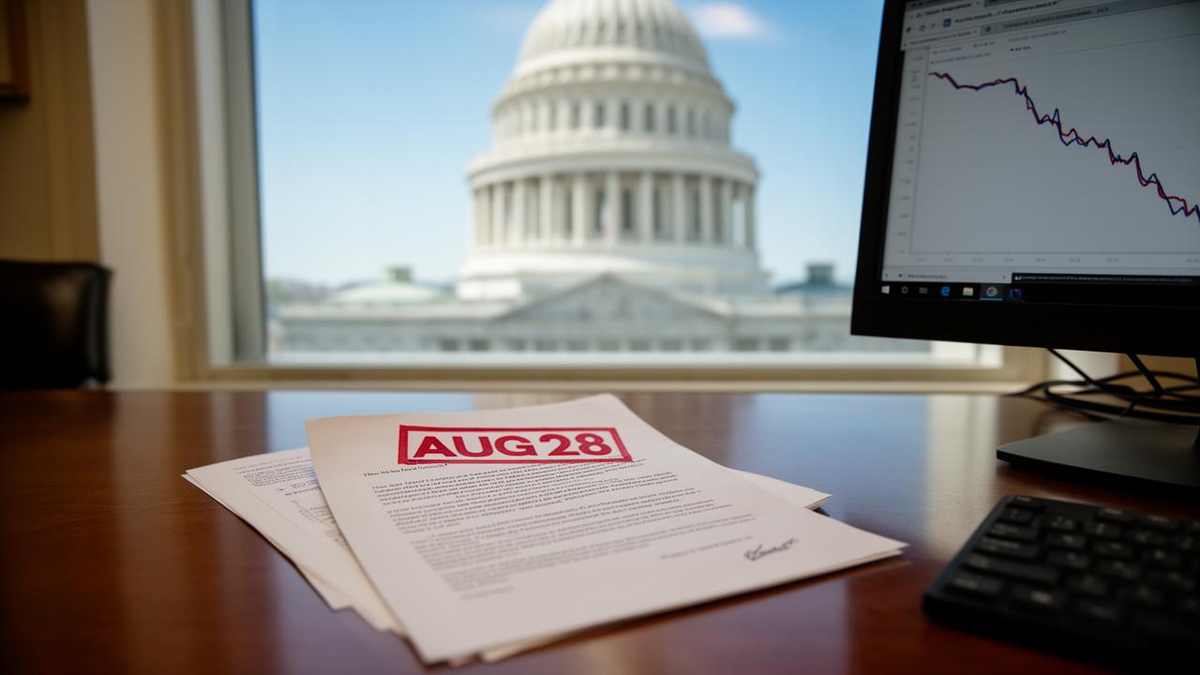
Senator Elizabeth Warren, the top Democrat on the Senate Banking Committee, has formally issued an ultimatum to Treasury Secretary Scott Bessent, demanding a complete accounting by August 28 of the legal basis and cost breakdown for the coordinated U.S.-Japan yen intervention in late July. This rare cross-border foreign exchange operation is igniting a political firestorm in Washington over the use of taxpayer funds and policy transparency.
In a letter sent on August 13 local time, Warren stated bluntly: “To date, the Administration has not provided a detailed justification for its intervention, nor has it formally disclosed how much taxpayer-linked funding was spent purchasing yen.” She is demanding that the Treasury provide a complete legal analysis and outline the expected costs to U.S. taxpayers, as well as the specific scale and conditions of any financial support currently being considered for Japan.
On July 31, the United States and Japan executed their first joint foreign exchange intervention since June 1998 to support the persistently weakening yen. Bessent subsequently confirmed the reports and revealed that the operation drew on euro reserves held in the Treasury’s Exchange Stabilization Fund (ESF). However, the specific amount deployed has not been publicly disclosed to date.
The timing of the intervention was highly dramatic. According to Japanese reports, the Japanese government and the Bank of Japan launched a “surprise” unilateral intervention on the evening of July 30, after the first day of the monetary policy meeting concluded, pulling the exchange rate back from near ¥164 per dollar to the ¥157 range (approximately $0.9872). Then, late on July 31 into the early hours of August 1, the U.S. and Japanese governments launched a coordinated intervention, pushing the yen to the ¥155 range (approximately $0.9747).
Japanese Finance Minister Satsuki Katayama officially announced the coordinated intervention on August 3, emphasizing that Japan “will not hesitate to implement further coordinated interventions going forward.” Vice Finance Minister for International Affairs Atsushi Mimura described the action as “the completed form of the Japan-U.S. monetary alliance.”
Was the European Central Bank Kept in the Dark?
In her letter, Warren specifically questioned whether the Treasury adequately consulted with the European Central Bank before deploying euro reserves. Bessent claimed in a CNBC interview earlier this month that he had assured European officials that “this was merely a reallocation of our reserves.” However, according to the Financial Times, the ECB was actually informed only after the intervention had already taken place. As of now, the U.S. Treasury has not responded to requests for comment regarding Warren’s letter.
The Deeper Logic Behind the Intervention
The motivations behind this foreign exchange intervention extend far beyond stabilizing the yen. In her letter, Warren is demanding that Bessent assess how turmoil in Japanese financial markets could transmit to and affect U.S. employment, wage levels, and overall financial stability.
Market analysts widely believe that one of Bessent’s core motivations for intervening was to prevent the Japanese government from engaging in large-scale selling of U.S. Treasuries to rescue the yen. Japan is currently the largest foreign holder of U.S. government debt. If Tokyo were to initiate a selling spree, it would inevitably push up U.S. Treasury yields, thereby raising credit and financing costs across the United States.
Japan’s domestic fiscal situation is the starting point of this transmission chain. Japan’s long-term interest rates have climbed to the upper 2% range. While still low compared to other major economies, as the “anchor” of the global interest rate system, the surge in Japanese long-term rates has already exerted upward pressure on U.S. long-term rates. Bessent is highly alert to the risk of this “Japan-originated interest rate shock” spreading to the United States.
According to sources close to the Japanese government, Bessent began focusing on the spillover effects of Japan’s fiscal risks as early as January of this year. At that time, Japanese Prime Minister Sanae Takaichi proposed a food consumption tax cut during the House of Representatives dissolution election, triggering market concerns about “fiscal deterioration without alternative revenue sources.” Japanese long-term rates spiked and spilled over into U.S. markets. Bessent reportedly conveyed strong concerns to the then-Finance Minister.
The trade policy considerations of the Trump administration represent another key factor behind Washington’s willingness to cooperate in the intervention. The Trump administration has long viewed an excessively strong dollar as the culprit undermining export competitiveness and widening the trade deficit. Trump himself described the intervention as “proof of friendship,” stating that “the United States can also gain economic benefits.” The joint statement issued by the U.S. and Japanese finance ministers last September explicitly included a clause stating that both sides “reserve the right to intervene in cases of excessive or disorderly movements” — language reportedly insisted upon by the U.S. side.
The Argentina Intervention Resurfaces
Warren’s rigorous scrutiny of the Trump administration’s foreign exchange policy has become routine. As early as autumn 2025, Bessent had deployed the Exchange Stabilization Fund to intervene in the Argentine peso market, providing financial support to Argentine President Javier Milei. In her latest letter, Warren revisits the matter, characterizing the Argentina operation as a “politically driven, taxpayer-backed bailout.”
Bessent has previously argued that the United States realized a profit from its support operations for Argentina. However, the Treasury has continued to refuse to disclose the specific financial details of that intervention to the public.
The Limits of Intervention
While the first coordinated U.S.-Japan intervention in 28 years succeeded in suppressing speculative yen-selling pressure, markets remain skeptical about its long-term effectiveness. A strategist at a major Japanese securities firm bluntly stated that “the nature of this as a time-buying exercise cannot be denied,” noting that as long as the substantial interest rate differential between the U.S. and Japan persists, the structural pressure to “sell yen, buy dollars” will be difficult to fundamentally eliminate.
Bessent himself has acknowledged: “Foreign exchange intervention can send a signal to the market, but ultimately it is policy and fundamentals that determine exchange rate direction.” He also expressed “strong support for Japan’s financial measures to correct excessive yen depreciation,” hinting at expectations for further rate hikes by the Bank of Japan.
Markets have already begun rapidly pricing in the possibility of a Bank of Japan rate hike this autumn. A senior official at Japan’s Ministry of Finance analyzed: “If the United States and the market have already laid the groundwork, it will be difficult for Prime Minister Takaichi to oppose a BOJ rate hike.” If Takaichi were to oppose a hike, it could not only accelerate yen depreciation but also cause embarrassment for the United States, which cooperated in the intervention.
The next focal point is the Bank of Japan’s monetary policy meeting in September, where Governor Kazuo Ueda’s judgment will determine the ultimate outcome of this cross-border currency defense. Meanwhile, the political scrutiny Warren has launched in Washington adds a new layer of uncertainty to this rare act of international financial coordination.