
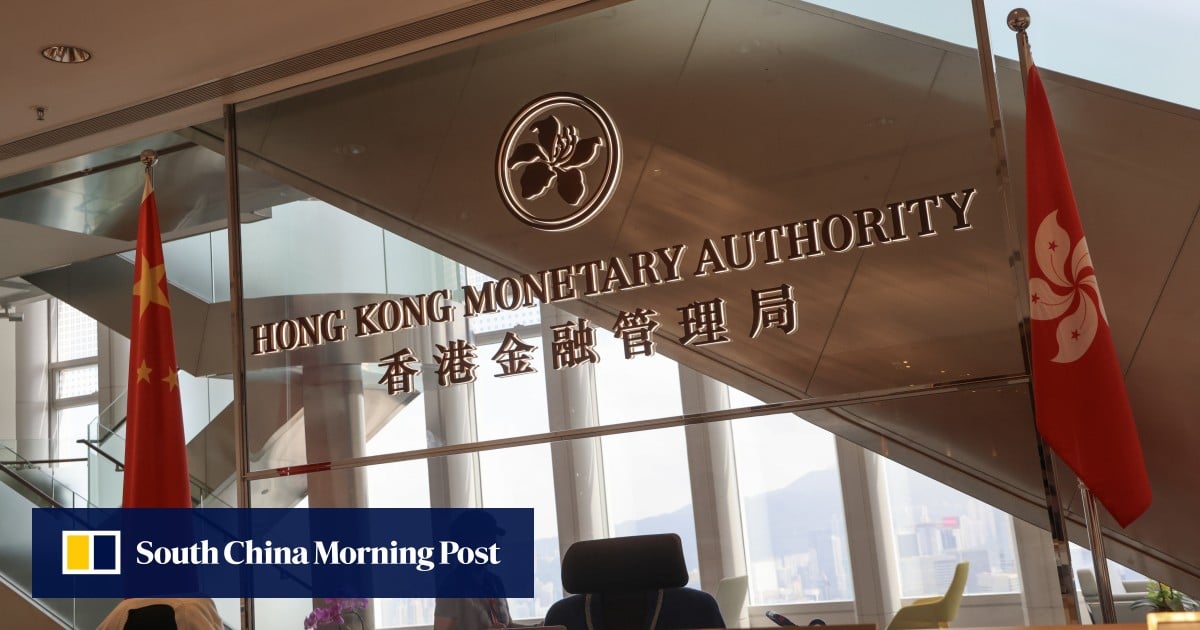
Hong Kong’s Exchange Fund, the war chest used to defend the local currency, reported its smallest investment gain in five quarters as the Middle East crisis weighed on stock market performance.
The fund gained HK$34.5 billion (US$4.4 billion) in the first quarter, 56 per cent lower than HK$79.2 billion a year earlier, according to data released by the Hong Kong Monetary Authority (HKMA) on Monday. The fund still managed to report its fifth consecutive quarterly gain, but it was the smallest gain among the five quarters.
The Exchange Fund, which has investments in Hong Kong and overseas stocks, was hit hard by a stock market slump in March following the start of the US-Israel war on Iran on February 28, as investors shifted from stocks to cash or other safer bets.
“The Middle East conflicts have led the market on a roller coaster, with the global stock market falling 10 per cent in March after the war started,” the de facto central bank’s chief executive, Eddie Yue Wai-man, said during his quarterly meeting with lawmakers on Monday. “The ceasefire in April led the market to bounce back, but the outlook is still full of uncertainties.
“The interest rate outlook is also affected by the Middle East conflicts, as traders generally expected no interest rate cut this year due to inflation worries from increased oil prices. Overall, the Middle East crisis has brought a lot of uncertainties to Asia and Hong Kong, but the local economy and capital market remain resilient. The initial public offering markets remains active and the property market has recovered.”
The fund’s total assets stood at HK$4.34 trillion at the end of March, a HK$19 billion increase from the end of last year.
In the first quarter, the fund’s Hong Kong stock investments lost HK$5 billion, compared with a gain of HK$16.4 billion a year earlier. Hong Kong’s benchmark Hang Seng Index fell 7 per cent in March, its worst monthly performance in three years. The loss wiped out a strong gain in the first two months of the year, resulting in a 3.3 per cent drop for the quarter.