
By Makiko Yamazaki and Satoshi Sugiyama
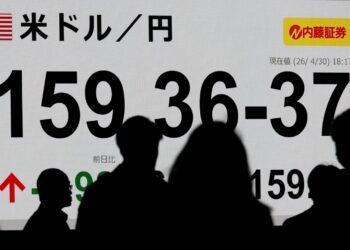
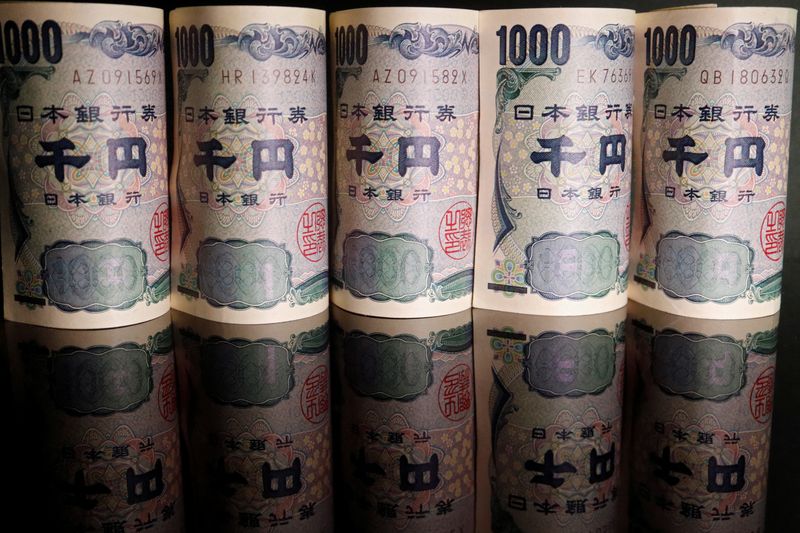
TOKYO, May 1 (Reuters) – Japan intervened to support the yen against the U.S. dollar on Thursday, sources familiar with the matter told Reuters, in their latest attempt to stem a selloff worsened by a spike in oil prices linked to the Iran war.
Sources have said Japan is also considering stepping into oil futures markets to relieve pressure on the currency, with policymakers increasingly viewing speculative surges in energy prices as a key driver of its weakness against the dollar.
The Japanese currency has been under sustained strain from the Bank of Japan’s slow retreat from its ultra-easy policy and concerns over Prime Minister Sanae Takaichi’s expansive fiscal agenda.
Below are details on how yen-buying intervention works:
WHEN DID JAPAN LAST ACT TO STRENGTHEN THE YEN?
Japan conducted yen-buying intervention in September 2022 for the first time since 1998 and has conducted four such operations since then to curb sharp depreciation in the currency driven by wide rate differentials with the United States.
The country last stepped into the foreign exchange market in July 2024, buying yen after the currency hit a 38-year low of 161.96 per dollar.
WHY STEP IN?
Yen-buying intervention used to be rare. Far more often, the Ministry of Finance has sold yen to prevent its rise from hurting the export-reliant economy by making Japanese goods less competitive overseas.
But yen weakness is now seen as problematic, with Japanese firms having shifted production overseas and the economy heavily reliant on imports for goods ranging from fuel and raw materials to machinery parts.
Higher oil prices triggered by the U.S.-Israeli war with Iran have piled fresh pressure on Japan, which relies on the Middle East for about 95% of its oil imports, fanning import-driven inflation. The dollar’s safe-haven appeal has only deepened the yen’s pain.
WHAT HAPPENS FIRST?
When Japanese authorities escalate their verbal warnings to say they “stand ready to act decisively” against speculative moves, that is a sign intervention may be imminent.
Rate checking by the BOJ – when central bank officials call dealers and ask for buying or selling rates for the yen – is seen by traders as a possible precursor to intervention. In January, U.S. authorities took the unusual move of conducting rate checks, spurring a rally in the yen.
WHAT HAS HAPPENED SO FAR?
Japanese Finance Minister Satsuki Katayama has said the government is prepared to take decisive action against excessive currency swings, adding she remains in close and constant contact with U.S. authorities.
Markets at home have been gripped by volatility since Takaichi’s party swept a February snap election on a pledge to pursue “responsible, proactive” fiscal policy, injecting fresh uncertainty into Japan’s financial outlook.
Before Thursday’s sudden jolt in dollar-yen trading, Katayama warned that “decisive” action was imminent, while Japan’s top currency diplomat Atsushi Mimura delivered a stark message to investors: “This is our final evacuation warning to markets.”
HOW WOULD IT WORK?
When Japan intervenes to stem yen appreciation, the Ministry of Finance issues short-term bills, raising yen it then sells to weaken the currency.
To support the yen, however, the authorities must tap Japan’s foreign reserves for dollars to sell for yen.
In either case, the finance minister issues the order to intervene, and the BOJ executes the order as the ministry’s agent.
CHALLENGES?
Japanese authorities consider it important to seek the support of Group of Seven partners, notably the United States, if intervention involves the dollar.
Washington gave tacit approval when Japan intervened in 2022 and 2024, reflecting recent close bilateral relations.
In a joint statement signed in September, Japan’s finance ministry and the U.S. Treasury Department reaffirmed their commitment to “market-determined” exchange rates, while agreeing that interventions should be reserved for combating excess volatility.
WILL THERE BE MORE ACTION?
Even after intervening just hours earlier, Mimura stressed that authorities stand ready to re-enter markets as speculation was still running hot.
WHAT’S THE TRIGGER?
The decision is highly political. When public anger over the weak yen and a subsequent rise in the cost of living is high, that puts pressure on the administration to respond. This was the case when Tokyo intervened in 2022 and 2024.
But the decision would not be easy. Intervention is costly and could easily fail, given that even a large burst of yen buying would pale next to the $9.6 trillion that changes hands daily in the foreign exchange market.
There is no guarantee intervention will effectively shift the weak-yen tide, which is driven to some degree by expectations of prolonged low interest rates in Japan relative to other nations.
Still, finance ministry officials have repeatedly said their response could span “all fronts,” explicitly leaving the door open to intervention in oil futures markets as volatility bleeds into yen trading.
Japan could tap its $1.4 trillion war chest of foreign exchange reserves to build short positions in oil futures, though analysts doubt such firepower would do much to halt the yen’s slide.
(Reporting by Makiko Yamazaki and Satoshi SugiyamaEditing by Shri Navaratnam)